Good Easy Plants: Gaillardia (Blanket Flower)

Or what? You’ll release the dogs, or the bees, or the dogs with bees in their mouths and when they bark they shoot bees at you? Well, go ahead — do your worst!

– Homer Simpson

It’s been a bad year for butterflies, but we’re hosting a regular bee convention! No matter how early the day, by the time I come outside, three or more species are already busily (and, I like to think, happily) working away.  Our “Arizona Sun” Gaillardia is one of the bees’ favourites.

Dohiy.com - Blanket Flower and Bees

Also called “blanket flower”, Gaillardia comes on strong in mid-summer, and keeps the blooms coming right into fall. Unlike many perennials, it will bloom (and rebloom) in its first year. The “daisies” sport vivid reds, oranges and yellows.

Dohiy.com - Gaillardia Patch

The “Arizona Sun” variety is a compact version, but other varieties can be much taller. You don’t have to deadhead it, although doing so promotes rebloom. Even if you leave it alone, the flowers aren’t the only feature – after dropping petals, it leaves eye-catching seed heads that attract goldfinches.

Dohiy.com - Blanket Flower Seed Heads

A North American native, it’s a sturdy plant and not bothered by much. It’s drought-resistant and widens its immediately area via seed with no encouragement. Plus, not only do you get more from seed, they can be divided and moved or shared every few years. A little frost won’t hurt Gaillardia, and deer generally don’t like them. But the bees are another story.

  • Depending on variety, blanket flower stretches from zone 3 to 11 (US and world zone maps).
  • They spread politely and can be divided.
  • They don’t mind heat and are drought tolerant.
  • As long as the soil drains well, it doesn’t really mind soil differences.
So much to do!

So much to do!

Other varieties move into peachier tones (such as the Tokajer), deep red (Burgundy), or citrus shades (including the Oranges and Lemons variety), but they are all easy-going and ever-cheerful. You will like them in a pot. You will like them when it’s hot. You will like them here or there. You will like them everywhere!

For more good easy plants, check out Catmint, Clematis and Weigela.

Posted in Yard & Garden | Tagged , , , | Leave a comment

Garden Maintenance: Renovating Wood Mulch

 Mmmm…chips…

– Homer Simpson

Our raised vegetable beds are surrounded by wood chip paths. When we originally put in the beds, we leveled and cleared the whole area and swaddled it lovingly in landscape fabric (a/k/a weed barrier) before adding three inches of mulch. It’s performed admirably, even though I used the cheap fabric. But several years later, the weeds are regaining ground.

Weeds in Mulch

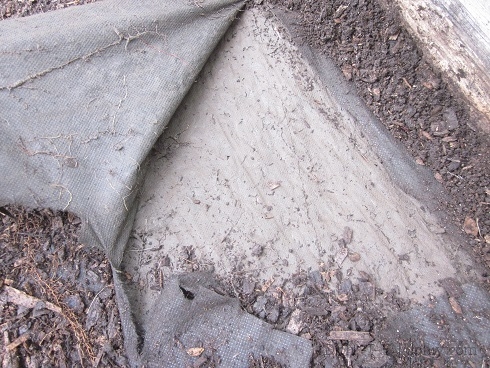
Weeds can break through the fabric if determined enough, or take advantage of tears and holes, but the bigger issue is that the mulch on top of the fabric is always decomposing (aren’t we all?).  Wood chips take quite a while to rot, but they will do it. The top of the wood mulch still looked fine, but the moist layer closest to the ground had broken down .

Once was wood.

Once was wood.

That’s all natural and good, but it does give weeds a foothold. It’s fixable! You just need:

  • Fresh weed fabric and new landscape staples
  • A rake, hoe and shovel (and wheelbarrow or bucket, if available)
  • A current tetanus inoculation

Rake out the existing mulch (and any weeds with it). You might prefer to weed first to separate it from the mulch. Either way. If the mulch is up against raised bed walls or similar, a hoe can help you clean mulch out of the edges. If you want to reuse any of the mulch (anything still in wood chip form can go again), move the good stuff into one pile and add the new humus to your compost pile. (This is where buckets and wheelbarrows come in handy.) Or just throw it straight into a planting bed.

What lies beneath.

What lies beneath.

If you are getting a lot of weeds, it’s generally time to replace the fabric. If the fabric looks good still covers everything, you could just keep it. But in that case, it will be pretty full of decomposition bacteria, so you will want to brush it down and let it get good and dry before mulching.

I WILL CUT YOU!

I WILL CUT YOU!

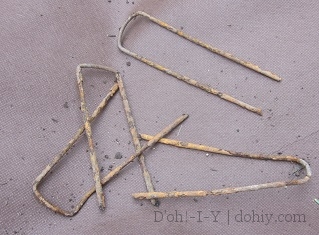
If you are replacing the fabric, pull up the old stuff. If there are any weeds or surface root systems in the soil underneath, pick those out. You want a clean slate. If you used landscape staples originally, pull those out as well. Put your tetanus booster to good use – those puppies will be mega-rusty! I pull them out where I find them, and if they are still staple-shaped, I reuse them. Be careful, though – the metal may be nearly rusted through, and you don’t want to have one break and jab you.

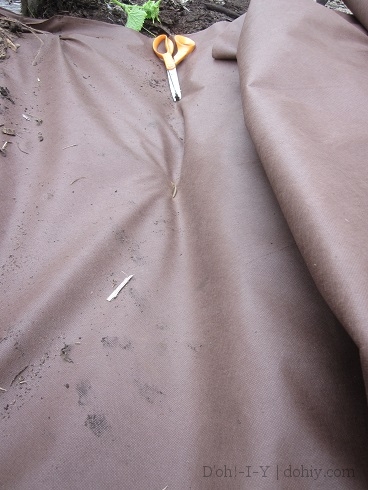
Put down your new fabric. I used two layers and augmented the old staples with some new ones. Get it as smooth as possible (folds tend to poke up through mulch over time and can trip people). If you have joints, overlap the pieces at least six inches, and use staples through both pieces.

At raised beds or walls, run the fabric up the side a couple or three inches rather than cut it as you would a fitted carpet. Those edges are prime weed territory, and ending the landscape barrier at the edge means there’s necessarily a tiny gap where seeds can find a toehold. Don’t worry – you will cover up this extra weed barrier with mulch. Think of the ground surface and bed edges as a pie tin and the mulch as the yummy filling. The barrier fabric is your nice, thick, chewy crust. (This pie analogy is making me hungry.) Just as you would press pie crust into the corners of the pan, pin the fabric as close to the bed/wall as possible at regular intervals.

Laying the new fabric.

Laying the new fabric.

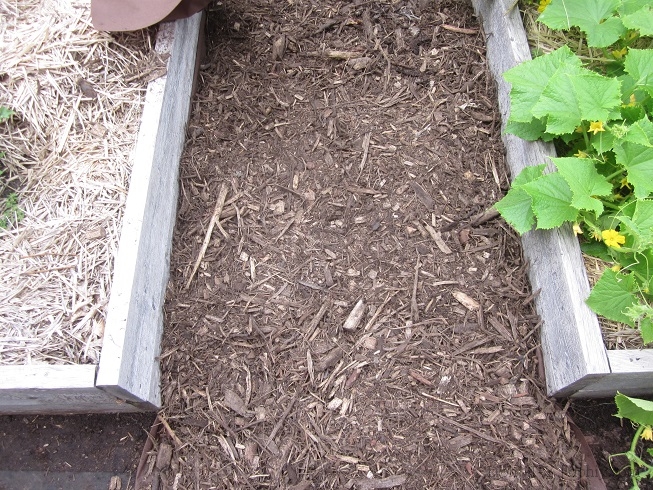
At this point, take a pie break you will probably be sweaty and dirty. But good news – this is the last step! Put down a hearty layer of fresh mulch and spread it evenly – you want three inches or more. I know it seems like a lot, but it will settle over the first week. At beds/walls, make sure the mulch stays on the sunny side of the fabric, pressing it up against the surface. You don’t want to have a wood chip make a gap where weeds can happen.

Wondering where to get mulch? Check locally for free options – we pick up free wood mulch from the county, which grinds up wood waste at sites around town. Also check tree services and Craigslist. If you need to buy mulch, garden centers may give you a better deal in bulk than buying individual bags. And don’t forget to reuse anything that’s still good.

After New Mulch

Done! You’ll lose any vestige of personal cleanliness, but the garden will look super-tidy. I’m renaming this place Dorian Gray Gardens.

Posted in Before & After, Repair & Maintenance, Yard & Garden | Tagged , , , | Leave a comment

Misunderstood in My Own Time

Hmmmph!

– Marge Simpson

On my way back from work this week, I stopped by K-Mart to return some spraypaint. When planning the bookcase project, I thought I might use spraypaint instead of latex we had on hand. Latex carried the day, so my many cans of spraypaint were surplus to requirements.

At the customer service counter, the clerk asked, “Was there anything wrong with these?”

I replied, “No, I just bought way too much spraypaint.”

He continued processing the return. Since I was wearing a cardigan/dress combo, I added helpfully, “I recently became much more efficient in my tagging.”

Tagging (via)

Tagging (via)

Dead silence.

And a bit more dead silence.

Then, “So…you didn’t use these or anything?”

“Nope.”

Posted in D'oh! | Tagged , | Leave a comment

Carbon By Any Other Name Would Smell As Neutral

Ultrahouse: Say, it’s a bit stuffy in here…and I know a certain someone who really fancies lilac.
Marge: Oooh, that really covers the cat crap!

– The Simpsons

The Kev and I both noticed a bit of online buzz around the idea of fancy, Asian-themed charcoal air fresheners.

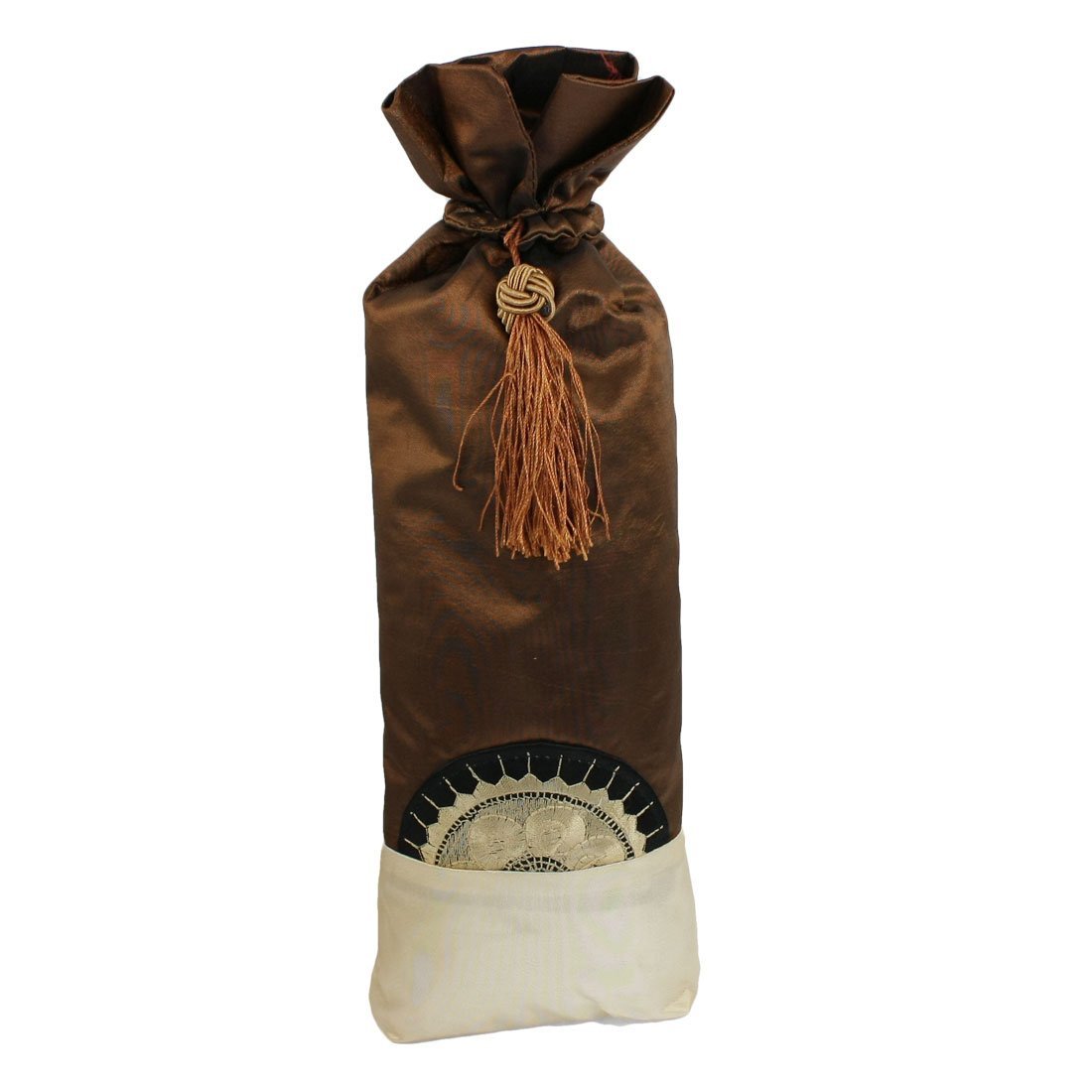
I’m not a chemist, but I’m pretty sure the important thing about these is the “activated charcoal” part, and not that the charcoal originally came from bamboo. The bamboo part just makes it seem fancy. And exotic, if you aren’t from a place with bamboo. Anyhoo, if I understand it right, activated charcoal is just charcoal carbon processed so that it has an enormous number of tiny holes. The bigger resulting surface area helps trap pollutants.

Say hello to my little friend.

My getting goat (via).

So if you just need activated carbon and a fabric pouch … why are these sold for as much as $20? Even with shipping and other overhead, that seems kind of excessive. Basically, you’re paying a premium for a simple thing tarted up.

If there’s anything that gets my goat, takes it on a date and gets fresh with it before ditching it at the diner (the goat, I’m still talking about), it’s pretentious marketing. I decided to see how cheap I could make the same thing.

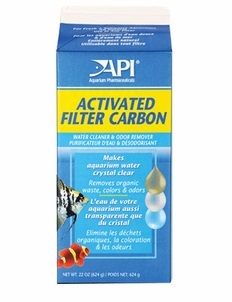
I picked up a big ole box (over half a kilo) of activated carbon from the aquarium section of the pet shop. EIGHT BUCKS.

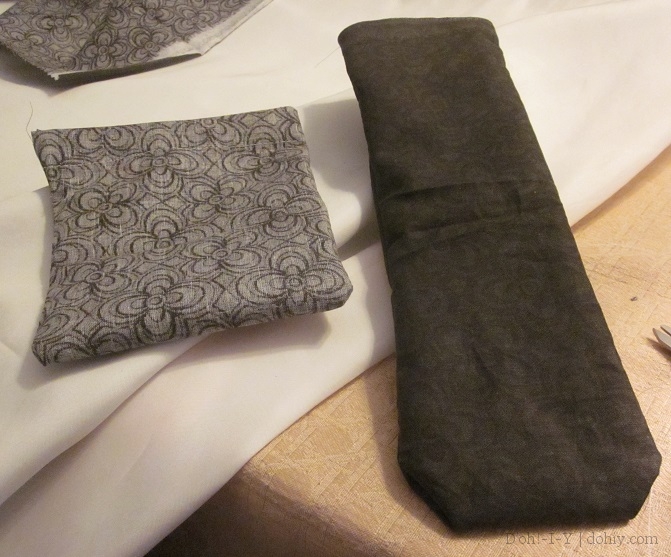
api Then I grabbed some fabric scraps I had on hand. (I was meant to be working on bedroom curtains, so the sewing machine was already out. Curtains still not done, by the way. This was far quicker and easier.) Let’s say this 1/8 of a yard piece was worth $2, including the thread and bits of ribbon I used. I ran up three quick baggies of various sizes. (If you don’t have a sewing machine, a spare sock would do the same job! Also, it’s something to do with spare socks.)

Both from the same fabric -- used the reverse side on one.

Both from the same fabric — used the reverse side.

Just in case I wasn’t having enough fun stalling on curtain-making, I broke out the gold acrylic paint to amuse myself further.

kanji

That’s the kanji for “marketing” (according to one source, at least). Marketers know: put random kanji on anything in the west, and it looks cooooool. (Apologies if you read Japanese, because my illiterate rendering probably looks pretty awful!)

Once I had the bags done and imprinted with silliness, they were easy to fill — the huge box of activated charcoal has a built in funnel! After filling, I tied or sewed them up.

Here’s my whole nascent (or should that be “no-scent”??) fake product range:

bags done

I deployed my bags of silliness in the house (product testing!).

bag on door

By the time I got to this point, it was all for the sake of my continued internal joke. (I won’t even say it was an “inside” joke, because the Kev observed all this with some perplexity — curtains, remember?) BUT GUESS WHAT?

They totally work!

I reckon I could make five to seven bags from that container of charcoal and a little more fabric, so something like $2/bag to make these. Less if you use a mismatched sock! And if you are feeling silly, you can look up your own kanji to make them all zen. I wonder what the kanji is for “goat.”

Update! Over a year later, this concept still works well, BUT if you are going to hang one like I did on the doorknob, please check out this post about how to avoid charcoal dust marks.

Posted in Decor, Repair & Maintenance | Tagged , | 65 Comments

Before and After: Ceiling Canopy Fancification

If your mother wasn’t so fancy, we could shop at the gas station like normal people.

– Homer Simpson

Just quick before we start — a shout-out to Amy at Commona My House, who selected our recent bookcase project as a feature for “Give Me The Goods Monday.” Thanks, Amy!

light3

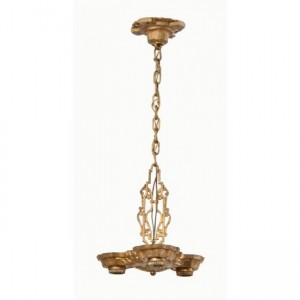
I recently restored a vintage ceiling light. I started with most of the original pieces, but I did not have the ceiling canopy. The ceiling canopy is the part that attaches to the electrical box and covers the wiring. Old lights like mine (or like the one to the left from Urban Remains) originally had a canopy that matches the rest of the fixture (also like the one to the left), but they are often reused when the fixture is removed, or just lost.

Instead, I started with a utilitarian version from the hardware store:

fixture canopy before

So sexy! Actually, it’s fine for most purposes, but for a fixture that should have a coordinating canopy, a simple top like this could prove distracting. Not as distracting as pasting cutlery handles to it, obviously, but distracting.

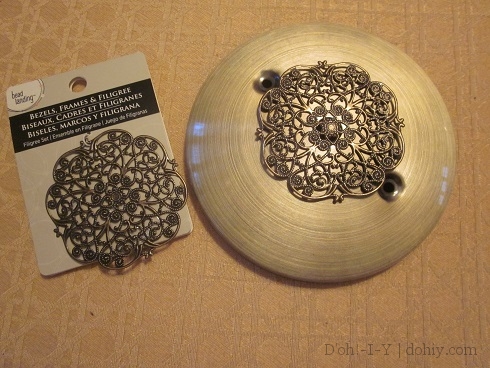
I decided to just add a little texture. After a couple of trips to Michael’s, I had a stack of filigree to choose from. One of the medallions fit neatly on the top.

Fixture canopy idea

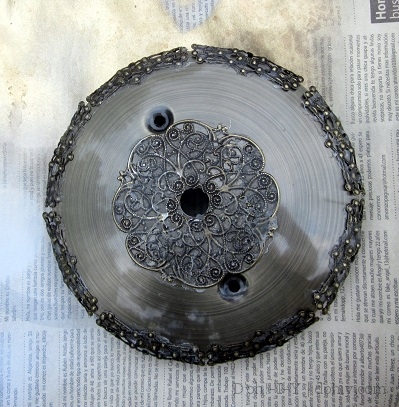
I trimmed the detail from the middle, glued that thing down and clamped it. I always feel like I know what I’m doing after I’ve clamped something, even when I really don’t. That momentary feeling of competence is a nice break in the day.

On the edges, I used some straight pieces that had been joined together in a chain. I used needlenose pliers to fold and bend them so that they would wrap around the canopy’s edge. Fortunately, these were about the right size to go around the circumference with minimal spacing. Here it is once released from the clamps:

Fixture canopy during

I don’t have a glue gun (I know!), but that’s partly because I swear by GOOP glue. I grabbed it at the Hobby Lobby checkout as part of a model rocket project, and it is great. How can you fault a glue that holds a rocket together on re-entry?? Ok, not re-entry strictly speaking, but it held together despite several parachute failures. Rockets crash really hard!

Quick aside: I hope it is needless for me to say that canopies should only be fancified on the ground. Don’t start smearing glue on canopies covering actual wiring, people! That’s a good start on getting out of the gene pool.

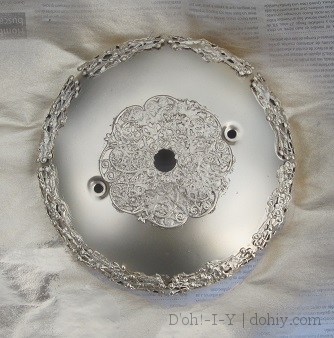
Next step was gold spray paint:

fixture canopy during 2

At this point, I hated it. It’s just so prissy! What am I, twelve?? It’s more Victorian uptight than art deco fabulous. I was about to toss it like a Frisbee, but the Kev said it was “good” and that it would “be on the ceiling anyway and who’s going to look that hard?” He reminded me that I was just trying to put a little texture on it so that it didn’t clash with the fixture, not create a Standalone Showpiece of Magnificence. That man, he’s useful in so many ways.

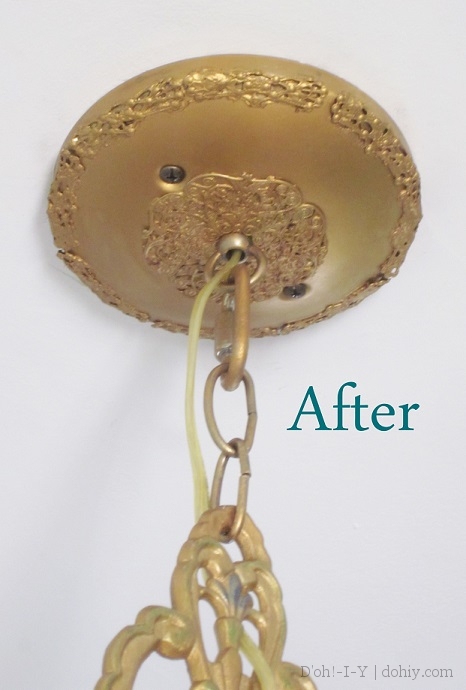
So I kept going. I top-coated with Grecian Gold Rub ‘n Buff to match the fixture, and called it a day.

fixture canopy after with letters

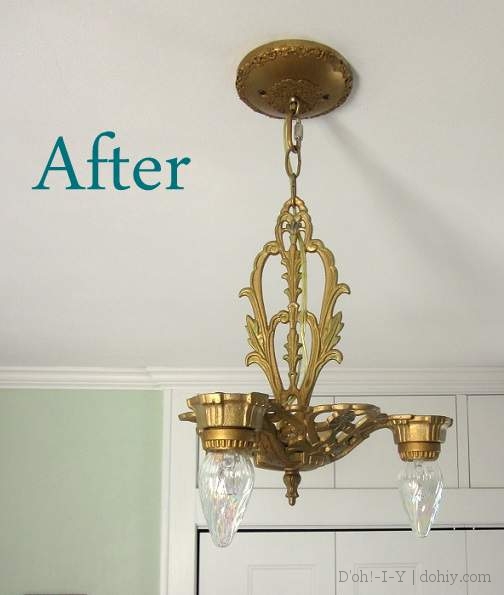
And the whole kit and kaboodle:

fixture after with letters

It sort of blends. And I don’t notice it now, which was my goal. If I found an old salvage canopy that suited the fixture, I’d change it out right away, but in the meantime, it’s fine. It’s FINE.

Posted in Before & After, Decor, Electrical | Tagged , , | 2 Comments

Before and After: Art Deco Light Fixture

Batting this light bulb is the only thing that cheers me up.

– Homer Simpson

As part of our bedroom redo, I wanted to restore and install an antique light fixture. I bought one in rough shape online.

Before

Before

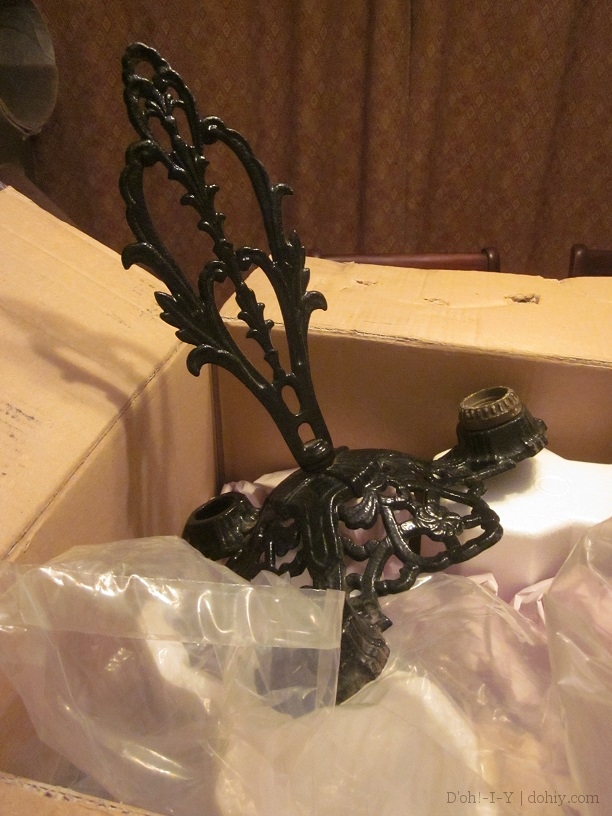
You’ve seen this puppy before. I spent many hours freeing the fixture from its painted carapace, finally arriving at bare metal.

clean

My goal was to restore this to a gold tone with polychrome touches common in the 1920s, as seen here:

light urbanremainschicago

The “polychrome” refers to the small touches of color. Usually, these are green on the leafy elements and red on any flowers or crests.

To get from bare metal to this look, the next step was to prime it before any rust could set in. I used a Rustoleum spray primer for metal. I was almost sad to cover up the metal after working so hard to reach it, but rust would have been far more saddening.

 fixture primed

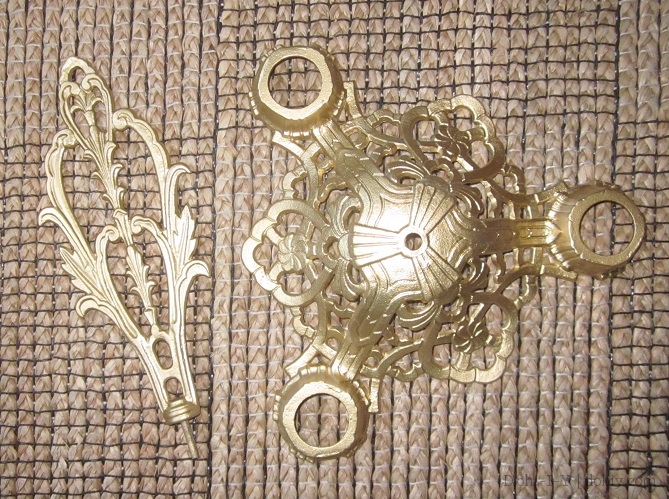
Once the primer was set, I hit it with a couple of coats of gold spray paint.

fixture gold spray paint

Mr. T just called: he wants his pendants back.

I used the Rustoleum that gives a “bright reflective finish” and it surely delivered. But this was just a base coat to give some dimension. I applied Rub ‘n Buff metallic wax (in Grecian Gold) over this layer to warm it up.

fixture after run and buff

“Better. But you are still not feeding me why?”

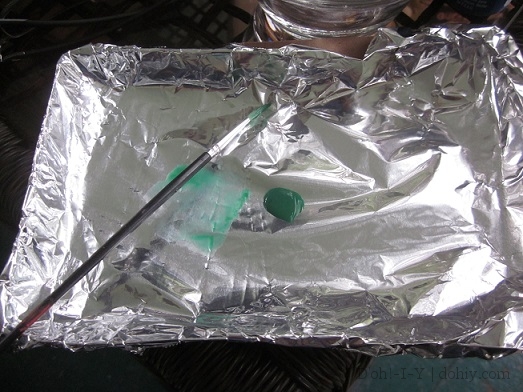
With the main body color in place, it was time for the polychrome. I took the advice of The Artist Generally Known (to me) As Mom: she recommended acrylic paint and a coat of fixative. And, BONUS, her traveling kit of paints was within striking range at my brother’s house.

fixture acrylic

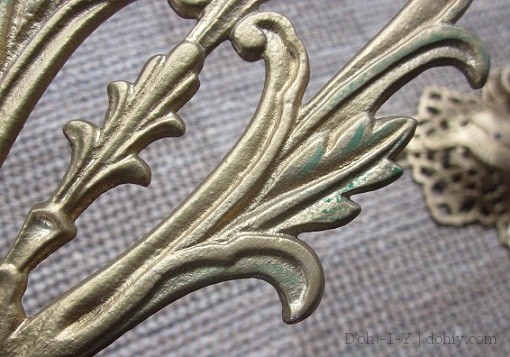
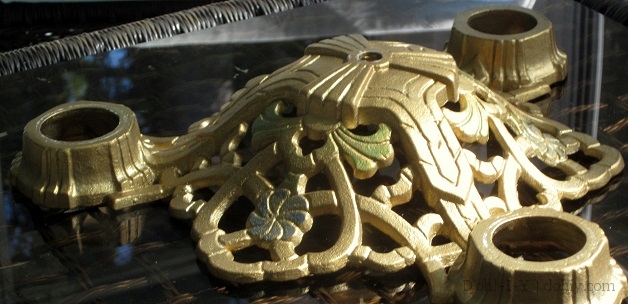
My goal for the polychrome was not Technicolor, but more of a wash. I wanted it to look like the original colors had been bright originally, but they had faded with age. I watered down the color and applied tentatively; it’s easier to add than to take away. I didn’t use much, and some wore off a bit when I applied the fixative (hello, pardon??). I used green for the leafy parts, but I used a blue for the floral elements instead of the more usual red.

fixture with polychrome

fixture with polychrome 2

Body done!

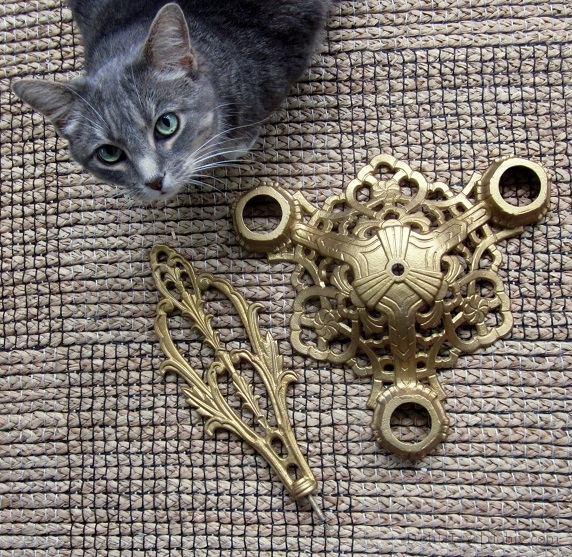
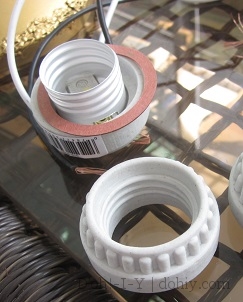
In the before picture, you can see one of the original sockets still attached. This fixture takes a ring-type porcelain socket, which is basically a porcelain socket with two parts that screw together. I bought ones with the leads already attached.

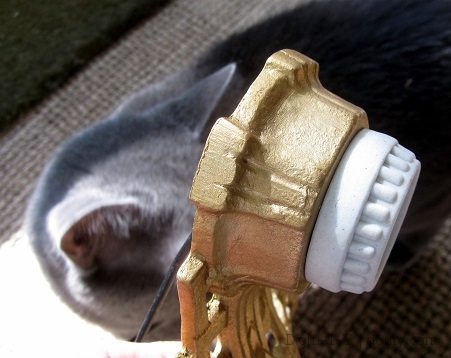
Please allow Inigo to demonstrate.

Please allow Inigo to demonstrate.

Ok, cat indulgence over. Here are some better pictures (apart and installed):

fixture porcelain apart

The ring screws onto the socket, which is inserted from the top.

The ring screws onto the socket, which is inserted from the top.

I later Rub-n-Buffed the porcelain ring to match the rest of the fixture.

Sticking the sockets in is not wiring as such, and this thing will need to be wired for use. I know something about wiring. My grandfather was an electrician, my dad and I wired all sorts of things when I was a kid (some of them legal!), and the Kev and I have done a stack of inspector-cleared jobs on this place. This light is an easy wiring job, but an easy job still requires basic skills and knowledge. So in the interest of not being responsible for your well-being, I’m not going to walk through the wiring. But here are some options for this part of the project:

  • Have an electrician or lamp repair technician wire it up for you. They could wire it for your installation, or the electrician could wire and then install it. It should cost relatively little, and you’ll have complete piece of mind. 
  • If you want to wire or install it yourself, check out code requirements and seek out competent instruction. BobVila.com and ThisOldHouse.com (no longer affiliated, those two!) both offer relevant guidance.

To assemble the pieces, the “pan” part faces down. I bought a finial to replace the hex nut that had been holding the thing together (in the wrong orientation) when I received it. The new finial screws onto the big matching “finial” (I really want the formal name for this part if anyone has it — there seems to be some diversity of terminology out there) that stiffens up the fixture so it hangs straight. This piece attaches to the chain. Finial bone’s connected to the chain bone, chain bone’s connected to the canopy bone (more about the canopy here), canopy’s attached to the HOUSE.

fixture after with letters

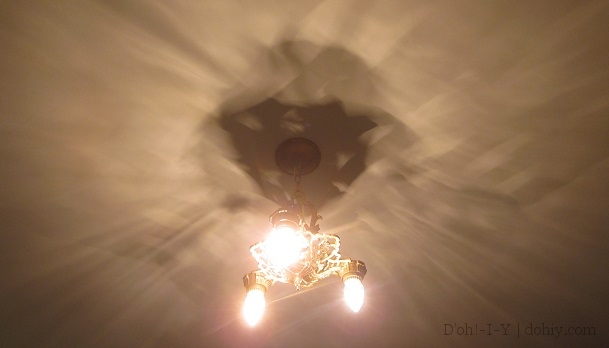
One of the things I really love about these old fixtures is the shadows they cast. Hard to photograph, but here goes:

fixture shadows

That was a long one — thanks for reading to the end. I hope you found it illuminating! BWAHAHA! I crack myself up.

Linking up at House of Hepworths and Thrifty Decor Chick — thanks for hosting!

Posted in Before & After, Decor, Electrical, Repair & Maintenance, Salvage | Tagged , | 7 Comments

The Great Escape…From Ikea

Marge: Look at all these clever pencil holders.
Lisa: Ooh, I wanna get the Kronk.
Marge: You don’t want something that overshadows the pencils. How about this Popli?

– The Simpsons

ikeaKev’s sister Helen and I text one another when we are Ikea-adjacent. The origins of this decade-old game are lost, but the general idea is that it’s enough fun to go to Ikea to make it brag-worthy.

We even text when we just see an Ikea in the distance. Best text ever was from Helen on holiday, reproduced here in its entirety:

Ikea Paris

We’ve bought a fair few things from The Big Blue Box in our time, and while Ikea is quite affordable, I’ve developed a few ways to get out cheaper and faster (while still having fun).

1.  Stay on Target

I’ve worked enough retail to know that the biggest mark-ups are not on big-ticket items — retailers keep a bigger chunk of the purchase price for cheap, funky extras. This is why Ikea insists you walk all the way through the Marketplace area to reach the cashiers. The little decorative stuff is so shiny and goes into your basket so easily! But it adds up.

Unless it’s just a lark, we usually go to Ikea with a PLAN. I’ve researched the options online or in the catalog. We’ve measured all the relevant spaces and checked against the item’s dimensions. We use the “shortcuts” in the floorplan to go to the right display to try out the short-list of things that might work. This method helps us avoid becoming distracted in the toy area with no furniture picked out until they start closing up shop. Not that that ever happened. In Croyden. In 2004.

This approach doesn’t mean that we don’t check other stuff out or maybe make an extra purchase or two. C’mon, it’s IKEA! But it does mean that we don’t buy a table that we don’t have room for (“it looks like it would fit!”) or go home with a lot of random junk that doesn’t look so great at home. Ikea has a LOT OF STUFF, and it helps to keep in mind what your itch is and the comparatively limited ways that Ikea can scratch it. Funky storage baskets don’t scratch my coffee table itch!

2.  Go When It’s Slow

Ikea is not as much fun when it’s overrun by locust-like hordes. If you enjoy crowds, by all means check out Ikea on Saturday afternoon! But if you have specific things in mind and want to get out while you’re young, try a Monday evening. It’s also easier to get through the check-outs and to find help at slower times.

Regardless of whether it’s slow or not, you might want to avoid the self-checkout tills. I use those just about everywhere I can except Ikea, where the system seems to stall Every Dang Time. Ikea’s carbon-based cashiers are just faster.

3.  Start at the End

I’m a devotee of Ikea’s As-Is section. Unless we’re heading in to pick up a small item from the Marketplace section, we go in through the out door, past the check-outs and into the As-Is area. The department contains display items, scratch-and-dents and returns at a huge discount.

Our best as-is deals have been on furniture items, including a couch for 70% off and Billy bookcases half-off. If you have a large enough vehicle, a bonus is that the stuff is already assembled. Slipcovered couches and chairs are usually offered assembled but “naked.” You can buy the slipcover full price, or there might be one in the as-is area (although I’ve never been lucky with textiles there). I skip them in-store and buy Ikea slipcovers on ebay. There’s a thriving and competitive secondary market there, and it’s waaaay cheaper than after-market makers such as Bemz.

Smaller as-is items (frames, lamps, kitchenalia) are usually damaged, but may be good for a hack or a fix — found a great bowl marked “damaged” a few years back, and I’m still not sure what was supposed to be wrong with it!

As-Is is particularly well-stocked early in the week, which is another good reason to go when it’s slow.

737-700-klmMid-month, Helen will be here(!!!) for a visit, and I intend to take her to Ikea. (And other places too, Helen, I promise.) We’ve never been at Ikea together, so I’m not sure if it’s entirely safe. Worst case, we’ll communicate entirely by text the whole time.

ROLL ON, MID-AUGUST!

Posted in Family, Furniture, Organization | Tagged , | Leave a comment

House Proud

One of us! One of us!

– The Simpsons

On Sunday mornings I ask Kevin, “Will we speak with The Boy today?”

Better known as “Ben”, The Boy is a full-grown man now, but speaking (and now Skyping) with him on Sundays is a tradition of long standing and one of the best parts of our week. For many, many Sundays, Ben — Kevin’s son/my stepson — provided updates on the hurdles and contingencies he was untangling in order to acquire his first house. Recently, everything resolved, and Ben and his lovely girlfriend Lois moved house. (Or just “moved” if you are logging in on the west side of the pond. No houses were literally moved for this post.)

Ben and Lois live not too far from Manchester (in the north of England, y’all), where houses are often built of creamy limestone block. I downloaded the estate agent’s pictures to give you a preliminary looky-look. Here’s the front of their new digs:

house front

And the back, with an extension and great French doors:

house back exterior

The sitting room. Fireplace is original and fully operational. The striped wallpaper is already gone. They also ripped up the carpet and refinished the original plank floors that they found intact underneath. They move fast!

house living room

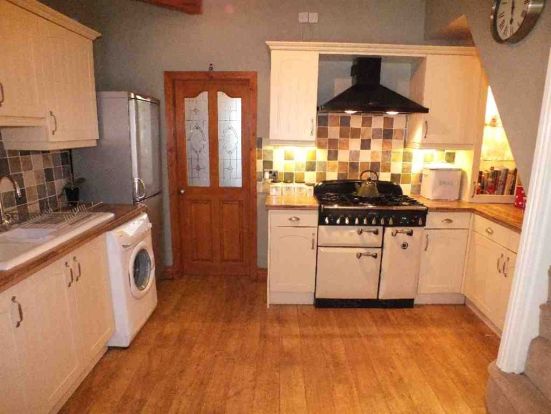
The roomy kitchen, complete with a rather amazing cooker (dual fuel! it rhymes!) and a refrigerator of nearly American proportions.

house kitchen

The dining room/sunroom off the back. A stream runs past the garden and flagstone patio.

house kitchen toward sun room

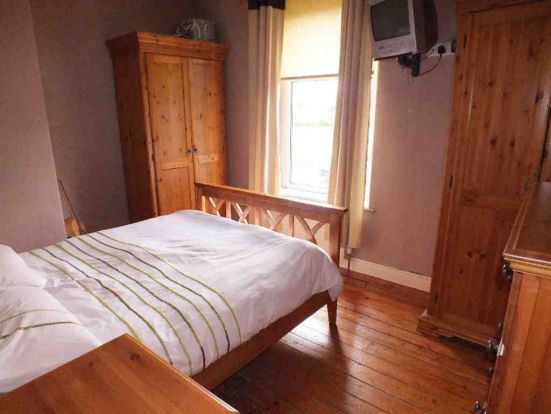
Upstairs, two bedrooms and a full bath, including this nice-sized room with wood floors and great light!

house bedroom

I cannot wait to see it in person! In the meantime, we’re getting a huge kick out of talking about home improvement and hearing all their plans. We’ll include updates here from time to time. Most of our traffic is from the US and the UK, so depending on where you’re arriving from, I hope you enjoy seeing a little bit about how projects unfold overseas. Plus, given the speed with which Ben and Lois are making changes, there’s a lot more stuff getting done there than around here!

Of course, people always think their sprogs (US: “kids”) are the Source of All Goodness and Light. But in this case, it’s actually true. Congrats, Ben!

Posted in American vs English, Family | Tagged , , | 2 Comments

Before and After: The Light, the Gadget, and the Wardrobe

Marge: Who’s “Disco Stu”?
Homer: Oh, er, I wanted to write “Disco Stud” but I ran out of space.

– The Simpsons

At about 10 p.m. last night, I finally purchased a stud finder. Because it’s Friday night, and the feeling’s right! Plus, the pitying look from the nineteen-year-old cashier is worth the price of admission.
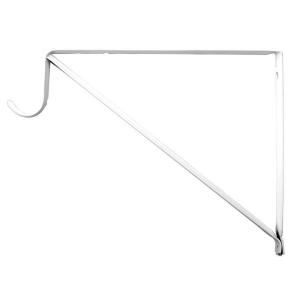
Closet Pro bracket to be returned; we need the wall-to-bracket dimension to be under 10 inches; this goes to 11.

Closet Pro bracket to be returned; we need the wall-to-bracket dimension to be under 10 inches; this one goes to 11.

Why Friday night? Well, I dreamed a dream where the closet was finished. I had to work late on Friday, but I wanted it done and thought I’d be able to install the rods in no time. We’d already had one set-back this week: standard closet racks were too deep for the space. My new plan was to use shelf brackets, electrical conduit and conduit hangers  to hang the rods where we needed them. (I could not find “short” ready-made closet brackets.)

We had the pieces, so all that needed to happen was to affix them to the wall. There’s a plumbing hatch, so I groped around and located one stud, and the first bracket went in fine. From there, I measured over 32 inches (the standard stud spacing is 16 inches) and I speculatively drilled into the wall.

Dead air. I re-measured and drilled an inch over. Plaster … lathe … AIR. Re-measured and did it again. SAME THING. The keening noise I made after the fourth hole brought Kev to the room.

A series of pointless holes, spackled and awaiting sanding and paint.

A series of pointless holes, spackled and awaiting sanding and paint.

“Isn’t that right behind the medicine cabinet?” he queried. The bathroom medicine cabinet is set into the wall between studs, so it’s framed out separately, and directly on the other side of the wall from where I was drilling. It disrupts the stud spacing.

“Well, yes, it’s obvious NOW, Mr. I-Understand-Spatial-Relations!” I harumphed. Good grief am I lucky he’s around! I would have kept drilling until I came through the back of the medicine cabinet and into the bathroom. I’m surprised he doesn’t hide the drill.

lww zirconI flounced off to Menards for a stud finder. I picked up a well-reviewed Zircon Studsensor i60 OneStep (if that’s not a brand name for the ages, I don’t know what is). The “one step” part is that it has an integrated pencil, so when the thing beeps and violently flashes to indicate that you are ON A STUD ALREADY, you push a button and the pencil springs out to mark it. It’s a little low-tech to be billed as a consolidated step, but the gadget itself is impressively flashy and beepy. And more importantly, it did actually find a stud so I could stop Swiss-cheesing the wall. So well done, Zircon Studsensor! You may join the arsenal.

With brackets in place, I added the conduit hangers, and hung the upper rod. We are trying out the new shelving all the way to one side and the rods to the other, but we placed the brackets so that we could move the shelf if we later wanted to. Mainly, though, we put the brackets where we could find studs.
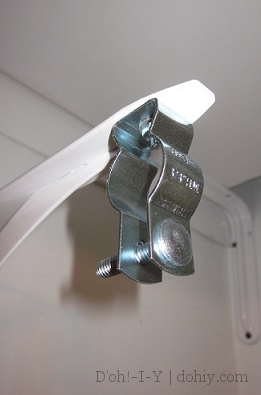
Conduit hanger bolted to a shelf bracket -- shallower alternative to standard closet brackets.

Conduit hanger bolted to a shelf bracket — shallower alternative to standard closet brackets.

Instead of putting in more brackets, I hung a lower rod from the upper. You can buy such a rod, but it’s basically a three-foot rod with cords attached to hooks. I’d bought a ten-foot length of 3/4-inch electrical conduit for the closet rods (under $3!), so I cut a three-foot length and attached it to a couple of hanger hooks with some cord. The ready-made product is only $10-$20 or so, but mine was almost free. Until we decide if this configuration is permanent or not, it’s easy to move around the lower rod.

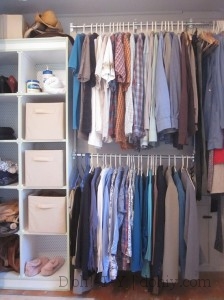
At this point, I became very excited and ran around the house retrieving our clothing from hither and yon. I’d bought a huge stack of matching hangers — chunky plastic ones because they best fit the limited depth of the closet — and I had a remarkably good time hanging up our clothes.
lww all

My discoveries:

  • That man of mine, he loves him some plaid.
  • I can stop buying blue tops now, because I have them all.
  • I think the Kev might have more clothes than I do!

I am tickled that I could fit so much stuff in this space without crowding anything. All our off-season and not-fitting-right-now clothing is in the upper cabinet section, and all of our folded stuff is in the bed drawers. The last time I had all my clothes in one room was 1988!

But the icing on the cake is the battery-powered, motion-detecting LED lights I installed behind the folding doors. I was of two minds about whether to order these, but once I installed them and turned out all the lights, I was a convert.
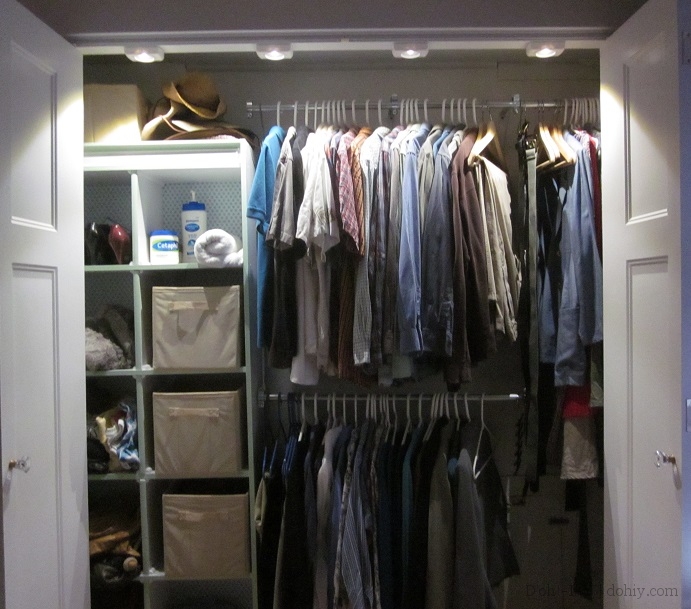
lww lighted

HOW COOL IS THAT?! Ok, yes, I’m aware it’s not very cool at all in an absolute sense, but it floats my personal boat.

Closet. Is. DONE. Un-be-freaking-lievable. Here’s the before:
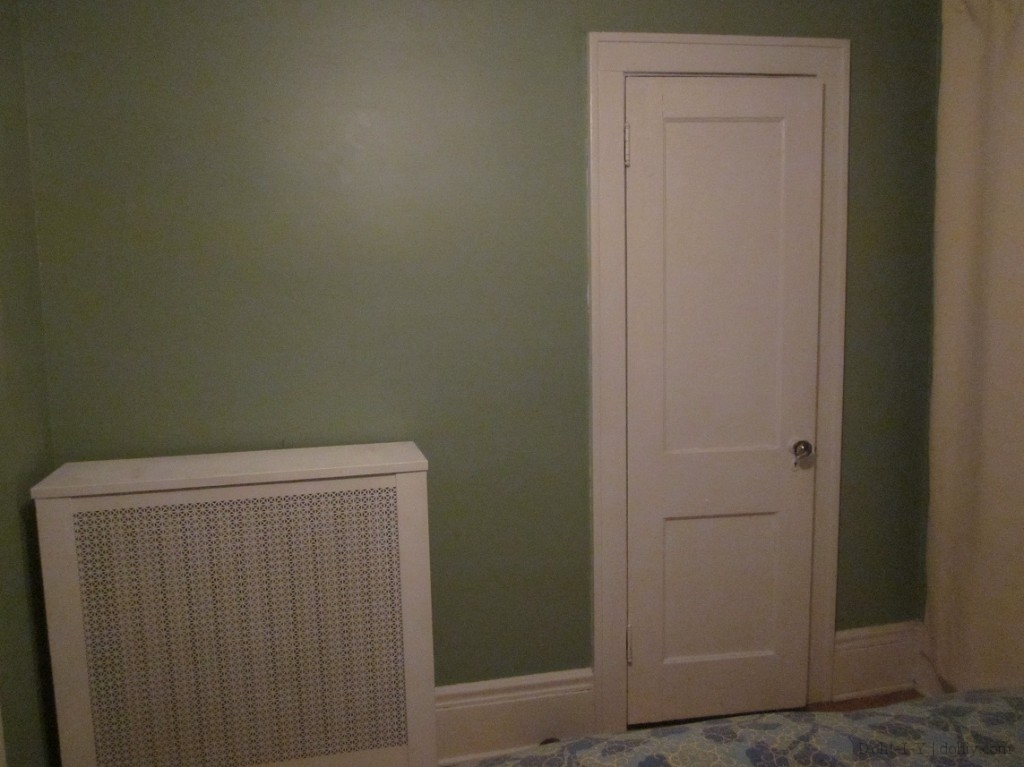
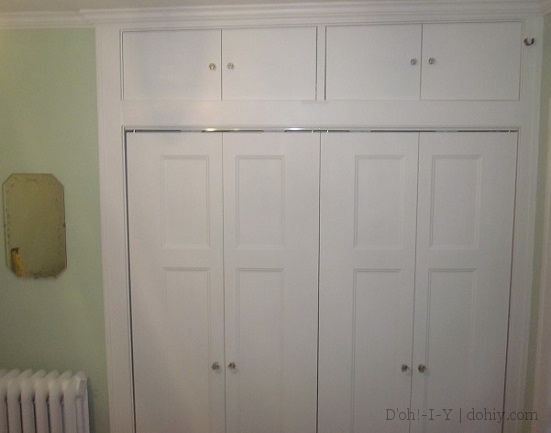
Behind this 24" door? Almost 90" of inaccessible closet.

Guess I don’t have a picture of the inside, so here’s the outside. Imagine opening the door and seeing a lot of clothes on hooks about 18 inches in front of you and darkness on either side.

And the after:
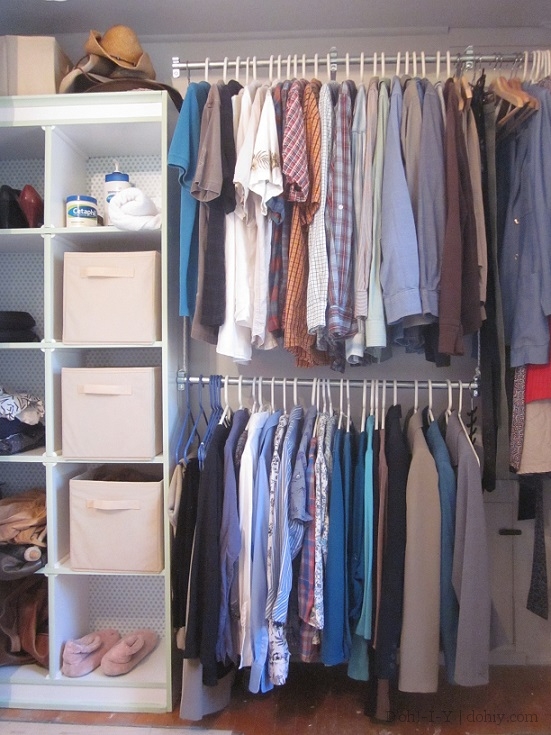
lww all

And the outside:

lww outside

I’ll get a better picture of this when there’s more light!

If I could just finish start the bedroom shades and curtains, we’d be on the road to the next project!


Posted in Before & After, D'oh!, Organization, Walls & Floors | Tagged , | 2 Comments

Before and After: Refreshed Flatpack Bookcase

Marge: Homer, we have a perfectly good bookcase.
Homer: Yeah, but this is what they’re doing on campus.

 – The Simpsons

bc titleThe whole pointed pointy point of our bedroom project was to open up the wall to access closet space. Having done that and installed trim and doors, we were using the much-desired closet space for the ladder and tools at night. Now that we’re nearing completion, it’s time to kit out the closet.

I used a few online closet organizing tools, and they all recommended something along these lines:

This solution came from Closet Maid.

This solution: Closet Maid.

Every option included shelving. That made sense to me — when we were last living in England, we had three Ikea Billy bookcases in our bedroom for open clothes storage. The skinny Billy bookcases were ideal for neat stacks of clothes. When we switched to using the looming armoire, the big open shelves resulted in big messy piles. On this go-round, I definitely wanted shelves with cubbies to keep things neat.

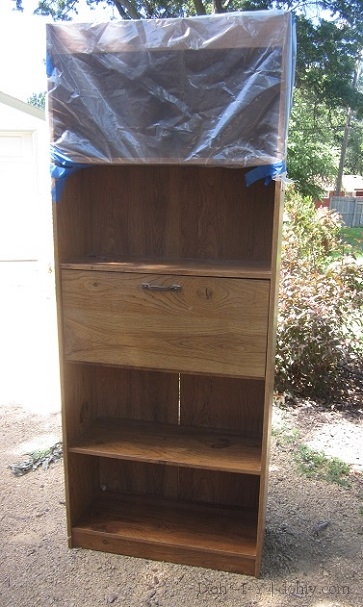
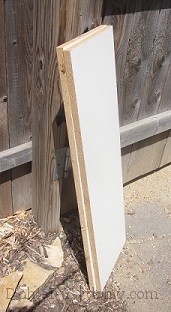
There’s an Ikea about 15 minutes from here. Did I go there and buy a Billy or two? No! I had an old flat-pack bookcase in the attic, and I was going to make use of it or wreck my marriage trying! Here it is after we hauled the surprisingly heavy thing outside:

bookcase before

The top shelf is swathed in plastic to keep something in until I could deal with it outside. It was one of these options:

  • A package of Pixy Stix that had come open, coating the shelf with sparkling pastel sugar!
  • Some glitter-coated holiday baubles were loose on that shelf — glitter is so hard to clean up!
  • A bat pooped and then died on the shelf, and remained there in various desiccated pieces!

You’re right — it’s the Pixy Stix! And anyway, we don’t have bats anymore. They all died in our furniture. 

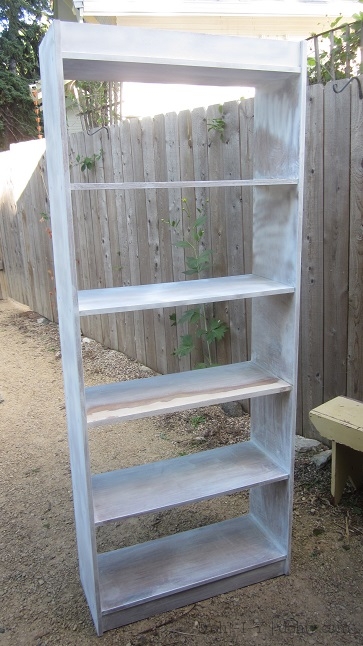
I took the unit apart and cleaned all the sugar powder. I used a little piece of trim to make the shelf that used to support the flip-down door (third from the top) the same depth as the other shelves. I woodfilled that fix, then primed the unit.

But, hey, this unit is not cubbified! I had a cunning plan that involved further random particle board shelves from the attic:

bookcase shelves

My plan was to cut center dividers from these white shelves so that each of the original bookcase shelves became two 12×12 cubbies. This would also better support the aged shelves. After measuring, I cut those puppies down to size. I was originally going to nail or screw these in place, but the particle board falls apart when you look at it crooked (or put a nail into it). The Kev glued down quarter-round to make channels for the uprights instead, and that worked great.

This was all taking longer than I expected, and I won’t lie — I was super-crabby about it. The particle board was engaging in passive resistance, the finish wouldn’t take paint, and I regretted not going to Ikea! But I took a deep breath and recommitted myself to making use of what we had on hand.

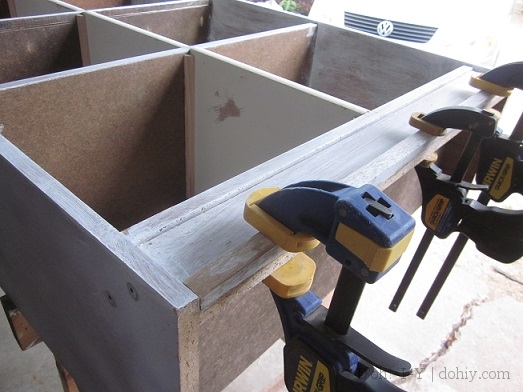
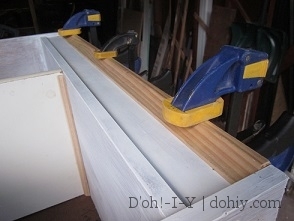
With my renewed outlook, I decided that as long as we were gluing stuff, I would trim out this bad boy. I cut down a square garden stake and sanded, primed, glued and clamped it.

bc clamps

Now here’s something that Kevin won’t know until he reads this post with y’all: Honey? This trim was supposed to be on the top of the bookcase. I managed to stick it to the base. This is why I came scampering through the house howling about how we never have enough clamps. I had to clamp a whole different piece of trim (and actually, a nicer one) to the top of the dang bookcase so you didn’t know I was an idiot. Love ya!

THIS is the top.

THIS is the top.

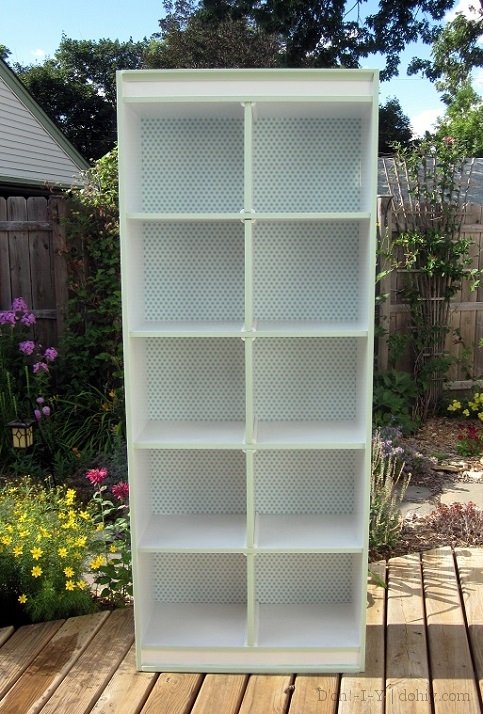
I had a heavy work week (plus, crabbypants), so Kev painted the unit and the dividers, then I just painted the front of the frames and the trim. I had some perky Hallmark wrapping paper on hand that I stuck to the back panels with spray adhesive. It’s what all the cool bloggers are doing! And it did brighten the thing up. Before again:

bookcase before

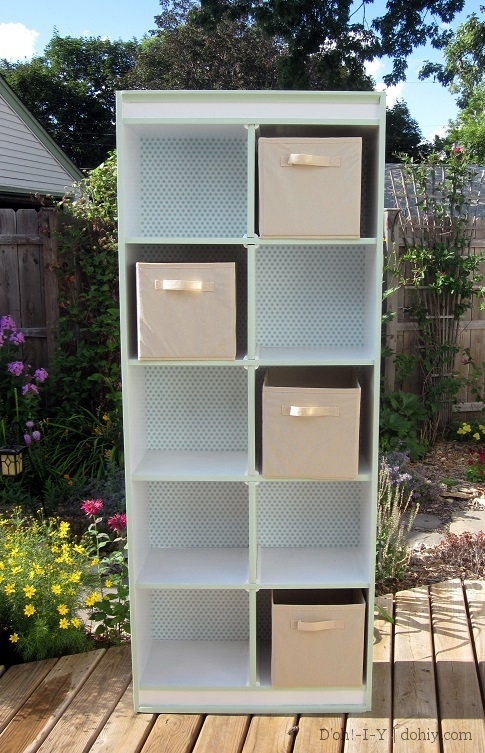
And (FINALLY) the I-didn’t-go-to-Ikea-despite-bats-Pixy-Stix-and-crabbiness after:

bc after 2

I picked up some fabric boxes from K-Mart on super-clearance for $2.50 apiece, and they work well in the cubbies.

bc boxes 2

After the photo session on the deck, we moved it into the closet so I could start loading it up.

All right, tools and ladders. You don’t have to go home, but you can’t stay here! It’s starting to look like a real closet now.

PS: I linked up at Rain on a Tin Roof’s “Give Me the Goods” party — check it out!
Give Me The Goods Monday

Related Posts Plugin for WordPress, Blogger...
Posted in Before & After, D'oh!, Decor, Furniture, Organization, Salvage | Tagged , | 4 Comments