Revisionist Histories: Staining a Fiberglass Door, Part 1

I don’t want any part of this project. It’s unconscionably fiendish.

– Waylon Smithers

When we bought the house, it had a wholly inappropriate mid-century front door.
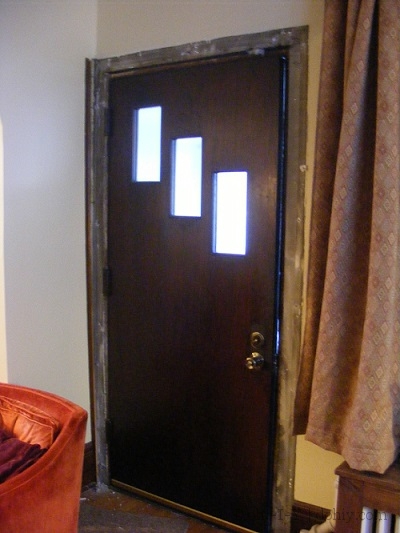
Didn't think to take a picture of it until we took the trim down.

Didn’t think to take a picture of it until we took the trim down.

That’s a cool MCM door, no? Yes! But perhaps not so much on a 1920s bungalow. To be fair, I saw a three-lite door like this in a 1920s kit home catalog, which slightly blew my mind — it looks so mid-century to me! And it’s certainly associated with that later era, but it’s cool that the design was already out there.

This particular example is not the original door, however, and we wanted something closer to what the original would have been. My quandary is not unique — Apartment Therapy featured a beautiful 1926 Tulsa home with a similar door mismatch earlier this year.
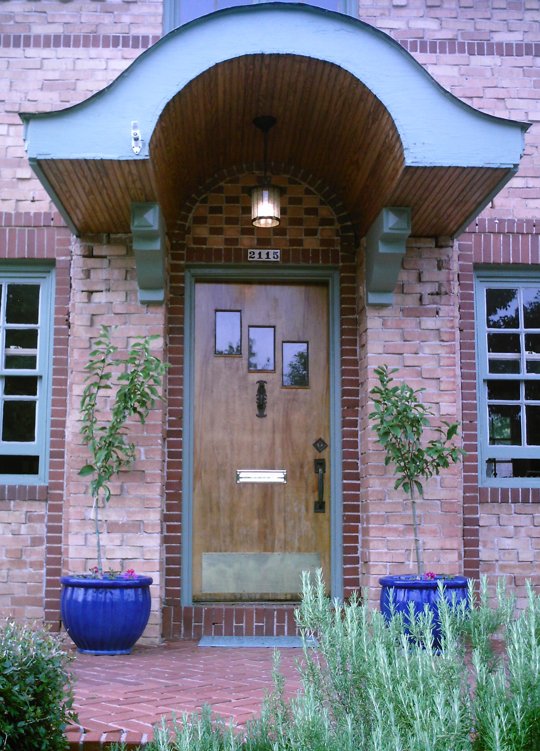
1926 Tulsa Home

I like that door, but not on this house (from the aforementioned AT article).

After de-prioritizing this little item for years, we finally picked and ordered a woodgrain-embossed fiberglass door (from Feather River via El Depot). Purists may howl, but the design is more era-friendly, and is similar to the original doors seen on this house’s siblings ’round the neighborhood. And fiberglass is a good insulator against the mighty Minnesota winter.

Because I am Miss Fussy MacFussypants about matching stain colors, it was my fabulous idea to order the door unfinished and then finish it to match existing trim. MY IDEA!

An unstained fiberglass door is a big slab of pastiness.

An unstained fiberglass door is a big slab of pastiness (via).

I almost repented many times during the process, but ultimately, it was worth it. Or at least I choose to believe that. If you also just cannot reconcile yourself to any of the perfectly lovely pre-finished colors available for your special-order fiberglass door…try again to reconcile yourself.

Still want to stain your own door? Okeydoke, I’ll start here with the prep work and basics, and then follow up next time with the actual staining technique. For both editions, note that this is a process for staining a wood-grained fiberglass door, and not for faux-finishing a flat door.

Before You Start:

  • Thing One: Don’t compromise. Buy the door you really want. You’re going to be spending a lot of time together.
  • Thing Two: Patience, grasshopper!

Supplies:

  • Gel stain in your chosen color or colors (I used Old Masters, which is the most uniformly recommended brand for this type of work; it worked well for me.)
  • High quality spar urethane
  • Lintless cloths
  • Painting pads
  • Disposable nitrile (blue) gloves
  • Mineral spirits
  • Eraser sponge
  • Other standard stuff – masking tape, drop cloths, sawhorses, podcasts, etc.

Pre-Stain Work:

1. Disassembly 

Assuming that you bought your door prehung, yank that puppy out of the prehung frame – CAREFULLY – by taking the hinges off the door itself. Take off all the knob/lock hardware if it came with any and keep all the hardware and fasteners together in a box or bag for later.

Set the door up for working. I started this project with the door laid down on (padded) sawhorses, but when the weather turned cold (and we needed the garage stall back), we moved it into the house and I worked on it upright. As with many activities, horizontal is easier! If you must work on the door upright, mask off the floor so you don’t cramp your style when finishing near the bottom.

Note that some folks recommend installing the door and staining it in place. That might work for you if (a) you are doing a light stain that will only need a couple of stain coats, (b) if you have a quick-dry spar urethane, and (c) you can have the door open in place for adequate dry time. For a deep finish, the drying time will be lengthy, and you don’t want uncured stain and weatherstripping to adhere to one another.

2.  Masking

Mask off any windows or inlay features of whatever type. Remove or mask weatherstripping. If you remove it, make sure you know how to put it back on. I masked mine because it was only on the bottom (most of the weatherstripping was on the frame). Mask precisely so that the tape doesn’t cover anything you want to stain — the raw fiberglass really stands out if you miss a spot, and it’s hard to blend (this is also a reason to remove hardware completely).
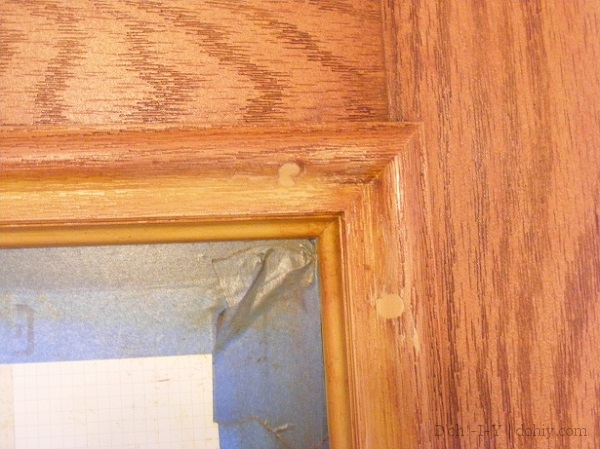
Take your time with the masking tape.

Take your time with the masking tape.

3. Cleaning

Take a lintless cloth (NOT a tack cloth, which can leave a residue) and wipe down the door with mineral spirits (UK: white spirit) to get any dirt or grime off the surface. Oh, by the way, this is a smelly job, so ventilate…but don’t ventilate so much that dust settles on your door.

Speaking of dust and the things that cause it: you cannot sand a fiberglass door. A sanded fiberglass door is a ruined door — the embossed woodgrain doesn’t carry through the material, and there’s no getting it smooth once you start to sand. It will just be all fiber-y (it’s right there in the name!). If there’s a problem with the door that makes you want to sand, then that’s a warranty issue.

THERE IS NO SANDING IN FIBERGLASS!

THERE IS NO SANDING IN FIBERGLASS!

Once you’ve done all that you are ready to STAIN THAT THING!

Oh, if only it were that easy. But the hard work is rewarding! See you next time with the nitty-gritty on staining.

Posted in American vs English, Decor, Windows & Doors | Tagged , , , | Leave a comment

Third Time’s the Crunchy Charm

Look at that comic book fellow, calmly eating candy like a Spaniard!

– Mr. Burns

We celebrated Bonfire Night chez D’oh tonight. The Kev prefers to call it Bonfire Night rather than Guy Fawkes because, thing one, that’s what his family calls it, and thing two, calling it Guy Fawkes in the states ends up with his reluctantly giving a history lesson. That’s fire-poking time he doesn’t get back, so Bonfire Night it is!

We invited our local nephews and a couple of neighbors and their kids for fire and fireworks. And FOOD.

Fireside Boys

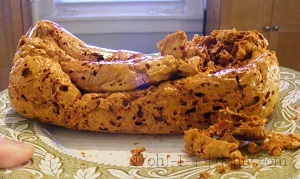
The Kev always mentions cinder toffee around Bonfire Night. I think the equivalent thing would be called honeycomb candy in the U.S. Or imagine a Bit o’ Honey, but crunchy. It’s basically pure sugar melted and then puffed up with baking soda (UK: bicarb). I finally made it today. Three times. Only once of which yielded anything edible.

Cinder Toffee Fail

Cinder toffee fail.

The first candy was tooooooo hot (it burned).

The second candy was tooooooo cold (not cooked enough).

The third time was…well, it was sweet and crunchy. I have nothing to compare it to! Kev said it was good, so yay.

Here’s a U.S.-based recipe if you want to try. It’s crunchy sweet goodness. Bet it would be awesome crumbled over ice cream!

Cinder Toffee (a/k/a Honeycomb Candy)

1 C white sugar

1/3 C dark corn syrup

1 T baking soda

Grease the heck out of an 8×8 cake pan and set aside (best option would be a silicon pan you could turn inside out; I did not use that, but wish I had!).

Pour the corn syrup into a bowl with steep sides. Add the sugar a bit at a time, stirring to incorporate it as you go. You should end up with a grainy golden goo.

Put the grainy golden goo into the bottom of a large sauce pan, trying to spread it evenly across the bottom of the pan. Cook at low-medium heat (err on the side of low) WITHOUT STIRRING. As it melts and bubbles, pick up the pan from time to time and swirl the goo a little bit to keep the heat distributed well. But do not stir it.

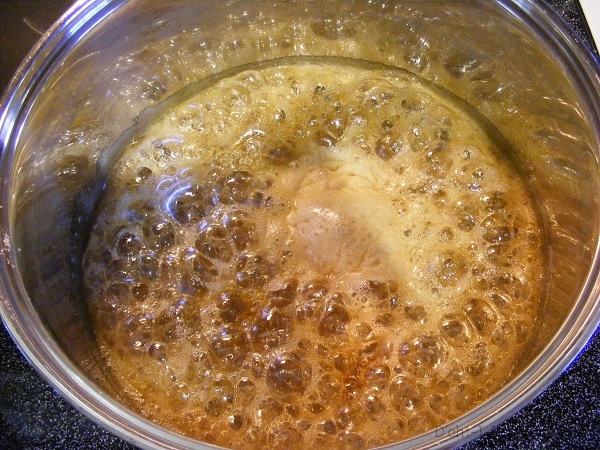
Boiling Sugar

The melted goo will become clear and bubble. After that point, keep cooking for about four minutes or until the goo is about root beer colored. Lighter than Coke, is what I’m trying to put across here. It goes from root beer to big burned mess in no time, so be watching.

At root beer stage, throw the baking soda in the pot and whisk it in. The goo will puff up alarmingly. Manhandle the puffed goo into the greased pan. Let it cool for a few hours and chip it out into a bowl.

Cinder Toffee

Distribute to children you don’t have to deal with at bedtime.

Fireside

Happy Bonfire Night!

Fireworks

Posted in American vs English, D'oh!, Family, Food & Drink | Tagged , , , | Leave a comment

Cat Cozy: The Un-D’oh-ing

Previously on D’oh, I made a cat cozy that the cat couldn’t get into.

Cat Bed Fail

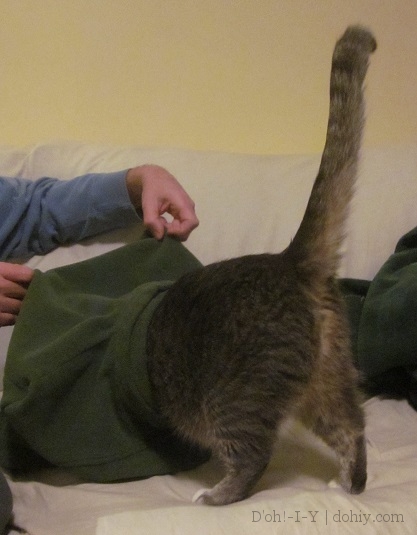
I remedied that miscalculation temporarily with a skirt hanger.

Cat Bed Kludge

This kludge worked, but is obviously pretty daft. But as promised, I have applied myself to the problem. Allow me to present Cat Bed II:

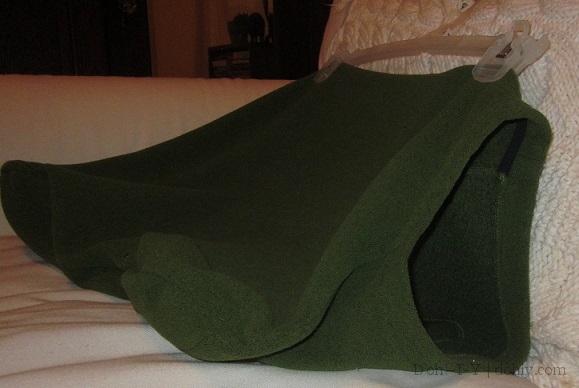
Looks a bit like an abandoned Halloween costume

Looks a bit like an abandoned Halloween costume

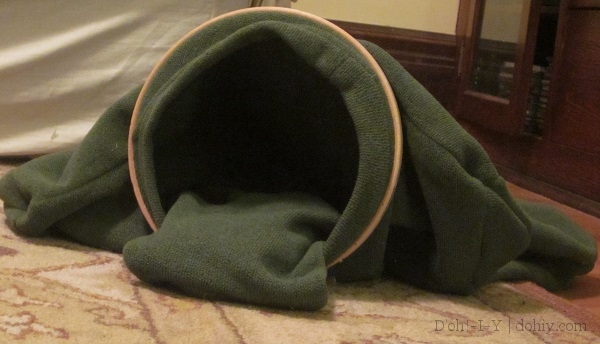
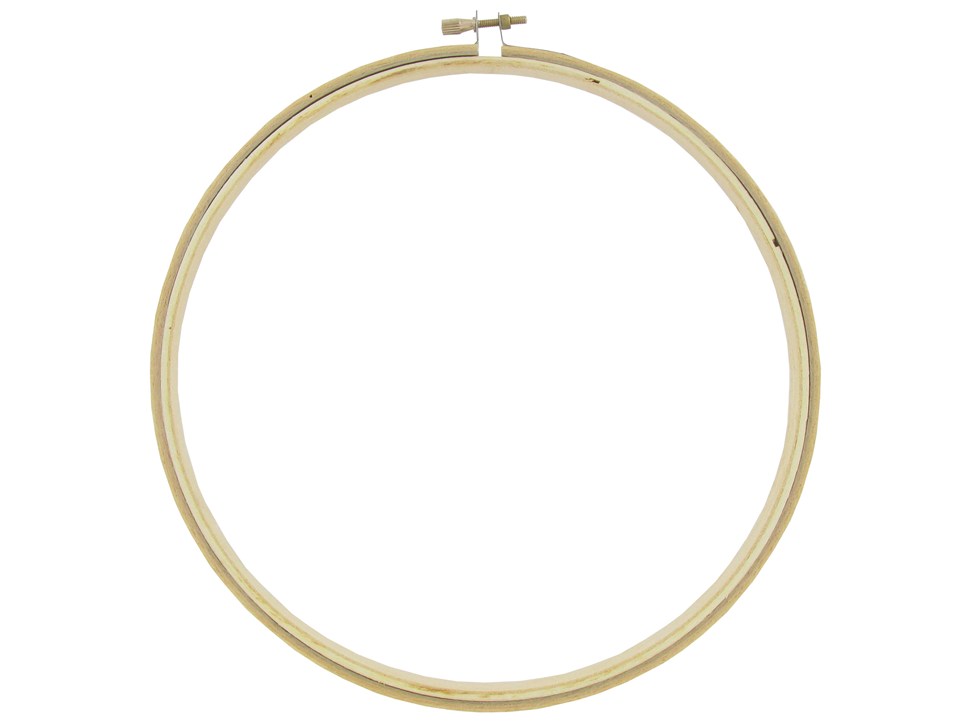
I picked up an eight-inch embroidery hoop (less than $2) and clamped it around the fabric just past the “neck” on the former sweatshirt.

8" embroidery hoop -- plastic (colors!) also available

8″ embroidery hoop — plastic (colors!) also available

To help hold it open a little bit, I made a bean bag with–guess what?–dry beans. I made an oblong bag out of one of the discarded sweatshirt sleeves and tacked it across the hoop with a few stitches. That weight was enough to give the hoop some vertical support so Mayya could stroll in whenever she liked.

And stroll she did.

"Stop taking my picture."

“Stop taking my picture.”

So the final instructions for a cat cozy (for cats who like to be in contact with or under a blanket):

1. Cut the sleeves off a big old sweatshirt. Flip it inside-out and sew closed the arm holes and the bottom.

2. Flip it right-side-out and clamp an embroidery hoop just past the neck. (The size of the neck and of the embroidery hoop will be driven by the size of the cat.)

3. Take one of the sleeves and sew one end closed. Fill it with a bag of dry beans and then close it up so the beans are bunched together, but loosely. You know, like a bean bag.

4. Set the beanbag halfway through the hoop opening, then put a couple of big loopy stitches through the underside so the bean bag is attached to the sweatshirt on either side of the embroidery hoop.

5. Place the whole ridiculous assembly in your cat’s way.

This is one of the sillier projects I’ve ever done! But it was fun, and the cat seems to enjoy it.

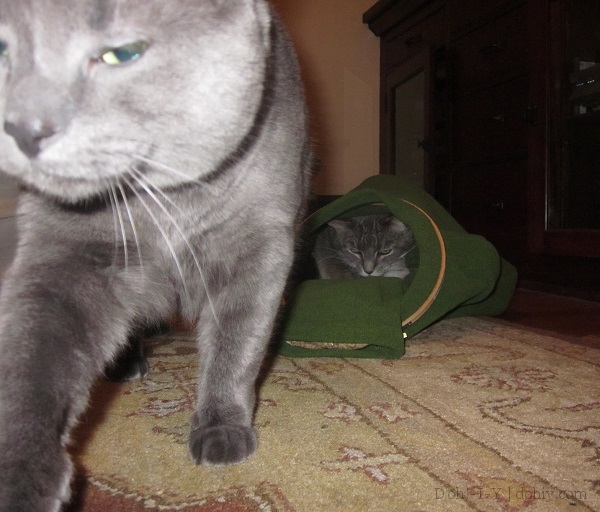
The other cat (who does not like to be swaddled) is not impressed (picture taken before I sewed up the beanbag).

The other cat (who does not like to be swaddled) is not impressed.

Done anything silly lately your own selves?

Posted in D'oh!, Decor | Tagged , , , , | 2 Comments

Where Do I Start With Pinterest?

See the pins, be the pins.

-Jacques

Pinterest. Is that place kind of addictive or what? I enjoy browsing and pinning very much, and I get a huge kick out of people pinning our projects. It’s a brilliant idea, and I’m all for the site’s creative team making a ton of money.

Having said that…some of the recurring projects do give me pause. This very funny Mental Floss video (nominally about “life hacks” but I think I’ve seen every one of them on Pinterest) scores 30 different ideas, including many big-time fails.

My favorite line: “The failiest pass of all time!”

Here are three frequently pinned projects that tend to stop me in my tracks when I’m looking at my Pinterest feed. They all work just fine, but…

1.  Electrical Outlet Trick

Sometimes drywalling or paneling can thicken a wall surface, which can mean that existing electrical boxes stop short of the new wall surface. Pinterest users suggest stringing a nut on the fastening screws between the box and the receptacle/switch to bring said receptacle/switch out to the surface of the wall. This does work, but it means that the receptacle or the switch is now partway out of its box behind the cover plate.

box-extender-packageNow, ok, this is unlikely to cause a fire or to shock anyone, but it could. There’s a reason that the outlet is contained in a box. This idea defeats the keep-your-electrical-connections-enclosed aspect of building/fire codes and common sense. Plus, this hack is not substantially easier than the actual fix. All you need is a box extender and about two minutes.

Measure the boxes you want to extend and drop in at the hardware store. Chances are, your boxes are all the same size and you can pick up a pack of extenders. Either way, they are cheap. Then you just turn off the circuit, unscrew the receptacle or switch, stick the extender in and fasten everything back together. Here’s a nice man to show you how easy it is:

This is one of those times it’s just as easy (but safer) to do it right.

2.  Salt to Kill Weeds

This works pretty well initially, but there’s a reason that ancient histories say that armies salted the earth to punish their enemies. Salt is very soluble in water, so any weed that gets salted is not necessarily the end of it. Salt applied to a plant can hurt desirable plants as water moves on and through the soil.

When it rains, it dissolves and drifts onto other plants.

When it rains, it dissolves and drifts onto other plants.

The other thing here is that weeds are successful because they can regenerate well from seeds or roots. Salt’s solubility also means that it’s not a long-term solution for weeds. Once the salt is gone, weeds can come back.

The best solution is pulling the entire weed, but that’s not often practical. Here’s where modern corporate research can help — glyphosate doesn’t travel like salt because it’s designed to dissipate in the environment without harming other organisms, which is why it’s favored even by university extension programs. Plus, the amount of salt some pinners recommend would cost more than weed killer!

3.  Pallets Repurposed for EVERYTHING

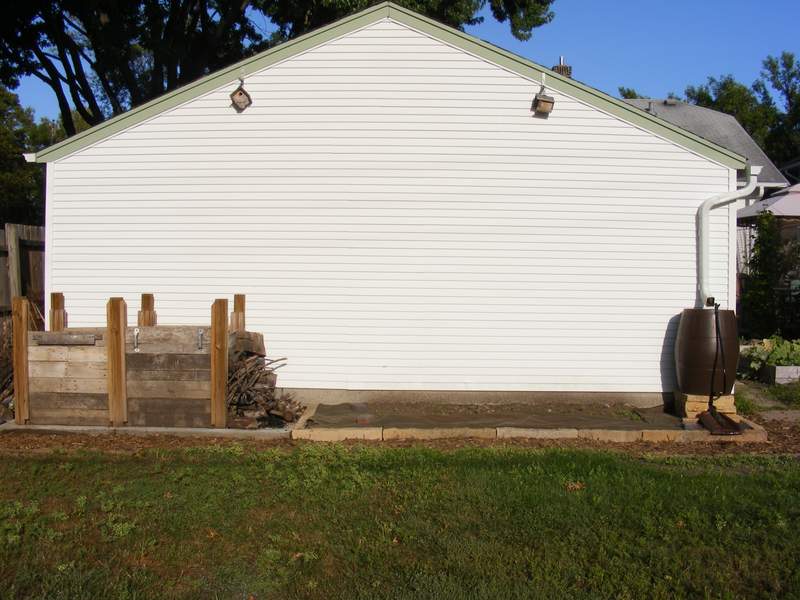
We have done a little pallet repurposing in our day. Our compost enclosures are made from pallets.

It needs...something.

Compost enclosures from pallets.

But I can’t bring myself to take pallets indoors. Earlier in my working life, I worked for a freight company, so I’ve seen a lot of pallets taking abuse. Besides being made of splintery, rough wood that wasn’t good enough to be low-grade lumber, pallets have some other extra-special features.

  • Pallets are often treated with pesticides to prevent the spread of invasive species. Since pallets are reused as many times as possible, they may have been sprayed many times with all manner of noxious stuff — regardless of what they were used to transport right before they made their way into the crafting world.
  • Despite the chemicals, pallets often harbor lots of bugs, especially if they’ve been in service for a while. Food-service pallets that might be less likely to be chemically treated are particularly spidery. Pallets can also harbor bacteria and molds.
  • Don’t read this bulletpoint if you have pallets in your house already! The stuff I’ve listed has been said before, so there are a lot of tips out there on how to pick the right pallets. Even if you can avoid the chemicals, though, that doesn’t mean a pallet hasn’t been sprayed. I’ll just say it: they get peed on. And not just by passing dogs. Freight is moved over long distances in big areas with big machinery by lots of folks who are a long way away from the restroom.

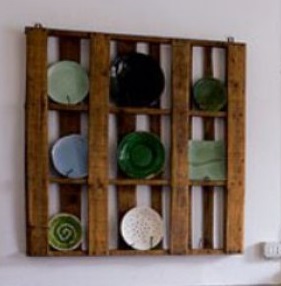
If you’re cool with all that, then there are some cute projects out there. But since I can’t unsee the things I’ve seen, I’m probably not going do anything like this:

Dishes stored on a pallet (via)

Dishes stored on a pallet (via)

I can’t look at that without thinking about that last item in my list! There’s other reclaimable wood out there with fewer issues.

I love the spirit of Pinterest, so I would not want to be all, “YOU’RE DOING IT WRONG!” there or on anyone’s blog. I’m sure there are many things I blog about that cause readers to smack their foreheads in frustration. As Mental Floss, Pinstrosity and others point out, not every project is a great idea. The three things highlighted here all work, but a little more info might make a good project a huge WIN.

Posted in D'oh!, Decor, Electrical, Yard & Garden | Tagged , , | Leave a comment

Salvage Shops: Art & Architecture, Minneapolis

My cans! My precious antique cans!

– Can collector, The Simpsons

When I had my doorknob snafu last week, the Kev and I packed up the car and headed over to Art & Architecture in Minneapolis.

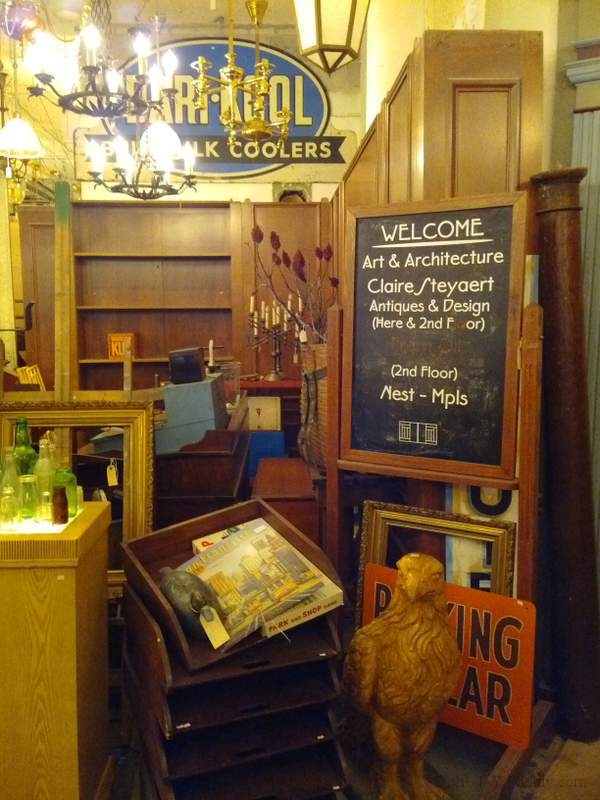
Art and Arc

Art & Architecture, 3338 University Ave. S.E., Minneapolis

Art & Architecture is one of our favorite salvage places. It’s a good source for door hardware (the aforementioned knob set), cabinet knobs (glass pulls for the vanity makeover) and switch plates (many replacement covers). But they also have doors and windows and mantels and lighting and….

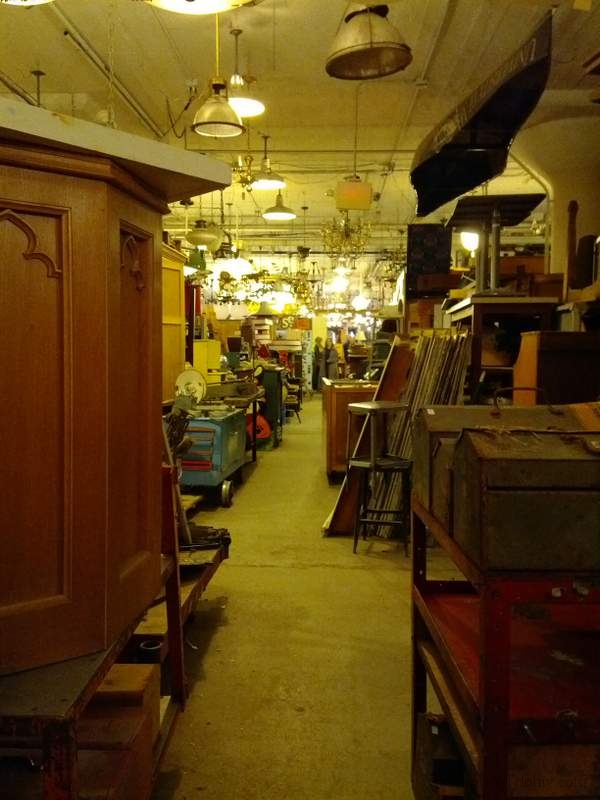
This Salvage Place Goes on Forever

…more lighting. Also a pulpit and a canoe.

Like a lot of salvage places, it’s something of a hot mess. There aren’t really departments, and few items have price tags. One time I was wandering through the door storage area when I tripped and fell into another room (still part of Art & Arc — not Narnia or anything).

Antiques and Salvage

Fortunately, the staff are always interested in what you are looking for and will help you find your way.

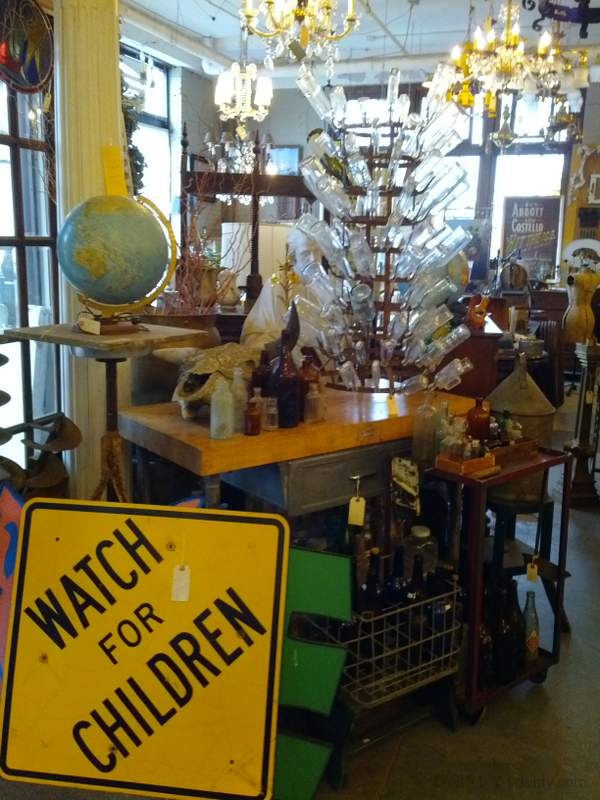
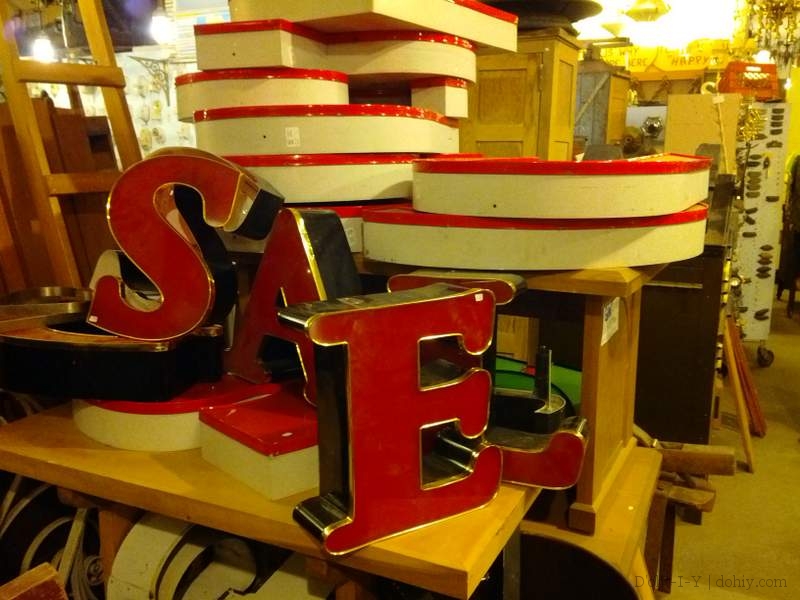
Check it out -- large letters. I believe that's on trend, as the kids say.

Large letters. I believe that’s “on trend”, as the kids say.

The stuff we are usually shopping for is in the warehouse-y back end of the store. But the building also has a couple of antique dealers, and the shop entrance is full of statement items and great vignettes.

Art and Architecture Vignette

I find the stuff nearer the front somewhat pricey, but it’s not out of line for what you’d find at an antique dealer, and the stuff is pretty great. (I also suspect these prices are not etched in stone.) The more “commoditized” stuff — hardware, light shades, doors — is generally priced in line with other salvage places in town, or maybe slightly higher.

The place itself is conveniently located — about smack-dab in the middle of the whole conurbation — and I just recently figured out that they have parking in the back. I’d been parking down the way and hiking in all these years! They are only open until 5:00 on weekdays but they are open both Saturday and Sunday until 5:00 as well, and that’s usually when we hit them.

But I’d be lying like a rug if I didn’t confess one thing:

JWO  Cupcake

Cupcake! (via)

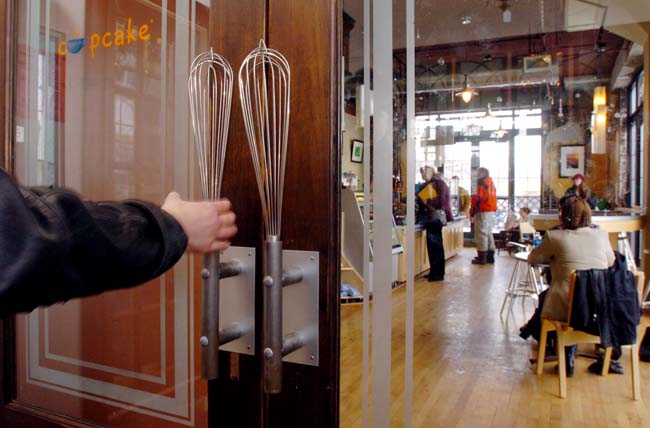
Pastry is one of the big reasons I like the place. The award-winning Cupcake bakery is across the lobby from Art & Architecture, which makes it a perfect Saturday afternoon salvage destination. A little browsing, a little coffee and cake — it’s a nice way to spend a lazy day.

Posted in Decor, Salvage | Tagged , , , | Leave a comment

Installing a Wooden Porch Door: The Sawing and Chiseling Edition

Ned: You’re using my table saw to violate a court order?
Homer: Well, we tried all those other tools.

– The Simpsons

We’re putting a new porch door on the front of the house. Stacey mentioned this when she was writing about our plans for the porch, and I wrote about picking up the door. It’s a wooden combination storm door, which will replace an old vinyl-clad model.

The current porch door swings outwards, and is quite effective at brushing trick-or-treaters back off the top step. To avert this kind of Halloween chaos, the new door will swing inwards. The new door should also fit within the existing frame, because that’s just easier.

The door was almost ½” wider than the opening, so we cut ¼” off both sides with the table saw. Now it fits in the frame.

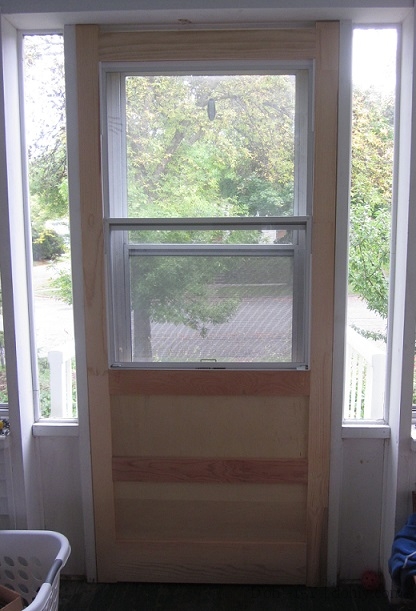
Tatty door is in place on the other side of the frame.

Yay, it fits!

Now I can start hanging the door. The main consideration when hanging the door was to make sure there was enough clearance at the bottom for a mat.

The floor slopes away from the house. This was for drainage back when the porch was unglazed. (Yes, that’s right, our porch is now covered in frosting! No it’s not. It has windows with glass in them, and that’s glazing where I come from.) When the door is open, the gap under the door is largest at the hanging end and smallest at the up-slope, swinging end. The point of smallest clearance is the one of greatest concern. This meant trimming the top of the door to allow for a large enough gap at the bottom. For our installation, we ended up taking off about ¾”.

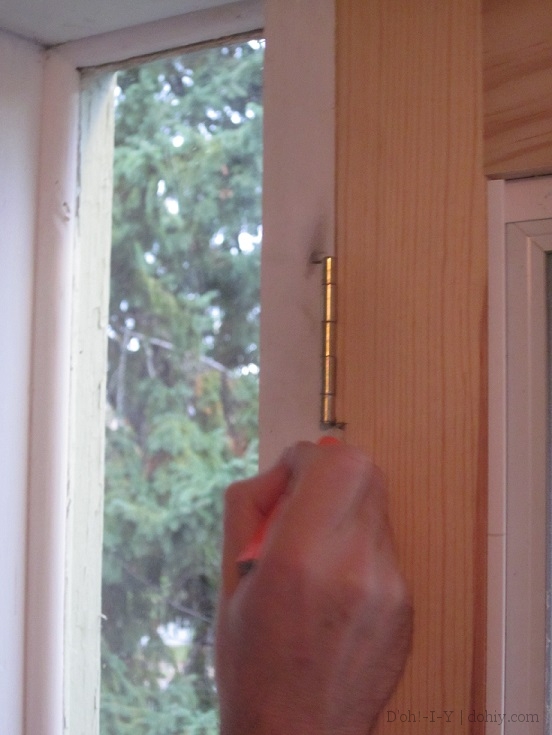
With the door trimmed and in place, I marked the position of the hinges on both door and frame. The distances from the top and bottom of the door to the respective hinges should not be equal, because it won’t look right. The distance from the bottom of the door to the bottom hinge should be bigger than that distance at the top. To get an idea where to place hinges, you can measure one of your own interior doors and make your hinges match.

marking hinge on frame and door

Marking a hinge on the frame and the door.

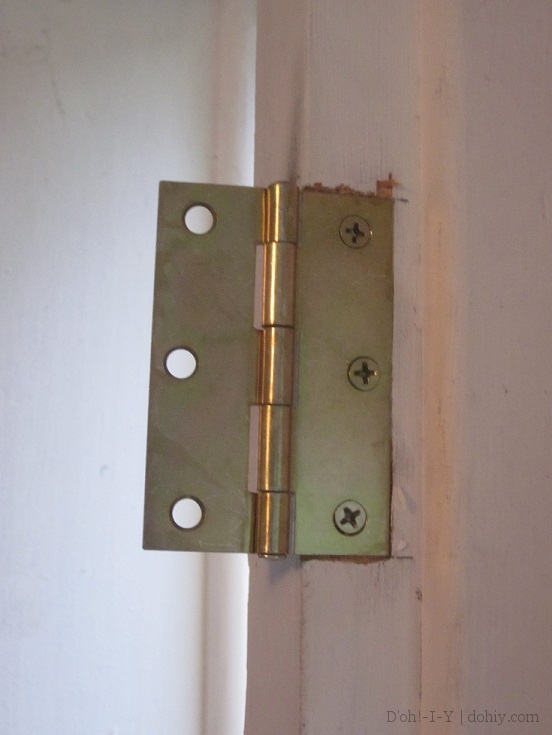
With the hinge positions marked, I used a chisel to cut mortises for the hinges on the frame. You want it to be just deep enough for the hinge leaf to be flat with the wood. If you go too deep, you can shim it, but try not to go too deep.

Once the hinge side was chiseled properly, I screwed the hinges to the frame and popped the door back in to recheck the hinge marks on the door. Then, I cut mortises for the hinges on the door and attached the hinges. Once the hinges were reattached to the frame, the door was hung.

Hinge in Frame

Hinge attached to door frame.

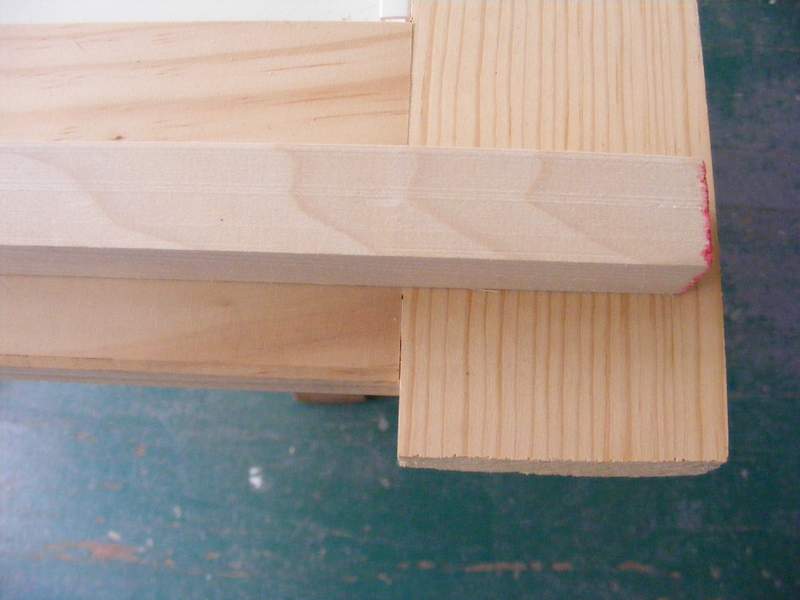
Now to fill in that gap at the top of the door. The gap measured 1″ x 5/8″, so we bought a 1″ square dowel and ripped it down to 5/8″ on the table saw.

1" dowel for filling in the top of the door.

1″ dowel for filling in the top of the door.

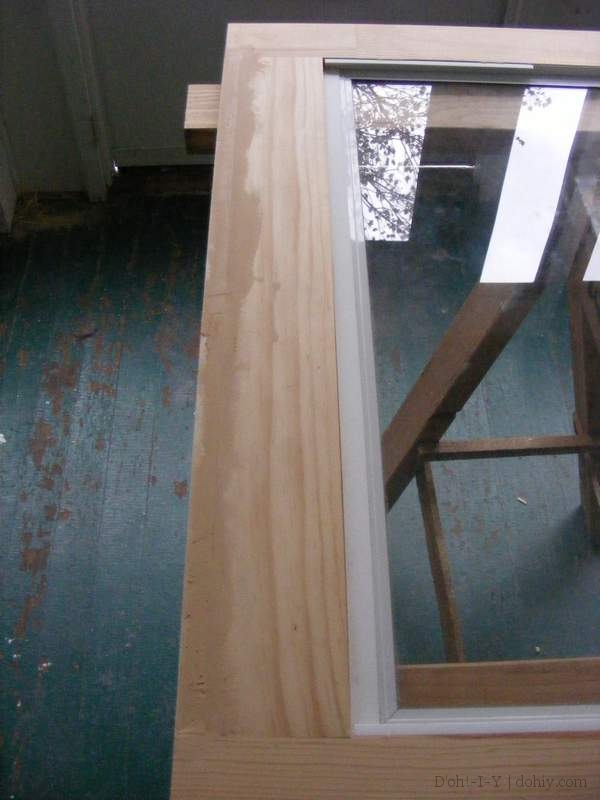
The brad nailer came in handy for attaching the strip to the top of the door. Then the joints were filled with wood filler.

Top of door filled in

Top of door filled in

With the top of the door fixed, I set about fitting the mail slot (or letter box for UK readers).

There was a bit of a problem when it came to deciding where to put the mail slot. The frame of the door is 1″ thick, solid wood, but the panels are ¼” and made of some kind of composite. Our first thought was to put the mail slot on a cross member, but it wasn’t wide enough. It has to go in the top panel. But the mail slot attaches with screws into the door, and the thin, composite material wouldn’t hold screws.

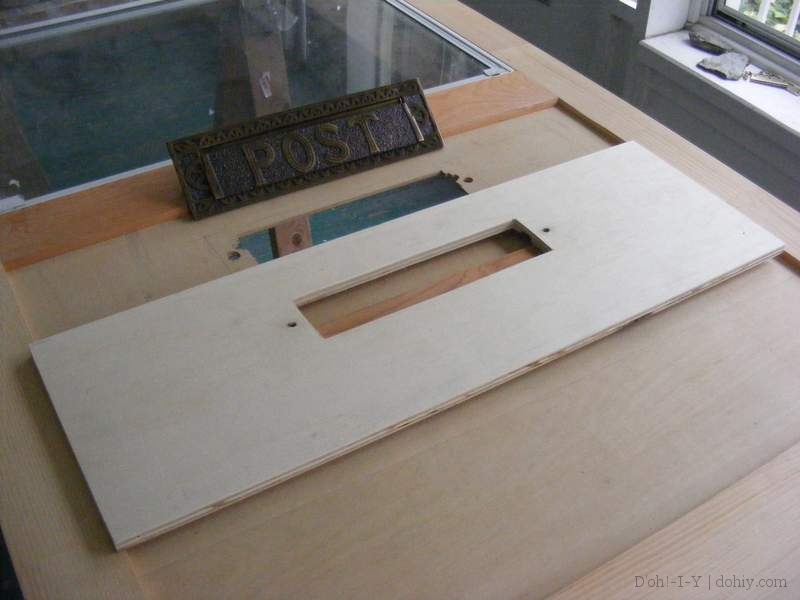
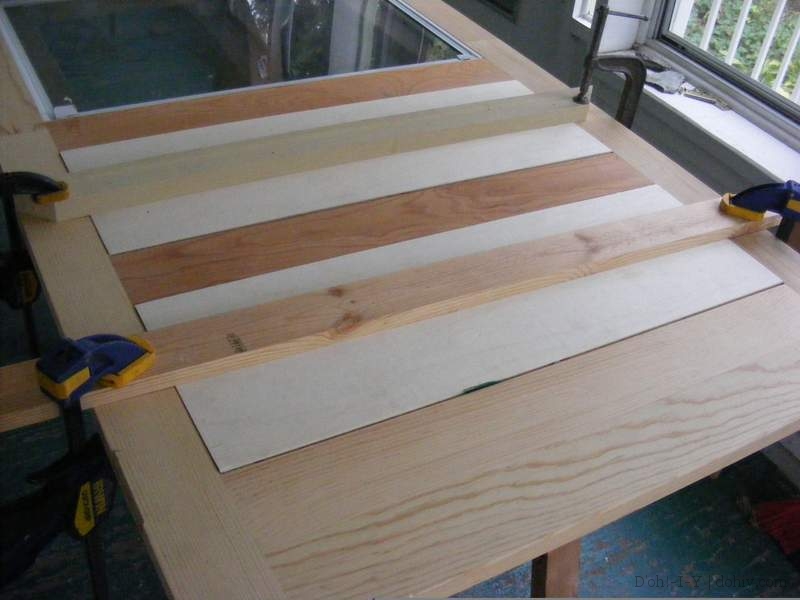
The answer we came up with was to glue pieces of ½” plywood inside the panels on the interior side of the door. This leaves the paneling intact on the exterior side. Now, the mail slot screws will have something to get their teeth into. Obviously, the gap for the mail slot has to go through both layers.

Marking out for the mail slot.

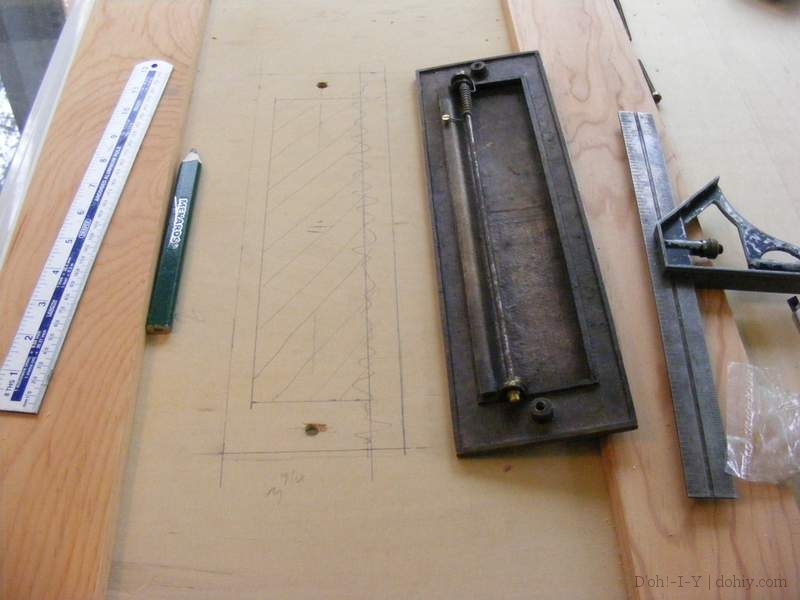
Marking out for the mail slot.

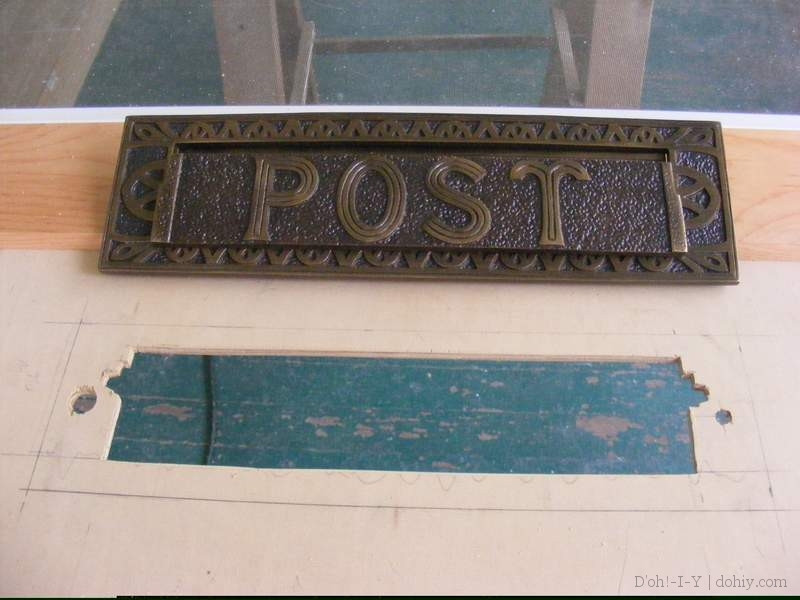
As well as cutting a gap the size and shape of the opening in the hardware, it is also necessary for this model to make cutouts where the hinge mechanism sticks out. (Most mail slots come with a template, but not this one.)

Hole cut for letter box.

Hole cut for letter box.

Mail slot holes all done.

Mail slot holes all done.

Once the holes were the right size I liberally applied glue to the door and the pieces of plywood and stuck them in. Before the glue set, I attached the mail slot with the studs provided to ensure the holes were lined up correctly. Clamps held both panels in place until set.

Plywood panels glued and clamped in place.

Plywood panels glued and clamped in place.

So there, the hinges, mail slot and panels are fitted. Now we have to attach the rest of the hardware (locks and door knobs and weatherstripping), then sand, prime and paint the door. I wonder if it’ll get done by Halloween, or if we’ll be sweeping toddlers off our top step for one last year.

Posted in American vs English, Construction, D'oh!, Porch, Windows & Doors | Tagged , , | Leave a comment

When Life Closes a Door, Go Shopping for Door Knobs

I wish they taught shopping in school!

– Malibu Stacy

A while back, I purchased some vintage door knobs for the porch door project (a/k/a Porch Fest 2013). And I was happy about it! Ignorance was bliss — once I started working with the knobs, I found I couldn’t use them, and I couldn’t improvise any sort of doofus solution. So I ended up buying more knobs. D’oh!

If you are shopping for old door knobs to use in your home, here’s how to make sure the process goes smoother for you.

First, here’s a little terminology:

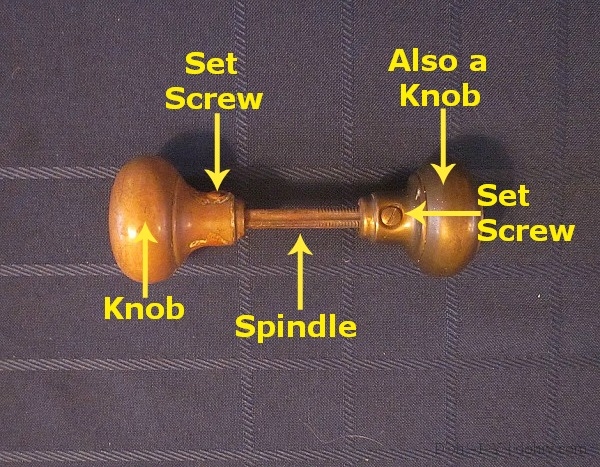
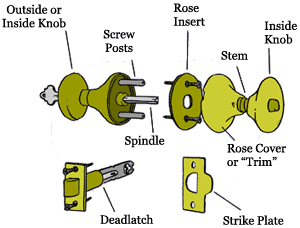
Antique Doorknob Diagram

Obviously there are a couple of knobs. The knobs are connected by a threaded spindle. (Some vintage sellers call this a “shaft” or a “rod” if they don’t usually sell doorknobs.) The center part of the spindle is about a quarter-inch square. The knobs screw onto the spindle, and then are further secured by a set screw that threads through a hole on the side of the knob and snugs up to the spindle. This stops the knob unscrewing itself every time someone turns it.

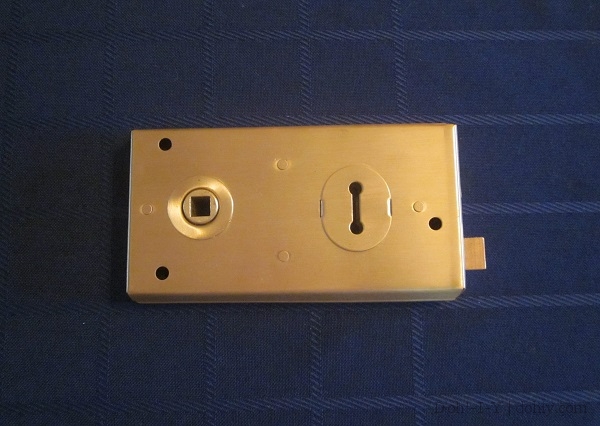
Modern doorknobs and latches are built a little differently, but there’s one basic similarity: the doorknob turns a rod with a specific shape in a matching hole to draw back the latch to release. Here’s the rim lock that we’re using for the porch door, which shows the old-school square hole very clearly.

Rim Lock

Modern sets often have a square spindle/hole, but may use another hard-angled shape.

Note that this does not mean that you can just replace a modern doorknob with a vintage set! Here’s a diagram of a modern door knob and latch system (via Lorraine’s Leanings).

DoorknobDiagram

Alternatively, some knob/latch models use a cylinder system.

There’s a lot more going on in there than with the old knobs, largely because the locking function is now incorporated into the knob rather than in a separate deadbolt. But fear not! There are conversion kits available so you could use a vintage knob set on a door already drilled for a modern door knob (this ebay shop is a good source). If you’ve used one, I’d love to hear how they work.

Ok, so far so good. What could go wrong?! Plenty.

1.  Missing Set Screw

The door knobs I bought originally had both knobs and the matching spindle. One knob had the set screw and one did not. I figured set screws were a standard thing. But I found out…

SET SCREWS ARE NOT A STANDARD THING.

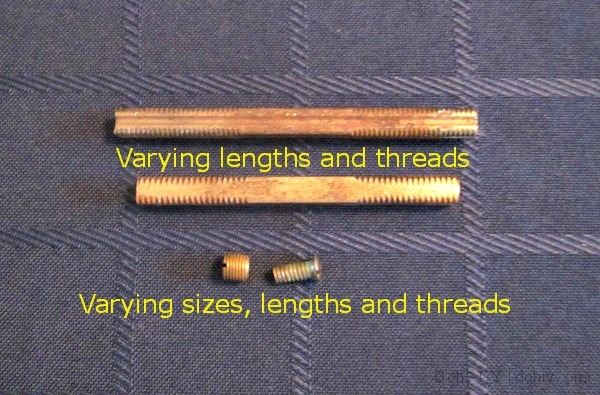
Set screws come in a variety of widths and lengths. Some have heads, while others have the head cut into the top of the thread. The thread can vary — some have 24 threads per inch (TPI), others more or less. Could be in inches, could be metric.

Door Knob Spindles and Set Screws

I went to a few places looking for a replacement, and ended up at Seven Corners Hardware. If you work on old houses in Minneapolis/St. Paul, you’ve probably been to Seven Corners. If Seven Corners doesn’t have it, it just about can’t be had.

They didn’t have it.

Rule 1 of buying old door knobs you actually want to use: Make sure that both set screws are intact.

2.  Mismatched Spindle

No set screw, no problem! I’d simply hoark a doorknob off the back of one of the attic doors and screw the unusable knob on there instead. We never use the door knob on the back side of the door, so it won’t need a set screw, and I can use the unused knob and its set screw for the other side of the porch door. But guess what?

SPINDLES ARE NOT A STANDARD THING.

Spindles can be different lengths (you can cut down a long one, but not add to one that’s too short for a thick door). They can have different threads (usually 16 or 20 TPI). Sometimes, the set screw is designed to drop into a hole in the spindle (yikes). And usually the square part is 1/4″ but it could be 5/16″. Which will probably work, but at this point, I wouldn’t take anything for granted.

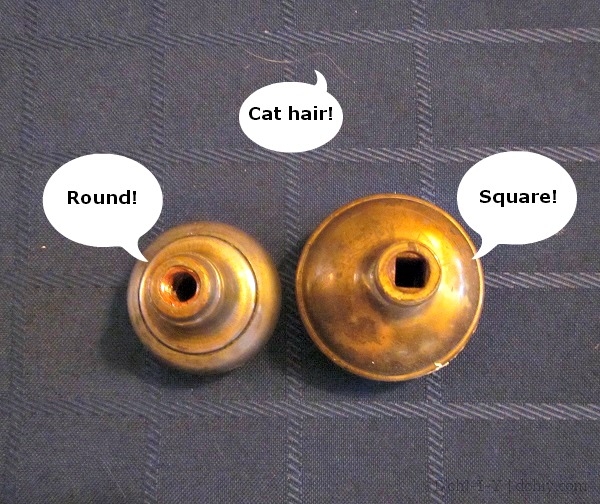
If you flip your knob (not a euphemism!), you may see a square or a round hole for the spindle. The square-holed knobs tend to be older; they are still threaded inside, no worries, but they are likely to be a different thread than the later, round-holed knobs.

Vintage Doorknob Square and Round Connections

The one on the left is the one I bought for the porch door — it’s from the mid-1930s or later. The one on the right is the one I stole from the attic door — it’s from 1922 or earlier.

When checking to see if a knob will work on a spindle, screw the knob on all the way. A thread that’s close may allow you to start screwing the knob on, but don’t be fooled — you need to keep going to make sure that it’s really a fit.

Rule 2: Buy a matched set of knobs already on a spindle — or, if you just need a replacement knob (or spindle), take the knob(s) and/or the spindle with you when shopping.

3. Accessories are Weird Sizes, Too

If nothing is standard, then it follows that…

ACCESSORIES AREN’T STANDARD EITHER.

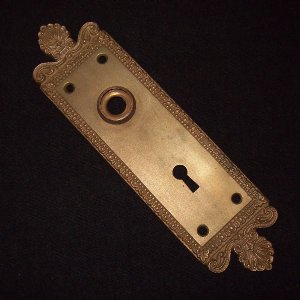
What kind of accessories? Well, there are roses (a/k/a rosettes) that go between the knob and the door and keyhole escutcheons, for instance.

Vintage Door Escutcheons

This isn’t such a problem as the stuff that makes the latch actually work, but it’s rather useful for being able to use your dang key. And rosettes look a bit ridiculous rattling around the spindle. It’s more important, though, if you have a whole plate for both things.

If the keyhole in the plate is a half-inch above the actual keyhole in the door, then you’re not going to have a good time. It’s another thing to measure before shopping.

Rule 3: Know all necessary relative measurements.

4. Knob Size

Knob size doesn’t matter! Really! Except when it does. This is the only thing that wasn’t an issue for us, but it’s worth pointing out that door knobs can vary from 1.5 inches to 2.5 or more in diameter. For our rim lock, I wanted a smaller knob so that it would be easy to access the lock, but a bigger one would not have blocked it. You might also want to know how far out the knob juts from the door if you don’t have a lot of wall clearance. Just something to be aware of.

Rule 4: Know the measure of your desired knob.

Hopefully, these rules are a help to those of you in the operational door knob market. But here’s a thing I learned when researching for this post: people collect door knobs! And why not? They can be really beautiful, and they certainly are well-made. Plus, you don’t have to worry about all this fitting and measuring business if you are just collecting them to look pretty! If you are so inclined, check out the Antique Doorknob Collectors of America site, which has all sort of info.

Wow, it would be nice to shop for a doorknob because it’s pretty rather than because you need it to work!

Posted in D'oh!, Porch, Repair & Maintenance, Salvage, Windows & Doors | Tagged , , , , | 4 Comments

You Should Seek Professional Help: Interior Designers (Part 3)

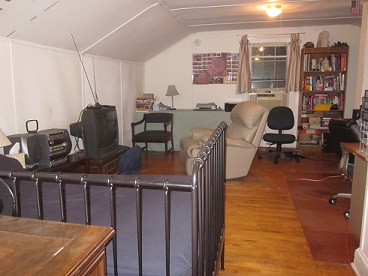
Wednesday! Wednesday was the day! We met with our interior designer about the plans for the upstairs. Just to recap, our upstairs space is one large, partially finished room with inadequate electrical service and little light. As much as it pains me, here’s a picture:

Loft

Isn’t it stylish?!?

We previously discussed the advantages of using an interior designer and how to get the most out of design work. In this latter category, we set specific goals for the space:

  1. A master suite with at least a half-bath.
  2. An office space that would fit both of us.
  3. Windows to provide light and sightlines.

At our earlier meeting, we told our designer we were open to adding a dormer if needed to achieve our goals. But after measuring, the designer said she thought that we could do everything we wanted without building out. The Kev said my face just fell when she said that, which surprised me — not building out would be a far cheaper option, and I am known to be careful with a dollar. But I’d been pinning dormers and balconies and expanding the space seemed so exciting. When the designer called to make the appointment, she said that she had two plans; neither involved a dormer, but there was more floorspace. I was intrigued!

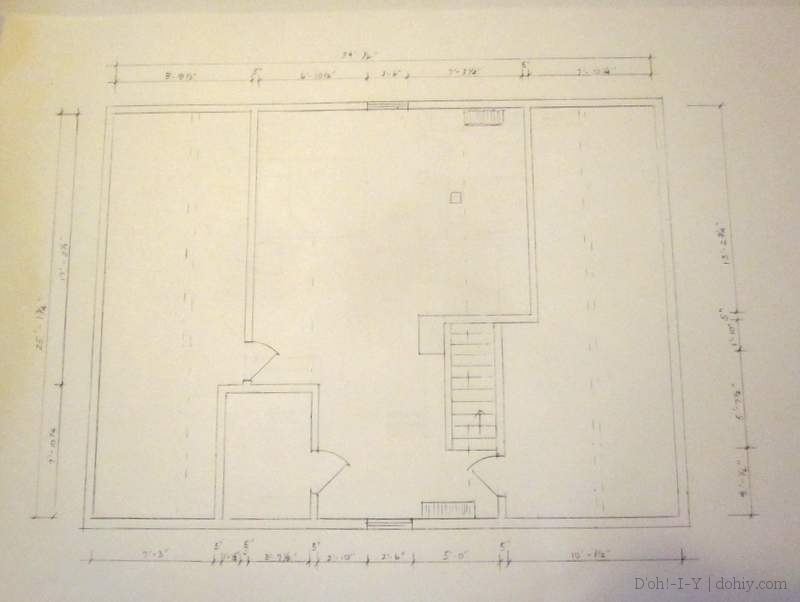
The designer brought a whole sheaf of drawings. I was going to scan them, but they were too big for our scanner, so I just took pictures to give the general idea. Here’s the base drawing of the space as it exists.

Plan blank

The peak of the roof runs top to bottom here, so there’s attic space on the left and the right. Once you’ve got that, you can see we’re talking about a long room running the width of the house with two little windows in either end.

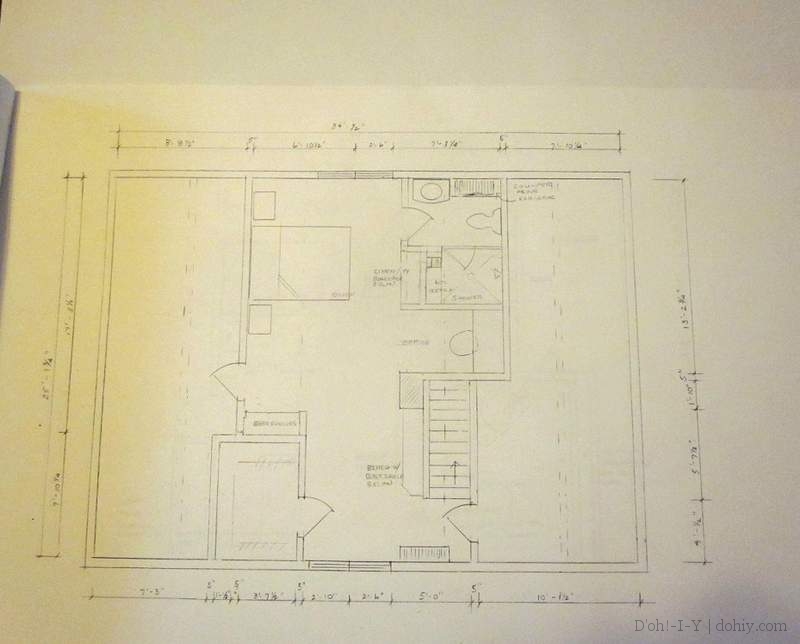
The first plan stayed within this footprint and even kept the closet intact. The windows were doubled, and one attic access door moved about a meter. There’s a bathroom with shower and an office alcove.

The simple plan

The simple plan

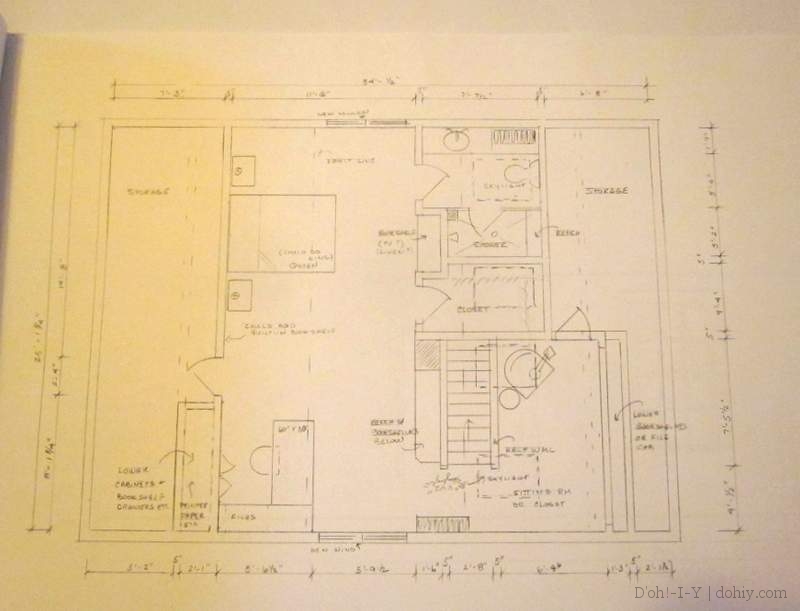
The next version was more complex, and involved taking some floorspace from the attic around the edges and at the top of the stairs.

The complex plan

The complex plan

This plan features:

  • A reading nook at the top of the stairs with bookcases nestled into the wall.
  • An office where the closet currently is (opposite the reading corner).
  • Office storage built into the knee-walls to maximize space.
  • A bathroom with shower.
  • A walk-in closet and a linen cupboard (across from the bed).
  • A built-in bench on the office side of the stair railing.
  • A series of four skylights along the backside of the roof (indicated with dotted squares on the right side of the plan — there’s one right on top of the toilet, for instance).

That is a LOT of stuff to put into this space, and it’s everything we asked the designer to do. And we had a really pleasant meeting with her to talk through all the options — she also had sample pictures and product ideas and all sorts of good stuff.

But…as I pored over the plans after the meeting, I found myself feeling a little disappointed that there wasn’t some sort of magical breakthrough for the space. I mean, WHERE ARE MY FRICKING MINARETS, PEOPLE!? My flying monkey aviary?! And there is NO WALK-IN HUMIDOR anywhere in this plan!! And around then, I realized I was not simply cranky but actually unwell and in need of large pills.

spongebob

“And not before time,” quoth the Kev.

Twenty-four hours later, the drugs had kicked in (wooo!) and I could look at the plan and the process more objectively. When we did our kitchen, we were much less experienced, and the door-moving revelation hit us like a bolt from the proverbial blue. By contrast, we’ve been playing around with ideas for renovating the upstairs for over a decade, so there was nothing in these plans that we hadn’t considered in some form along the way. A bolt from the blue moment just was not likely, or even necessary.

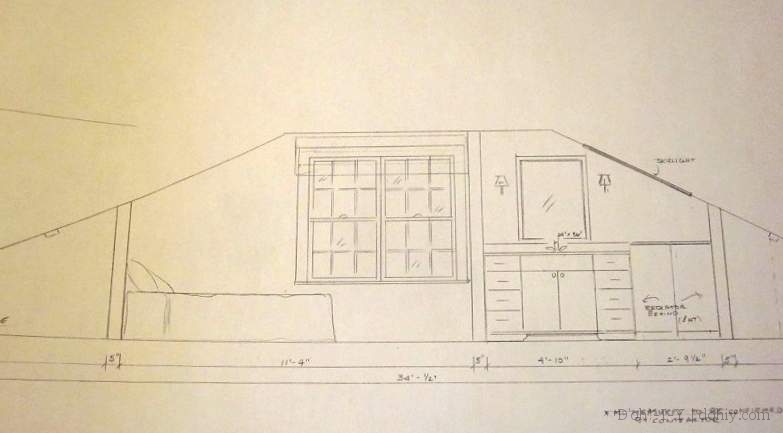
South wall elevation

South wall elevation with lots of stuff happening

This is not a huge space, and there are a range of constraints — the stairs, the existing plumbing vents, the chimney, the roofline, our not-wealthiness. And our wishlist was pretty long to cram into among all that. The designer did a valiant job corralling everything so nicely.

We prefer the complex plan. Specifically:

  • I love the linen closet/built-in idea (opposite the bed). Nice use of a little sliver of space.
  • The closet makes more sense to me back-to-back with the bathroom, as it is in this version.
  • The office space is better further away (no office right in the bedroom, please!).
  • I like the even spacing of the skylights (because I like symmetry).
  • We like the reading corner concept; it will open up the feeling of that end of the space.
  • The double windows are definitely going to be in the final mix.
  • The sunken-into-the-wall office storage makes good sense.
  • We like the built-in bench idea — we’d thought of seating there, but not built-in. Could look original if done right.

Where does that leave us with regard to the design phase of the project? After presenting and discussing the plan, the designer said we should mull it over and give her a call with any questions. Once we’ve talked it through thoroughly, she could make changes if the drawings helped us refine our thinking. We have the plans spread out on the dining room table, and we each flip through them from time to time.  While we like the plan, our initial feeling is that perhaps we’ve demanded too much of the available space. But we’ll let it all percolate for at least a week before assembling our questions and deciding whether to have the plans updated in any way.

Ok, time for my next pill — while I do that, let us know what you think of the plans. Are we trying to squeeze too much in?

Posted in Construction, Organization, Walls & Floors, Windows & Doors | Tagged , , , , | Leave a comment

Switching It Up

Parenting Instructor: Making a happy home isn’t like flipping on a light switch.
Cletus: Light switch??

 – The Simpsons

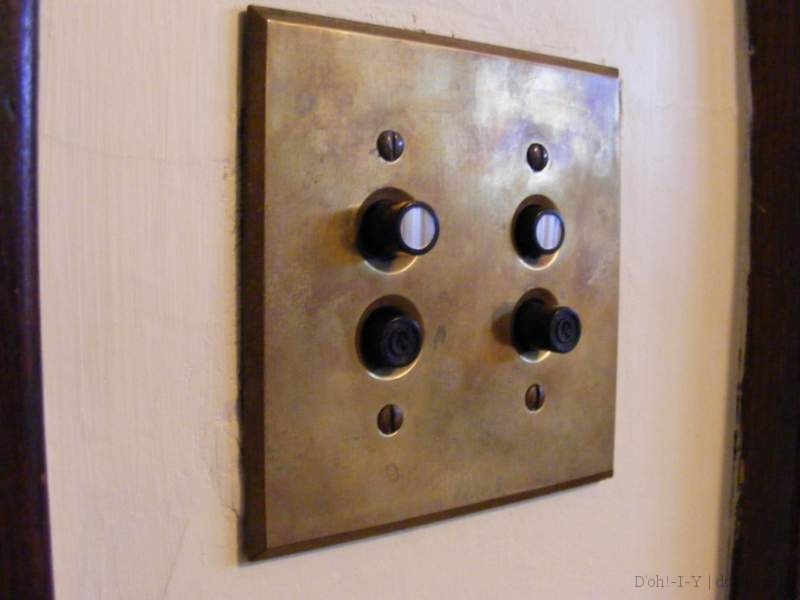
Originally, there weren’t a whole lot of light switches (or, indeed, electrical outlets) in this house. Most of the lights would have been on pullchains, and the switches are generally retrofitted. But our living room had a switch that was original in its entirety, from the wiring to the plate.

DSCF5679

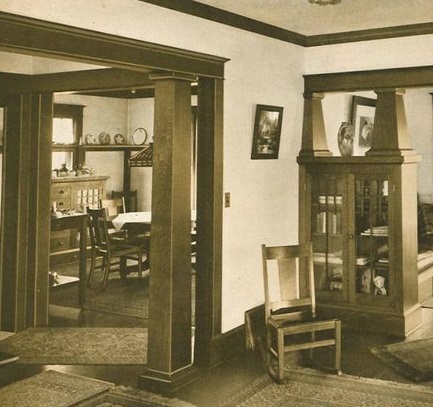
Push button switches were standard in the 1920s, and this plate contained one that was still operating (for the porch light) and one that was jammed. (The light for the jammed switch had been removed and the live wires plastered over, but that’s a story for another time.)

Push button light switch on the wall (detail from an ad for ready-to-install woodwork)

Push button light switch on the wall (detail from an ad for ready-to-install woodwork)

When we rewired the porch and living room lights, I wanted to keep the brass plate for these switches and the outlet plate below it on the wall. I liked the patina, and given some of the stupid things that had been done to the house over the years, the fact that the plates were still there was a bit of a triumph.

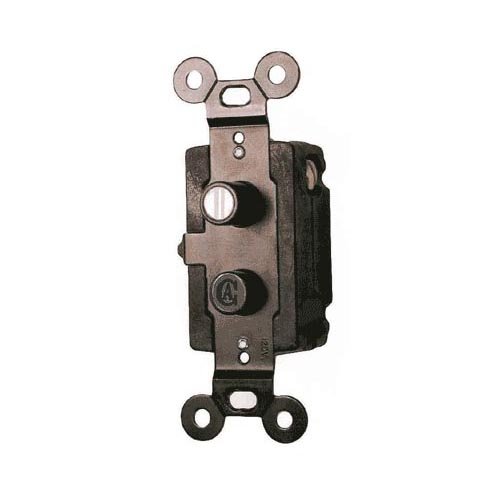
But how to use a push-button switch plate in a post-push-button world? Well, there’s a whole reproduction-hardware economy built around first-world problems like these! We replaced the old push buttons with these from Classic Accents.

Classic Accents Push Button ReproductionThese don’t have quite the operational “CLUNK” of the original, but they look virtually identical — and hey, they’re UL-listed, so they turn the lights on and off safely. Bonus! I’ve also seen rebuilt originals (check ebay) and some non-UL-listed reproductions if you are shopping.

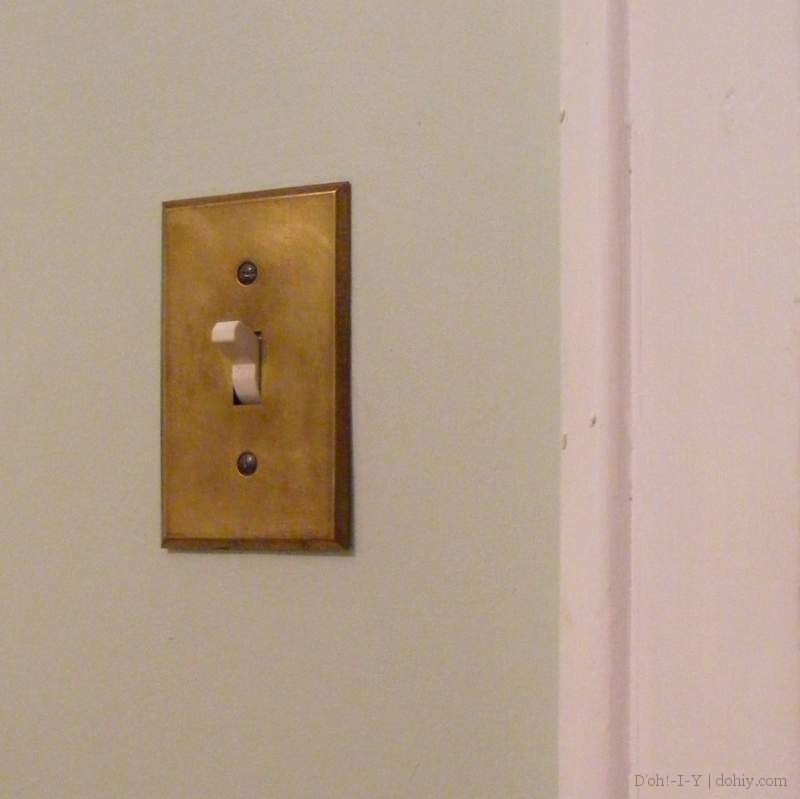
After we got that bit of wiring done, Kev said, “Hey, wouldn’t it be nice to make the other plates in here match the originals?” I said, “Are you taking the role of Stacey in the play today?” and started looking for brass switch and outlet plates. They are out there, but for more than I wanted to pay — plus, no patina. But at the salvage places, brass covers are about $4 a pop. They are often paint-coated, but pop ’em in the Crockpot, and it’s instant history time.

Before

Before

After

After. If super-shiny is your thing, these would buff up nicely as well.

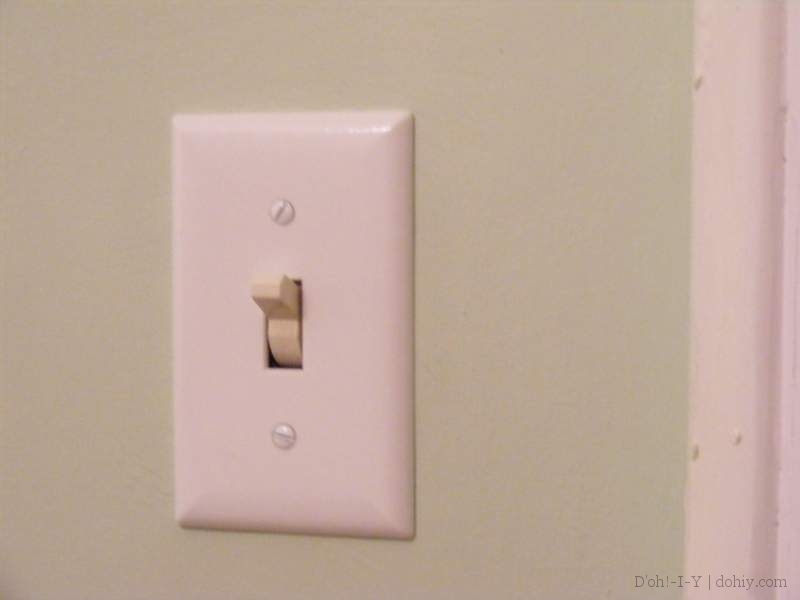
When using vintage switch covers, you may need to change the switch itself. The hole for a regular switch is a tiny bit smaller than the current standard. Switches with the plastic box surrounding the switch are just a titch too big for the vintage plates.

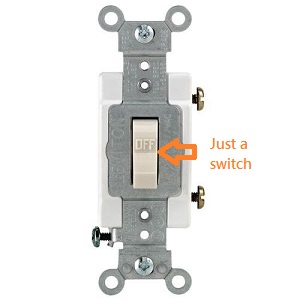
15-Amp Single Pole Switch

What you want is the fatter switches that look bigger overall, but without the casing around them (which has nothing to do with function in any event).

15-Amp Single Pole Switch without casing

If you need to do it, changing switches is easy, but be careful and follow all safety precautions.

Old metal outlet covers will fit standard electrical receptacles with no trouble (and if needed, you can find double-gang covers with some patience). For either switch or outlet covers, if you don’t have brass flat-head screws, you can fake it by painting the screwheads on the standard fasteners you remove with the plastic plates.

These vintage covers are a quick, easy and cheap way to restore a bit of character to an old home. It’s one of the easiest restoration projects you can do — and with an old house, those easy projects don’t come along often!

Posted in Before & After, Decor, Electrical, Walls & Floors | Tagged , , , , , , | 5 Comments

Cat Cozy for a Cozy Cat

Tuck in time!

– Marge Simpson

Our cat Mayya likes to snuggle up under blankets. She will ask us to lift up the covers for her to burrow in. More amusingly, she’ll try to do it herself, which often doesn’t work very well. Sometimes we tuck her under a blanket at bedtime, but if she gets up in the night, she’s out of luck.

Peeking under the blanket at Mayya

Peeking under the blanket at Mayya

Kevin thought it would be nice if we could make her a cat bed that she could insert herself that would still give her that “under the blanket” feeling. It’s not enough to be in an enclosed space, you see — she wants to be enveloped.

Karl Marx: hiding a cat in his jacket since 1848

Karl Marx: hiding a cat in his jacket since 1848

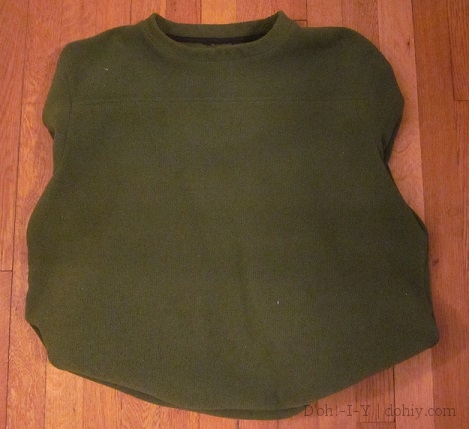
I started this project some months ago — I had an ill-fitting sweatshirt (is there any other kind?) that I was going to use. But I never got around to it, and I eventually donated that garment to Goodwill. When I decided to mess around with the idea again today, I went to Goodwill and bought a sweatshirt. This is probably the sort of thing Marx envisioned when he said that capitalism would eat itself.

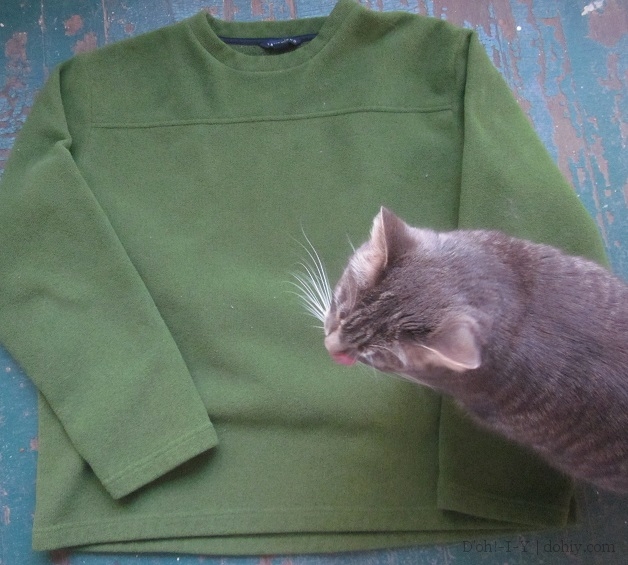
But this sweatshirt is particularly smooshy, and just the type of fabric that Mayya likes to knead. In fact, as soon as I set it down to take a picture of it, she came to claim it as her own.

Cat Bed Shirt

After reclaiming the sweatshirt from the cat, I turned it inside-out and cut off most of the sleeves, so I had a big square. Then I sewed up the bottom and the armholes so I had a big smooshy bag with just the neck open.

Cat Bed Bag

Not a particularly fabulous craft project

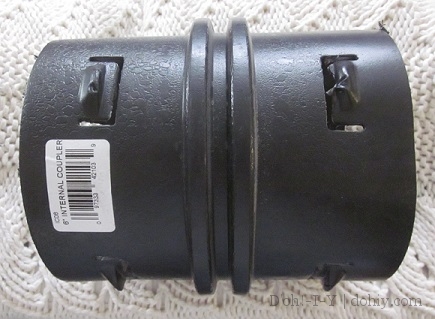
Then I had a brilliant idea. I had a garden drain coupler that I knew was big enough for Mayya to get through. I thought I’d use that to give the opening some rigidity so she could nose through it easier.

Cat Bed Coupler

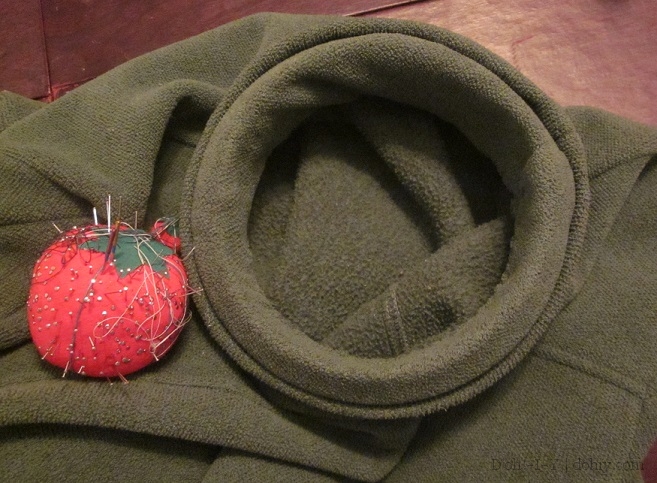
I cut the coupler down to just the most rigid part, and I hand-sewed that into fabric from one of the sleeves. Then, I hand-sewed the upholstered ring into the neck opening.
Brilliant!

Brilliant!

We summoned Mayya. She was very interested in trying it out (especially after we chucked a couple of treats inside). There was just one problem…

Cat Bed Fail

Cat bed FAIL

Mayya can get through a hoop that size, no problem. But if you upholster said loop, it raises the friction coefficient. The otherwise simple “cat-in-tunnel” maneuver becomes an undesirable “cat-stuck-in-a-bag” situation. Well, undesirable for Mayya…highly funny to the Kev and me.

Karl Marx cat

After cutting my brilliant coupler/cat bed door out, I was relieved to find that Mayya was still interested in the bed (with the addition of some more treats), and further that she could get through the opening once the hoop was removed.

Progress

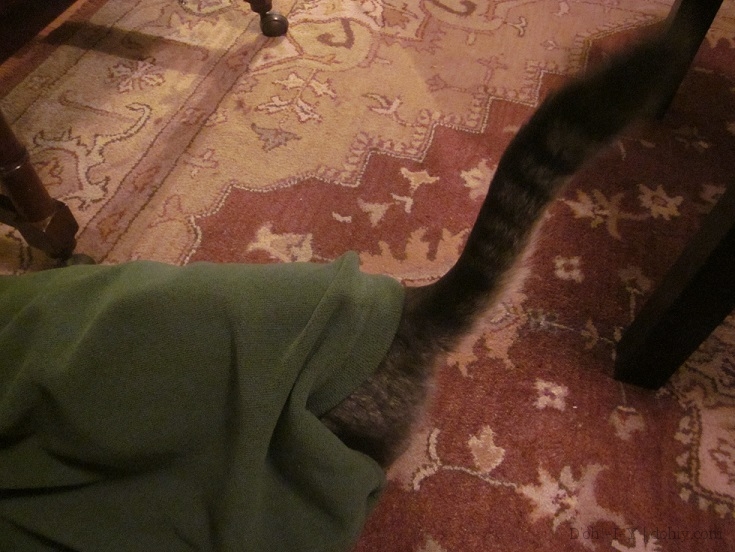
Progress! The tail fits, too; she’s just keeping her options open.

So that’s something, but it’s not much better than tucking her in — she’s still not going to be able to get in there under her own power.

“It’s too bad you have no interest in spoiling these cats,” the Kev commented.

But I wasn’t done yet!

Cat Bed KludgeSee! The skirt hanger holds it open AND hooks to the back of the sofa! There’s still plenty of fabric to drape. She’s gonna love it!

I tried to get her to test it, but at the moment, she’s firmly ensconced under the blanket and between Kev’s legs while he reads.

Get lost, woman. And take your flash camera with you.

Get lost, woman. And take your flash camera with you.

But it could work, right??

RIGHT?!?

I should probably get out more.

UPDATE: Look what happened under someone’s own power an hour later!

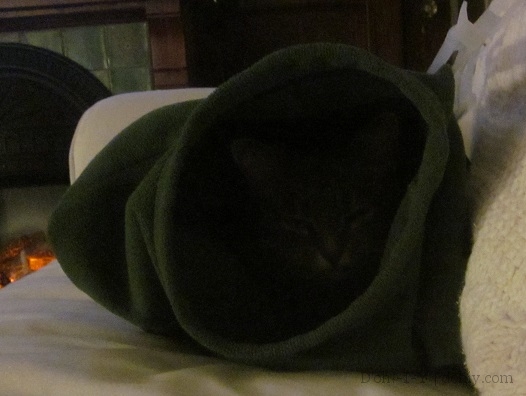
Cat Bed Win

I still need to get out more, but at least I know I can successfully swaddle a cat.

BUT ON A MORE PRACTICAL NOTE: If your cat also likes to be in contact with the blanket, I’m convinced that the loop idea would work (and be more convenient than holding the opening up with a hanger), but the loop needs to be big enough for the cat to get through easily. I’m going to pick up a large embroidery hoop this week and I will report back on the results. UPDATE: click here for the updated version that actually works.

Related Posts Plugin for WordPress, Blogger...
Posted in D'oh!, Decor | Tagged , , | Leave a comment