Meeting Spring Halfway

Bart: Now is the winter of our discontent.
Ralph: Oh, no! Run!

 – The Simpsons

What do a pile of recycling and a snowdrift have to do with gardening?

sowing jugs

Surprisingly, quite a lot! For several years, winter sowing has been our biggest source of new plants. Trudi Davidoff developed this technique, which uses plastic containers as small greenhouses to start seeds over winter, even in places like our frigid Zone 4. Her site gives detailed instructions on winter sowing and provides lists of the best seeds to use.

The short version: cut open and add drainage holes to plastic containers (especially milk jugs), add a bit of soil and some hardy seeds, water and close them up, then stick ’em outside in the snow. The containers keep the seeds warmer than the outside, but there’s still enough of a freeze/thaw cycle to work open the seeds. As the sun warms a winter sowing container, the water in the soil will create a moist environment, with condensation dripping back into the soil. New snow or rain adds more water, and the seedlings make a move usually before the snow is gone. It’s a virtually free way to populate your garden, and you don’t even need to harden off your seedlings!

Wintersown rudbeckia
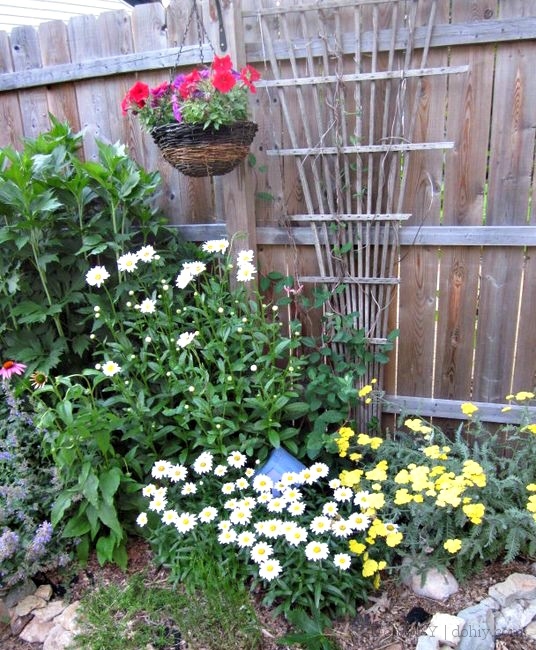
Wintersown rudbeckia

Wintersown daisies and coneflower

Wintersown daisies and coneflower

With a few years of winter sowing experience, I have a few tips to add to the basics.

As most winter sowers would agree, gallon or half-gallon milk jugs are the way to go. Similar containers, such as those jugs for windshield wiper fluid, are also good options. (Obviously, clean them first.) If you aren’t plowing through milk at a great rate, you can build up a stock by asking your friends and neighbors for their empties. The containers are also reusable year to year, if you have a place to stow them. They do eventually become completely warped or fall apart, at which point they can just be recycled.

Cut your drainage holes before cutting around the jug; otherwise, the jug gets too floppy to easily cut through the bottom. Simple slits are often not enough for adequate drainage. I cut “V” shapes, and bend up the flap to make sure the seeds won’t become water-logged.
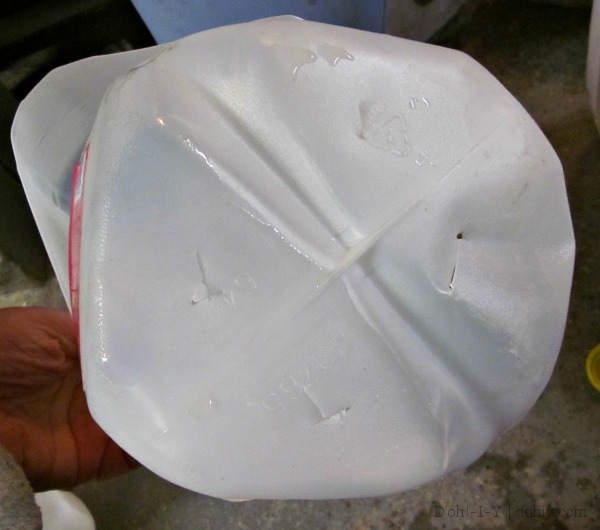
sowing jug drainage

Then I cut around the jug, using the handle side for the “hinge.”
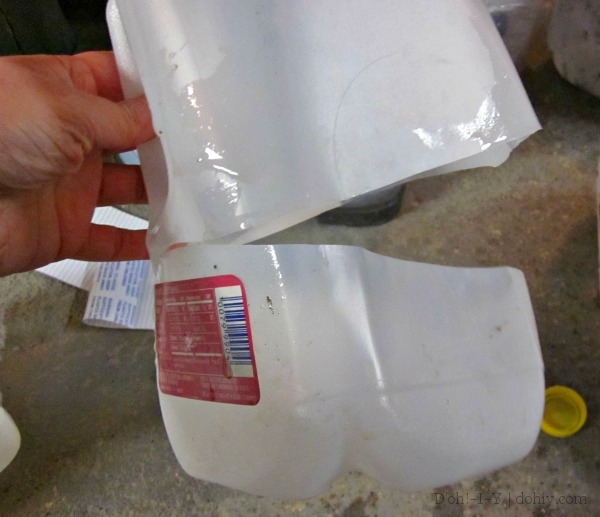
sowing jug cut

I use regular potting soil or seed starting mix for winter sowing. Just a couple of inches in the bottom is plenty, plus whatever you put over the seeds. To close up the jugs, I use cheap duct tape. I use one piece to “latch” the jug shut on the side opposite the hinge. This piece helps hold the jug in line while I tape around the cut.
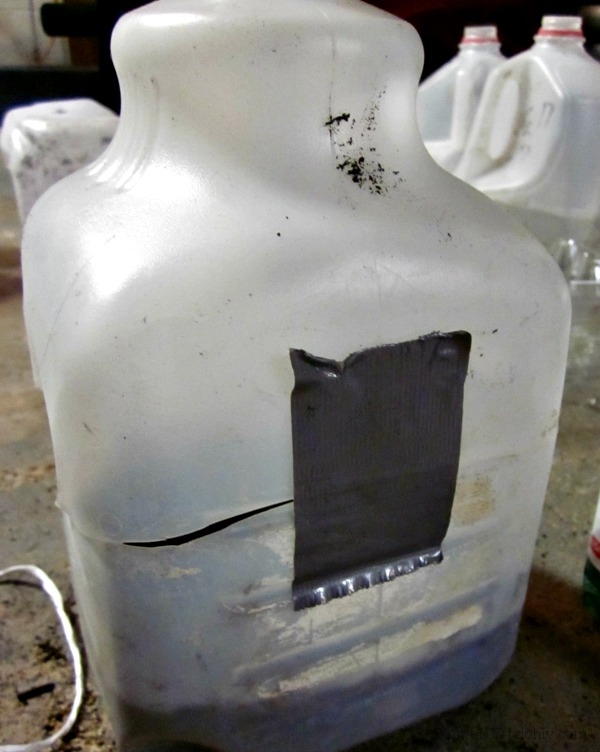
sowing set tape

To date, I’ve not been able to adequately label my winter sowing stuff. Between the sun and the snow, even permanent marker fades. Wintersown.org recommends writing on duct tape attached to the underside of the container, thereby avoiding the sun issue. You might have noticed in the first photo that one jug does have a number on the bottom (number 45–that was a big year!), but I like to know what I have without moving the containers. Tape failures can happen! This year, I came up with a new system to try. I labeled the containers with permanent marker, but I also used a knot code.
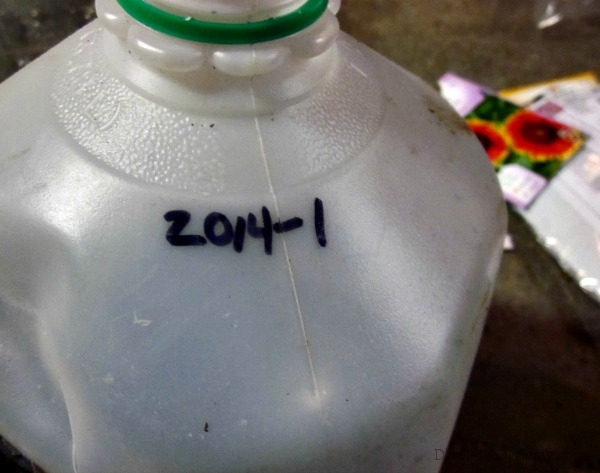
Numerical label
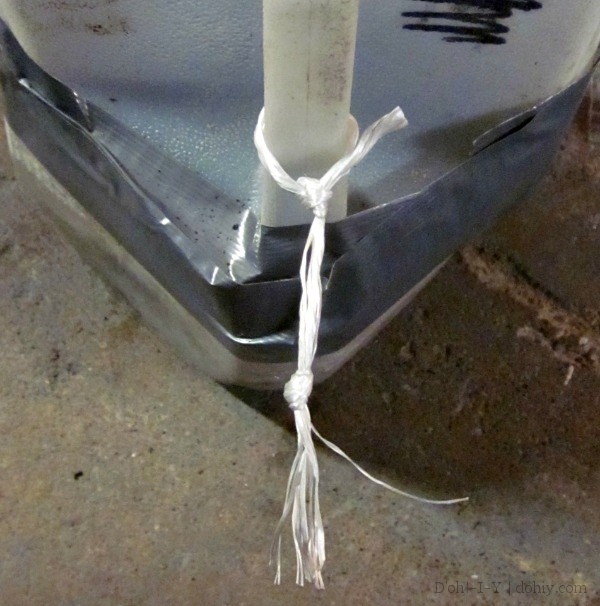
Numerical label

sowing twine

Unfade-able bit of twine with one knot in it
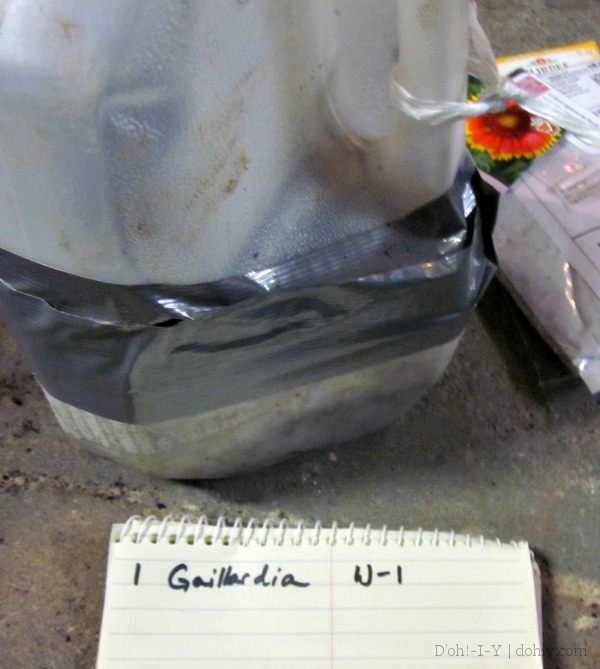
Reference list: number, seed type, and knot code (W-1 is one knot in white twine)

Reference list: number, seed type, and knot code (W-1 is one knot in white twine)

I’m not overly fussy about our garden, which is what people kindly refer to as a “cottage garden” (read: wild floral mess), but I do like to know what’s what when planting. Last year, I wasn’t able to tell what a few containers were, and ended up carefully nurturing a weed after a rogue seed germinated. Garden genius! But between the marker and my fabulous knot code, I should be able to keep track…assuming I don’t lose the reference list.
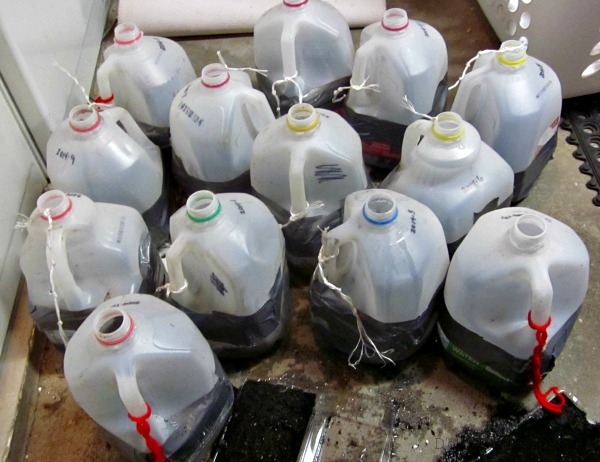
sowing draining

Fortunately, we have a floor drain in the basement, so I clustered the jugs there to water them, then let them drain overnight. I toted my comparatively modest baker’s dozen of jugs outside in a laundry basket.
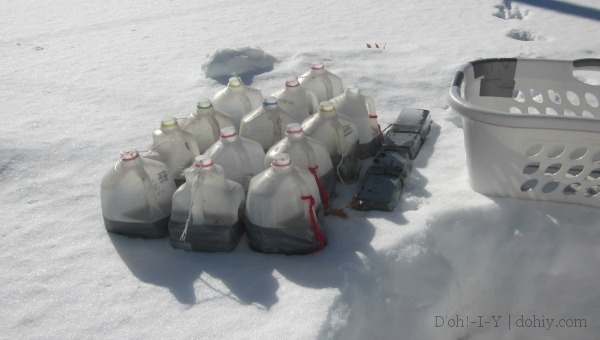
sowing jugs outside

And that’s it! All over but the waiting. They shouldn’t require any serious maintenance, except to throw some water on them if it’s unusually dry, and watch for late frosts after the seeds have sprouted. It’s fun to peek into the jugs and see a bit of green when the season is still trying to break out. And when the winter is lingering like this one is, any bit of green is very welcome!

Posted in Yard & Garden | Tagged , , , | Leave a comment

Frugal DIY Shopping on the Tundra

Then I heard the sound that all Arctic explorers dread . . . the pitiless bark of the sea lion!

– Homer Simpson

We left the igloo yesterday, despite the strong urge to stay in, eat carbs, and sulk.

weather

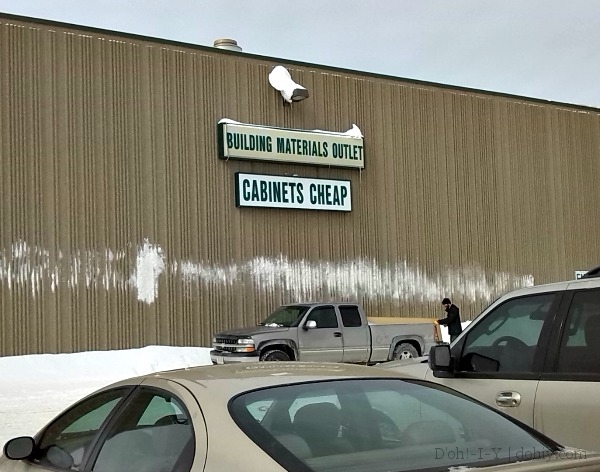
What adventurous possibility drew us from our murky abode? The creatively named Building Materials Outlet in delightful Eagan, Minnesota. If you are local to MSP and have a home project on the go, it’s well worth a jaunt just south of I-494.

It's not fancy!

It’s not fancy!

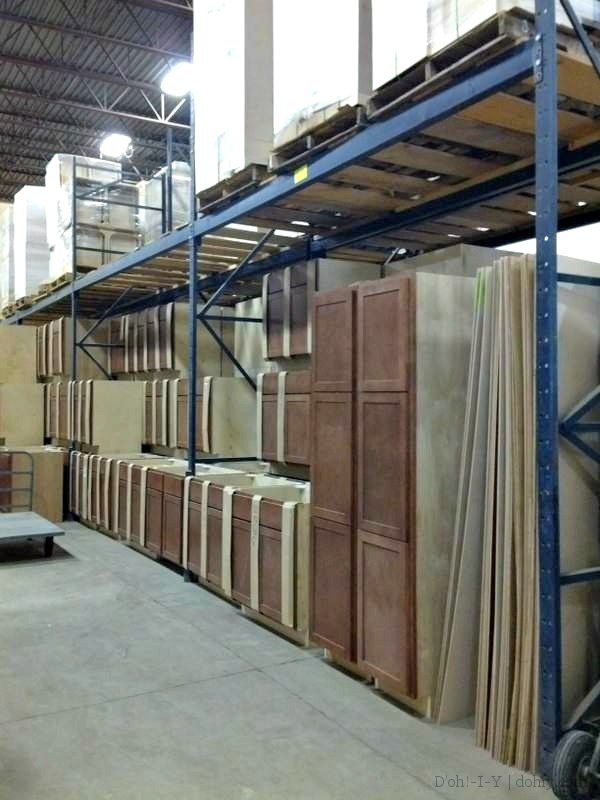
Retailers bring BMO their overstocks and other surplus materials, and BMO sells them, adding a 12% charge on the top to cover their costs. BMO has been around since 1963, so they have this business model figured out. The inventory ranges from doors to appliances to carpet to millwork from a multitude of sources. BMO has two huge warehouses, and I do mean HUGE.

Millwork

Some millwork perhaps.

One of several aisles of cabinets.

One of several aisles of cabinets.

A small sample of their windows.

A small sample of their windows.

BMO also auctions off parts of their inventory regularly; the auctions are online here. The auctions tend to be larger lots that might make more sense for contractors than for homeowners, but they give a good idea of the stuff on hand.

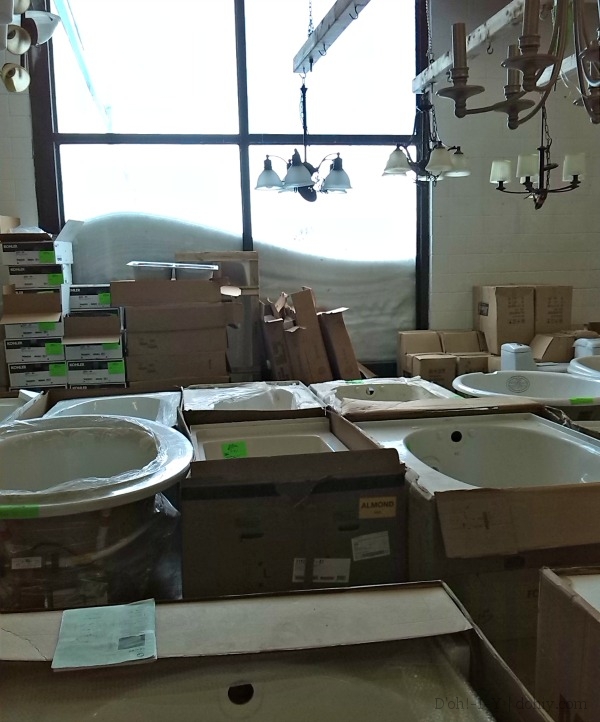
Bathtubs and light fixtures (and check out the level of the snow against the window).

Bathtubs and light fixtures (and check out the level of the snow against the window!!!).

BMO isn’t a salvage place like many we frequent. The website says that over 90% of their stock is new. In fact, I’ve never seen anything used–maybe shopworn or damaged sometimes, but nothing used. Sometimes, you just need new stuff! We were shopping for a new kitchen sink, but we still walked through the whole place…just in case.

Doors stretching off into the sunset.

Doors stretching off into the sunset.

We’re not regular BMO buyers, but we are regular shoppers. It’s one of our standard stops when we are planning a project, and we’ve picked up some great deals over the years. Of course, the stock changes all the time, so repeat visits are warranted. Some of the deals we saw on this trip included $5 wood cabinet doors and $19/sq. ft. granite countertop blanks (both prices are before buyer’s premium and tax are applied).

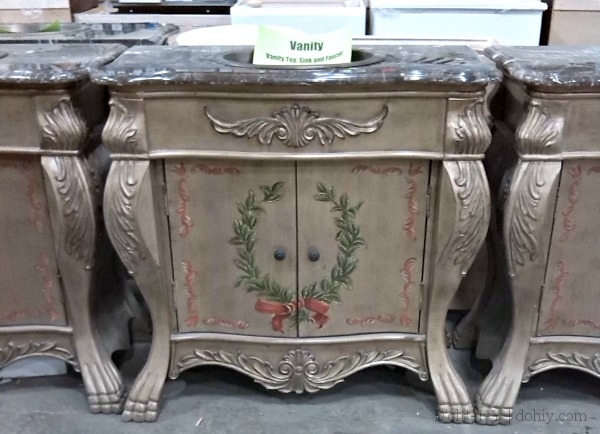
The stock involves a wide range of styles, not all of which I can vouch for.

The stock involves a wide range of styles, including some very specific items.

So far, so good–but there are some things to know before you go.

Also, it's not super-warm in the warehouses, as the Kev demonstrated.

It’s not super-warm in the warehouses.

Thing one, all sales are very final, so you can’t take something home to try it out.

Thing two, it’s strictly a warehouse environment. You must take your purchases with you immediately upon purchase, and you must load them yourself. There are many large warning signs–no pets, no kids, no cameras (ahem!), shop and load at your own risk.

On the other hand (and in contrast to the signs), the folks working there are very friendly. It’s just important to remember that this is a DIY shopping experience in more ways than one.

We learned about BMO from a contractor, but it is open to the public, and it’s always busy. Despite that, we find that few locals outside the trades have heard of it. If you are working on some serious home improvements in the Twin Cities, BMO should be part of your scouting process. Just be careful out there!

Posted in Construction, Salvage | Tagged , , | 4 Comments

The Adventures of Plumber Girl

Tap-a-tap-a-tap-a.

– Vicki Valentine

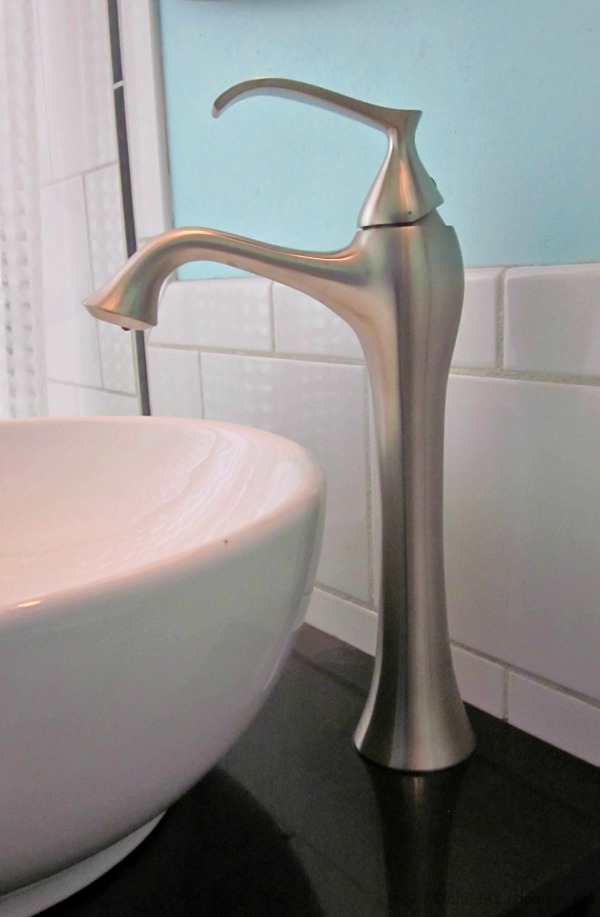
When we remodeled our main bathroom, the faucet was bought for economy’s sake, and its finish did not hold up well. I was patiently awaiting the right sale or stock clearance for a replacement when a great option appeared almost immediately. We found an open-box deal on a new Kraus tap.

KEF-15000BN

It much simpler than its predecessor, which pleases both of us, and it was a very good deal. I wasn’t familiar with the brand, but a few industry sites indicated that the warranty, quality, and customer service are good. The finish is said to be thick and resilient, so fingers crossed we won’t be back in the pits for a long time.

For small jobs like this faucet swap, the Kev and I don’t have a typical division of labor — it’s just whoever gets around to it, or we do it together if that works out. But I wanted to do this post because…

Lady readers, this job is completely doable.

It requires very few tools and absolutely no Y chromosomes!

Here’s how!

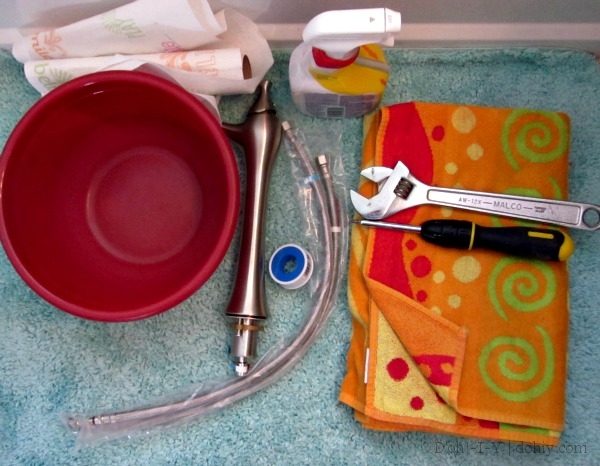
1. Assemble your supplies. You don’t need much:

  • An adjustable wrench (UK: spanner)
  • A Phillips screwdriver
  • A big old towel or two
  • A big bowl
  • Cleaning supplies

Faucet Supplies

It’s also nice to have a big sealable freezer bag to collect any loose hardware for the old faucet in case you want to donate or sell it. You may want a pillow in case you need to work lying on your back.

2. Clear out the area under the sink. Express surprise at the rubbish you’ve stowed down there; throw half of it away. Put the old towel under the supply lines on the wall to catch drips and put the bowl nearby.

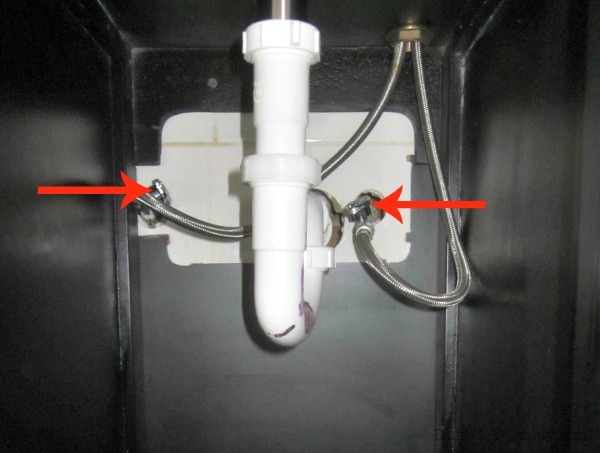
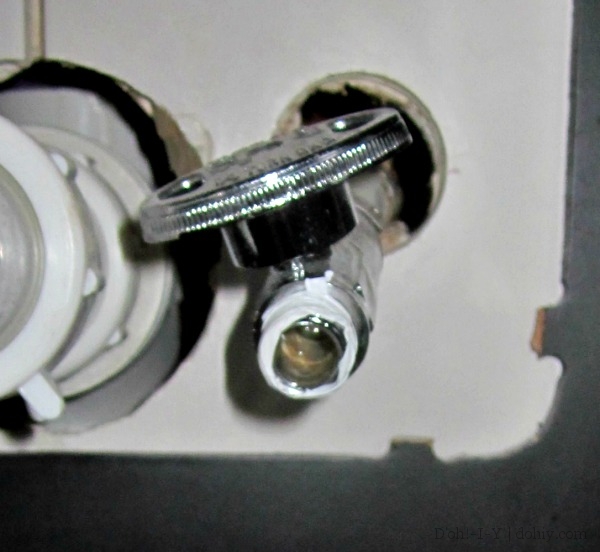
3. Turn off and drain the water. There are valves under the sink for the cold and hot water supplies. They are the silver handles on either side of the drain.

Faucet underneath before

Turn them off (right/clockwise). After they are off, turn on the existing faucet to clear as much water as possible out of the lines.

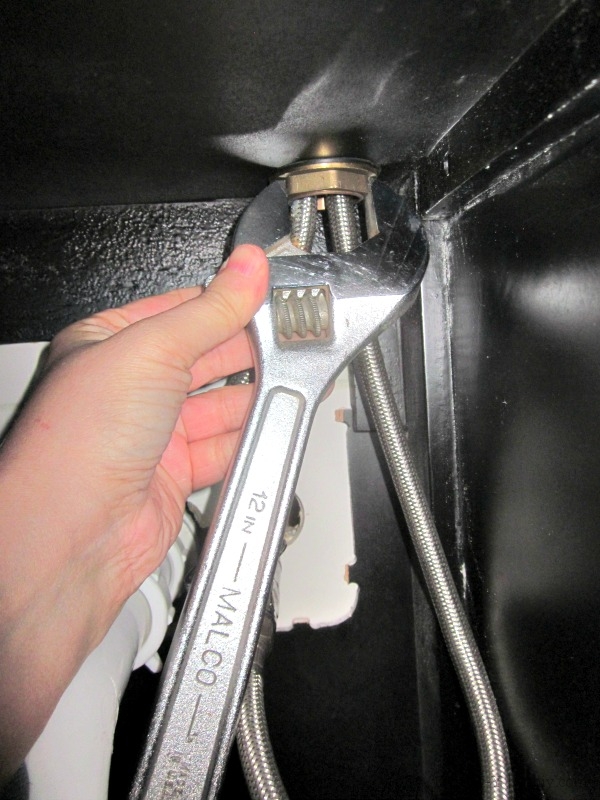
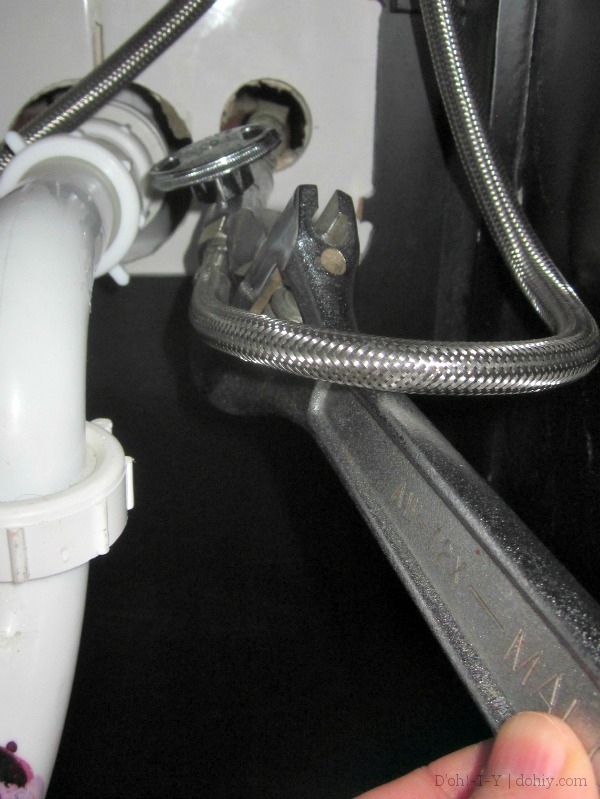
4. Unscrew the mounting hardware under the counter. Don’t pull the faucet out yet because it’s still attached to the water supply! Just loosen the nut that holds the faucet in place and slip it off the threads. You will probably need to start it with the wrench (left/counter-clockwise — that’s “anti-clockwise” in British English), but then loosen it by hand after the first couple of turns.

You may not have enough room to hold the wrench straight out from the nut, but you can get enough leverage at another angle (use the handle, though--I'm holding it like this only because I have a camera in the other hand!).

You may not have enough room to hold the wrench straight out from the nut, but you can get enough leverage at another angle (use the handle, though–I’m holding this way because I have a camera in the other hand!).

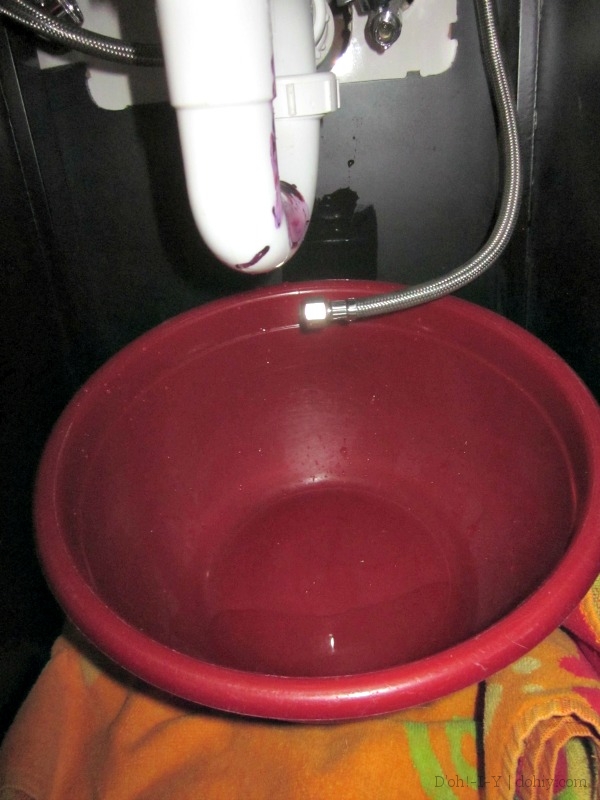
5. Disconnect the hoses from the wall. Here’s where your towel and bowl will come in handy! Loosen the nut attached to the hose that goes into the wall fitting (in front of the valve you turned off). Again, you’ll need the wrench to get it started. Loosen it and keep the open end facing up when it comes free. Set the open end in the bowl, and most of the water will drain there. Repeat for the other side.

Faucet draining

You don’t want to be too rough with the supply lines because you don’t want to open up a leak inside the wall. Be firm, but don’t go full Hulk with a huge amount of torque on the supply lines. Slow and steady.

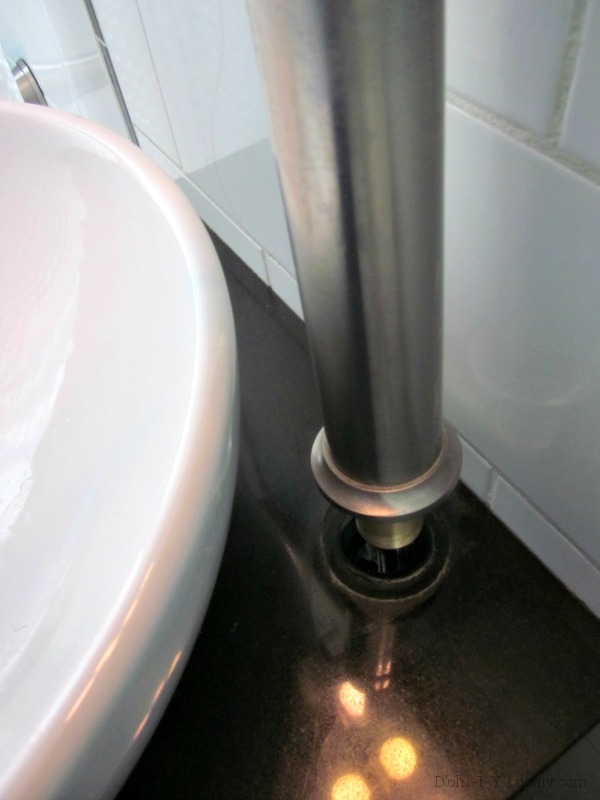
6. Remove the old faucet. Once the lines are drained, take the mounting nut off the lines and then lift the old faucet out through the top of the counter, pulling the old hoses along with it. Before starting with the new faucet, clean and dry the area formerly covered by the old faucet body.

Lifting out the old faucet.

Lifting out the old faucet.

7. HALFWAY. Take a break!

8. Put the new faucet through the countertop. You’ll want to follow the specific instructions for the new unit, but I’ll make some generalizations. There will probably be a rubber washer or O ring that slips over the threads and sits underneath the faucet body, so put that on first.

O ring already on the faucet.

O ring already on the faucet.

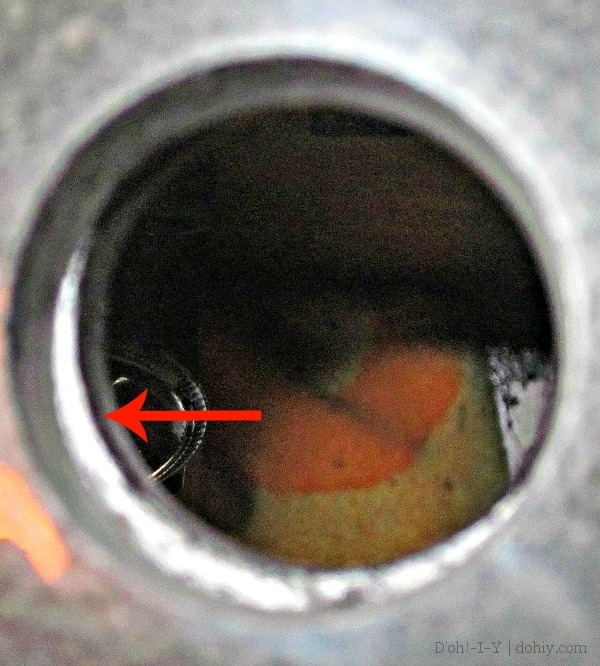
I had a hiccup at this point. The new faucet would not go through the hole, resulting in a Happy Gilmore-esque reaction from me. On closer examination, I realized that the hole in the granite top did not match up perfectly with the hole in the wood top of the cabinet. I put a grinding wheel on the trusty Dremel and sanded the ridge in the wood down, giving the faucet a straight shot.

Terrible picture to show the misaligned wood and granite top that caused the problem (a contractor did this, and we paid him).

Terrible picture to show the misaligned wood and granite tops (a contractor did this, and we paid him).

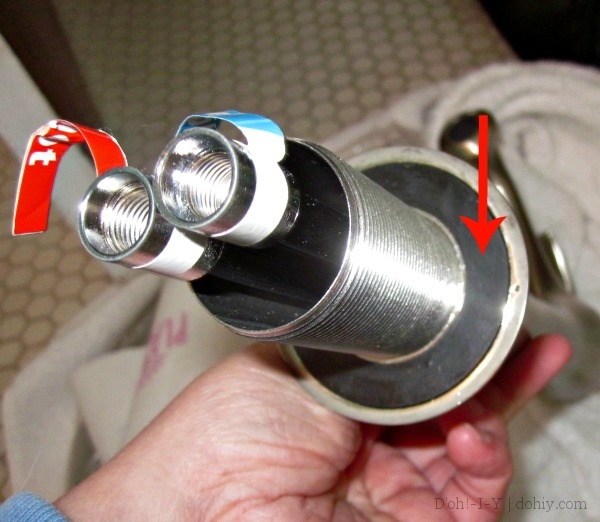
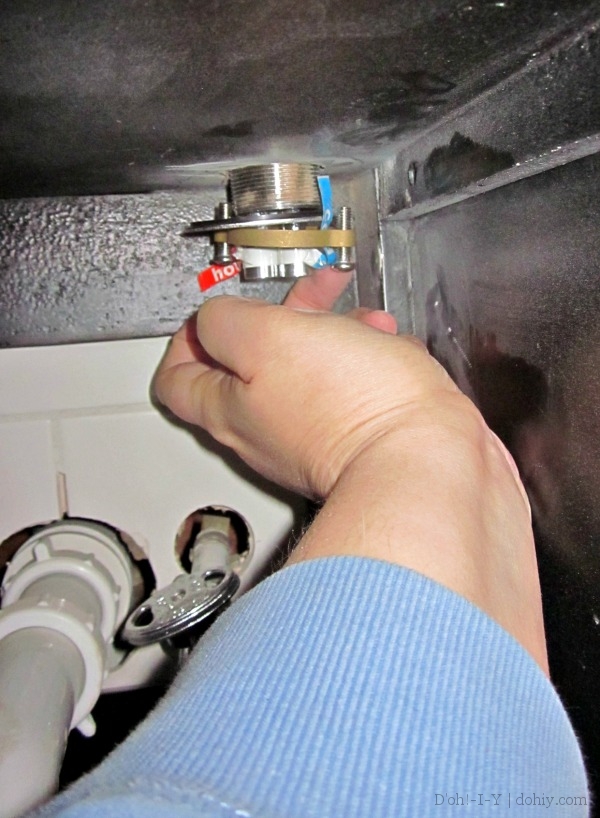
9. Secure the faucet in place. Following the instructions, thread on the mounting hardware for the faucet. The old faucet just had a rubber washer and a big nut, but the Kraus has a weird series of things: a rubber washer, then a brass washer, then a threaded piece with two Phillips-headed screws through the sides. It doesn’t matter, though, because the theory is the same — hand-tighten all the stuff they give you, then double-check that the faucet is pointing the way you want it to up top (adjust if necessary), and finally tighten with a wrench (or, for the Kraus, with a wrench and then a screwdriver). Make sure the faucet is really solidly in place, with no movement when you use the handle. Well, except that the handle should move, of course.

Keep the helpful "Hot" and "Cold" labels on, but out of the way when you are tightening the nut.

Keep the helpful “Hot” and “Cold” labels on, but out of the way when you are tightening the nut.

10. Attach the new hoses to the faucet. Attach the new hoses to the faucet first because you will turn the hoses to screw them in. You can’t do that if they are already connected to the wall (as I figured out after I tried to do so).

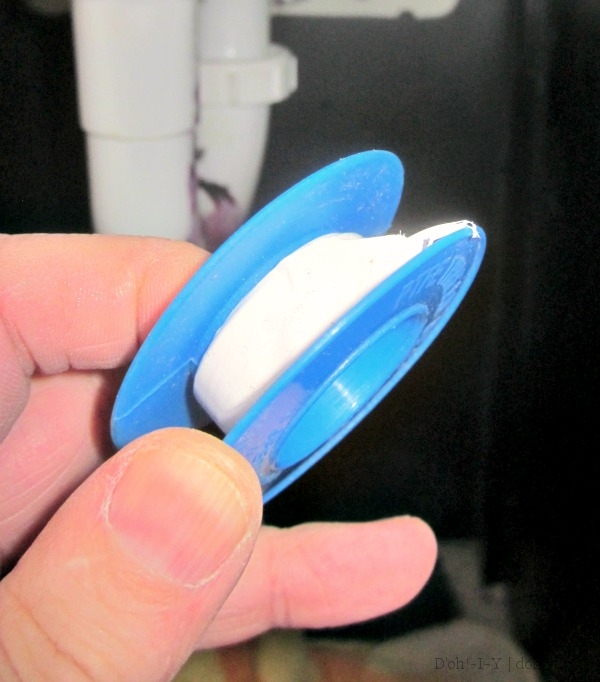
Thread tape.

Thread tape.

Your new faucet might come with some plumbing thread tape as ours did, or the directions might tell you to use it. If so, it’s cheap and easy to use. Wrap a small piece around the thread at the top of the new hose before screwing it into the connector at the bottom of the faucet (the protruding pieces marked “hot” and “cold”).

Thread tape on some threads. This is also a good view of the valve handle, at a jaunty angle above the threads.

Thread tape on some threads (although not the threads we’re talking about in this step). This is also a good view of the valve handle, at a jaunty angle above the threads.

Thread tape has the consistency of wet toilet paper, and it will scrunch up a bit as you screw the piece together, but not to worry–it just helps fill up the spaces between the threads to help prevent leaks. Hand tighten the connections, then snug up with the wrench.

11.  Attach the new hoses to the supply lines. Dry off the threaded ends of the supply lines, and wrap on some thread tape (shown above). Then screw the hose connectors onto the threads until hand-tight. Use the wrench to finish up, remembering not to go crazy twisting the supply lines. Most of this step might be easier to do lying down and looking up at the connections, especially if you have a pillow.

Faucet old hose

12. Turn on a supply valve! The moment of truth! Make sure your towel is in place, and slowly turn on the supply valve for the cold water. Mine leaked! So I turned the valve back off and tightened the connection between the hose and the supply line another turn with the wrench. This time, no leaks! Repeat with the hot side.

13. Test the faucet. Jump up and turn on that faucet. It will splutter a bit at first, but get a good stream going. Then feel around all the connections while it’s running to see if you have any leaks. If not, hurrah! If so, just recheck the problem spots, possibly disconnecting and redoing a connection with more thread tape.

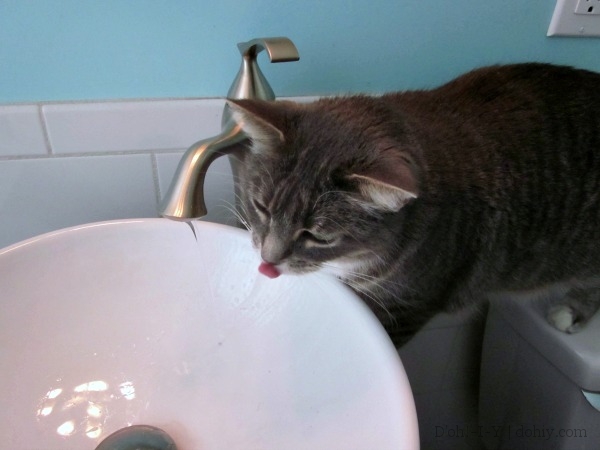
Mayya having her first sink drink with the new tap.

Mayya having her first sink drink with the new tap.

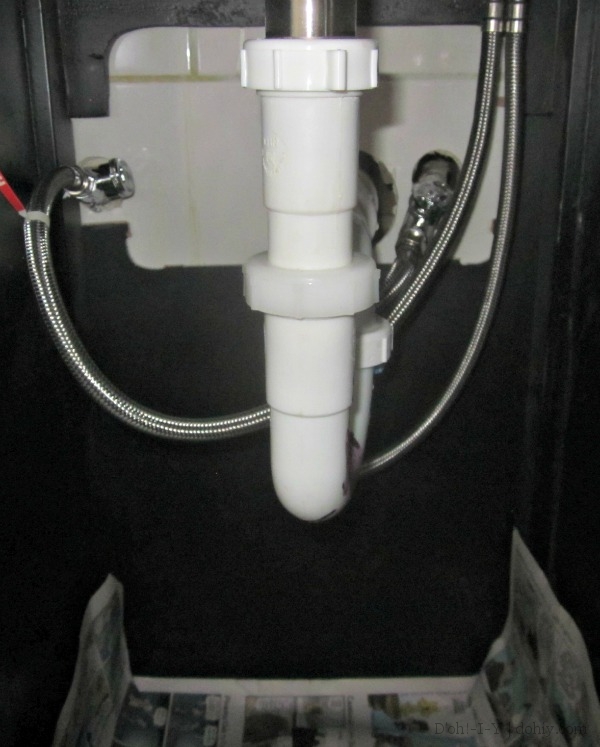
I left the cabinet clear and put some newspaper under the sink. I’ll leave it this way for a couple of days to make sure there isn’t a slow leak I haven’t caught yet.

Faucet finished

The newspaper (or a paper towel) will show if there are drips. During this time, I’ll probably apply some wax to the faucet to help protect the finish since the last model fared so poorly.

Faucet after

Now take a small amount of the money you would have paid a plumber for this job and pick up a pint of ice cream or some margarita mix, and celebrate. New skills and a new faucet!

Posted in American vs English, Bathroom, Plumbing, Repair & Maintenance | Tagged , , | Leave a comment

Countertop Under Wraps

Bart: What am I gonna do tonight??
Marge: You can help me change the shelf paper in the pantry.
Bart: I’ll have none of that!

 – The Simpsons

We’ve updated our thinking on the countertop options we previously posted, and revisited some old options:

  • Wood: Probably not…but maybe…but probably not.
  • Zinc: We decided against zinc. We love it in restaurants and in designer kitchens, but don’t think it would work for us. “I’m worried it would end up looking like a chip shop in there,” quoth the Kev.
  • Marble: I checked with some stone places, and it would seem our kitchen is conveniently a little too big for remnants. We’d have to buy a whole slab, which dwarfs my former estimate. The total cost would be north of $125 a square foot–A SQUARE FOOT–which made me (privately) snort with derision. Salvage marble doesn’t seem to be an option, so if we do marble, it would be as DIY mini-slabs.
  • Laminate: They are charging a lot for the fancier laminate these days. I priced out Wilsonart HD options (we liked a light abstract called Luna Frost), and with all our edges, it’s very nearly the cost of basic granite. Formica is similar. These counters can be homeowner-fabricated for less by buying the laminate sheets and edges, then bonding them to a substrate. Kevin’s even done that before, although it doesn’t sound fun. So laminate’s a maybe, but it’s pretty far back in the pack.
  • Quartz: We almost pulled the trigger on quartz a few years back. Believe it or not, there’s a semi-DIY option. Menard’s offers a product called Riverstone Quartz–you provide your measurements, and they fabricate your countertops, then you install them (or have someone install them). It’s the same deal as other quartz products–90-something percent quartz chunks in a resin matrix. It is, therefore, HEAVY. Originally, we decided it was a little too expensive for that much DIY muscle. When I checked last week, though, the price had improved, so it’s back on the table.

Obviously, we’re decision-impaired. We needed to do something to start eliminating quasi-options. In desperation, I did something faintly ridiculous: I swathed all the horizontal surfaces in contact paper.

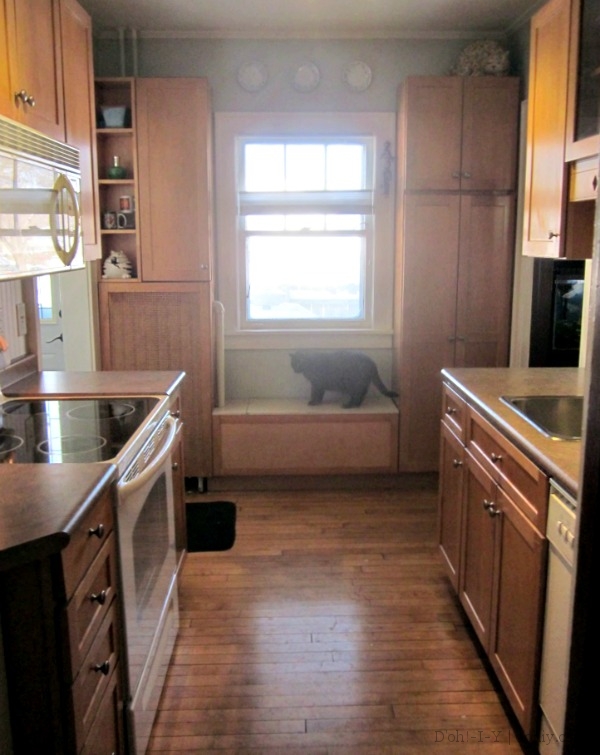
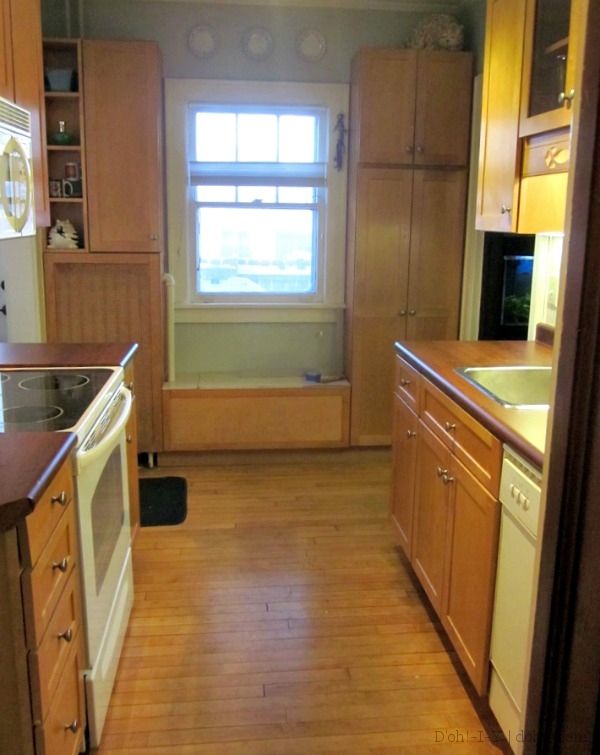
Kitchen with original countertops:

doh kitchen north 2 before

Kitchen plastered in shelf paper:

doh kitchen north after

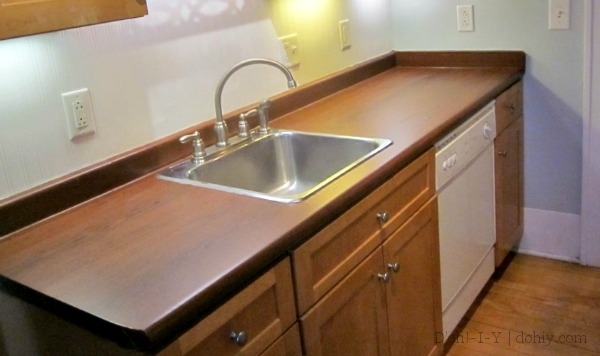
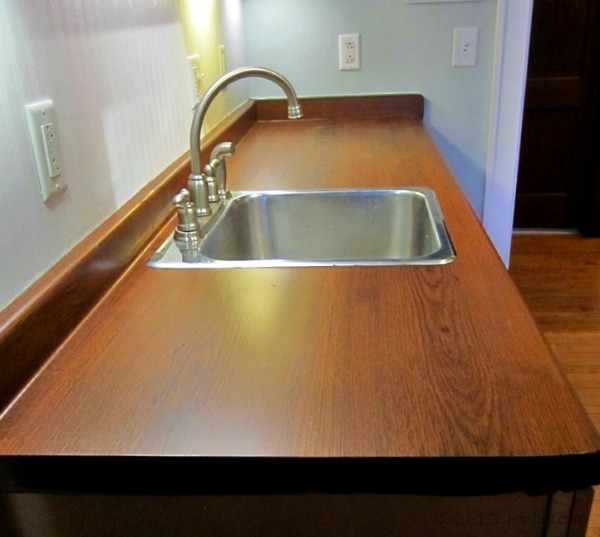
The wood countertop option is the only one that is not light-colored, so we picked up dark woodtone shelf paper to see how we felt about a darker worktop. It doesn’t bear close scrutiny, but at a glance, it gives an idea of what dark wood counters would be like in here (although we wouldn’t have the little backsplash).

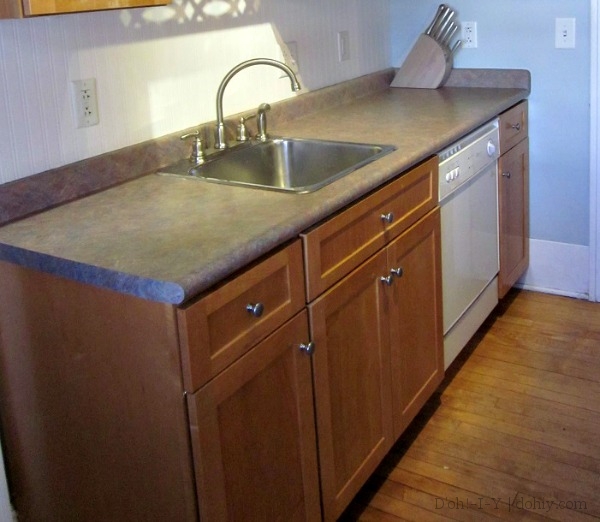
Another before:

doh kitchen sink before

And papered:

doh kitchen sink after

After the initial novelty, we each found we weren’t fond of the overall effect. That was surprising, because we were both very pro-wood in theory. While I’m relieved it’s no longer purple, there’s just too much wood! The Kev thought that it might even make the space look smaller, possibly because of the color or the woodgrain pattern.

doh kitchen sink after closeup

While I felt really silly going through this bizarre exercise (and then blogging about it), the effort was worth it to “try out” a dark wood finish. If you are in a similar quandary, I strongly recommend contact paper as a way to give a new surface a dry-run. Obviously, it doesn’t really replicate wood, but for $8, we now have a much better sense of how the surface would look in practice. There’s something about standing in the room with an approximated surface that we would never have been able to get from PhotoShop.

And there are lots of shelf paper options if we decide we need another trial run (although I’m not doing this more than twice!). UPDATE: No more shelf paper–we made a countertop decision.

Posted in Decor, Kitchen | Tagged , , , | Leave a comment

And The Nominations For Last-Minute Entry Are…

Hey, we’re an eleventh-hour nominee for the Homie Awards at Apartment Therapy!

homes

We’re in the DIY category, unsurprisingly, and near the bottom of the list because of the super-recentness of our nomination.

If you are a member there, we’d really appreciate your vote today–because today, the day we were nominated, is the last day of voting! It’s just for fun, and might help spread the word a bit. Thanks!

(Plus, I’m totally baking these for anyone who gives us a boost.)


Posted in D'oh! | Tagged | Leave a comment

Bright Old Things

There’s nothing here a little elbow-grease won’t fix! So let’s roll up our sleeves and… [falls asleep]

– Abe Simpson

The Kev and I met in London–we were both living in a formerly condemned council block repurposed as student housing. An early date involved listening to music by the light of the fire…the fire started by local kids in the trash bins outside his window. Romance!

Not knowing whether I would return to London after my program, I visited everything I might ever want to see there. One of my favorites was the west cemetery at Highgate. Highgate is a Victorian cemetery that fell into ruin during the 20th century. When it was restored, the goal was to arrest it in its decayed state rather than to return it to as-new condition. The result is atmospheric and unforgettable.

(For documentary pre-dating the major restoration work, click here.)

Having visited Highgate at a particularly impressionable age, the idea that something could be beautiful even in a state of decay lodged deep in my then-nascent psyche. Many years later, I saw this photo while shopping online…

light fixture

Photo courtesy of Barbara Bazan of Curios of Wonder

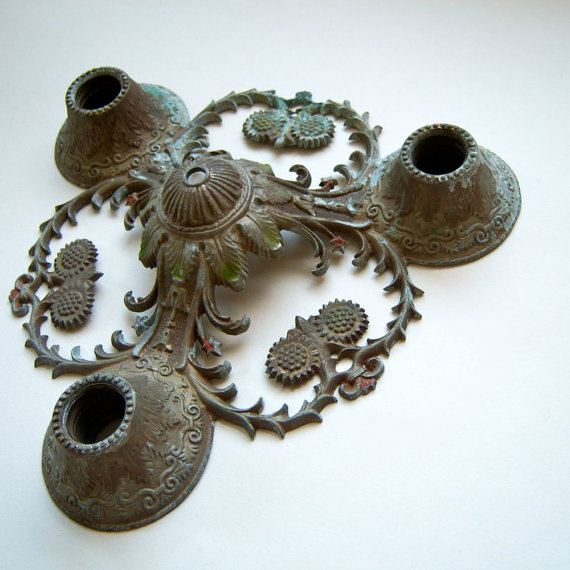
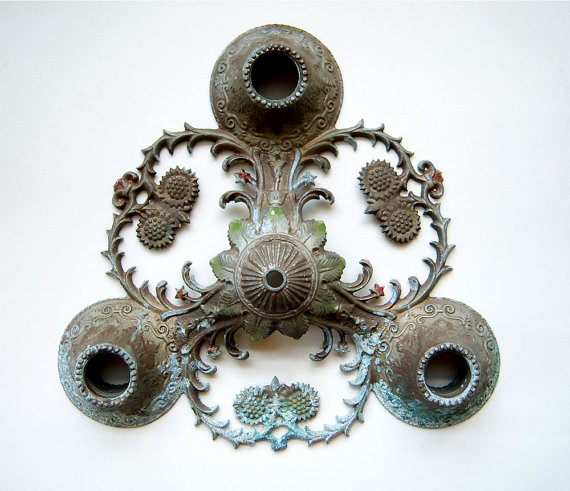
…and my jaw dropped. It was part of a 1920s or 1930s light fixture, but significantly worn and water damaged. The seller (Curios of Wonder–great stuff, check it out) recommended using it as a candle stand, but I immediately and ardently desired it as a light fixture in my house, complete with the oxidation and wear. I couldn’t click to payment fast enough!

light fixture 2

Much of the polychrome painting remains, along with green patina from water damage–enough water damage to wear away part of the metal at the bottom edge here. Sunflowers and stars–talk about a motif!  (Courtesy of Barbara Bazan)

Here’s an excellent example of what makes us individuals–most of you probably see, at best, a faintly decorative hunk of metal, but for me, this Etsy listing kicked off an obsession with vintage light fixtures. Victoria Elizabeth Barnes has enormous mirrors, and I have ceiling lights. We both trawl Craigslist, but my stuff is much easier to transport–plus, I can usually spring my purchases on the Kev after the fact. These are practicalities worth considering when lighting on an obsession.

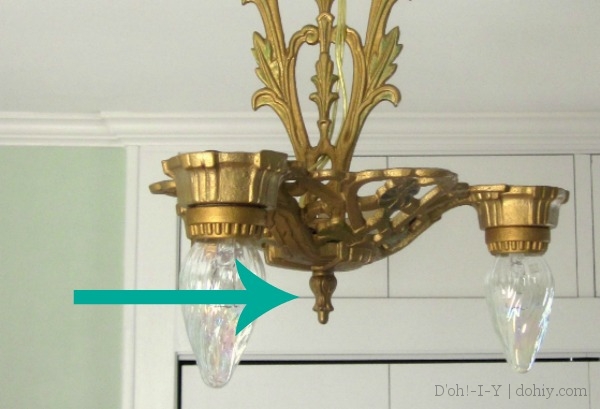
Since I loved the piece as it was, I just rubbed it down with a little matte wax before considering how to put it back into operation. This lower “pan” part is usually all that remains from this type of fixture. Originally, the light would also have had a large, rigid finial between the pan and the canopy to make it hang straight. The fixture I later did for our bedroom had this piece.

fixture after

This one was a complete restoration–there was nothing lovely in how this fixture had been mistreated.

It also would have had a coordinating hold-up nut/finial. Our bedroom fixture did not have this item, but acceptable replacements are easy to find. I bought a leafy version and Rub-n-Buffed it to match.

fixture after 2

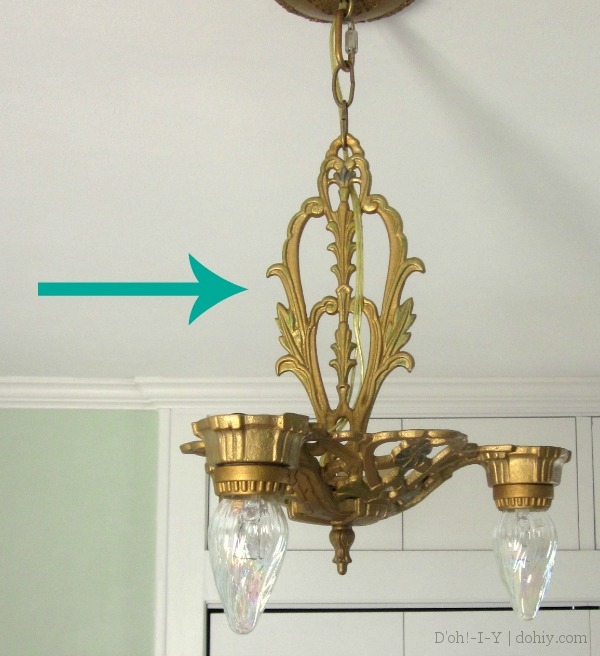
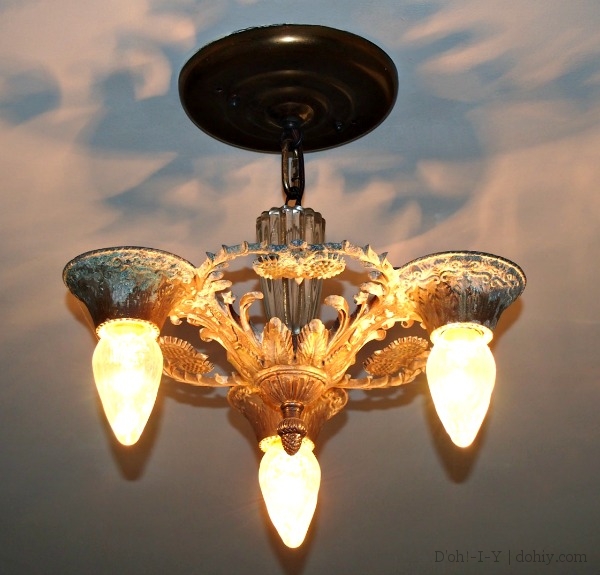
I was trawling eBay for acceptable replacements for the sunflower fixture when I ran across the five-light version in perfect shape with both finials intact. Here’s what they would have looked like.

via

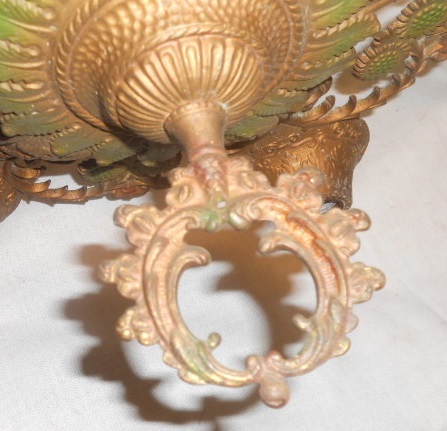
This photo and the next via. I wrote elsewhere about ceiling canopies for old fixtures; those are usually missing as well.

holdup

I didn’t bid on this fixture because thing one, CHA-CHING, and thing two, I wouldn’t break up a perfect set.

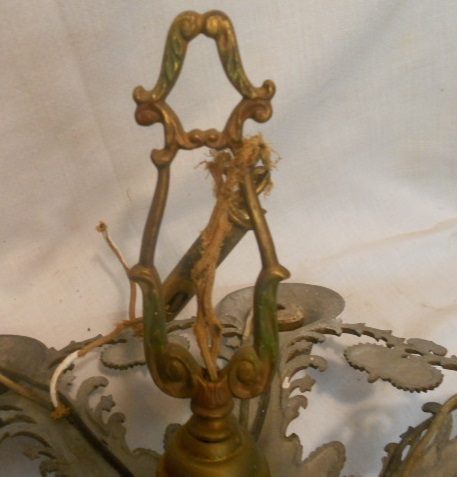
It’s truly strange to me that the pan should generally survive but not the other parts! If the fixture were taken down, all these pieces would just screw together, so they should simply be found together for later salvage or sale. It’s easy to buy a serviceable nut, but what happens to the upper finials? They rarely show up in vintage shops or online auction sites by themselves, and I haven’t found anyone who makes replacements. 

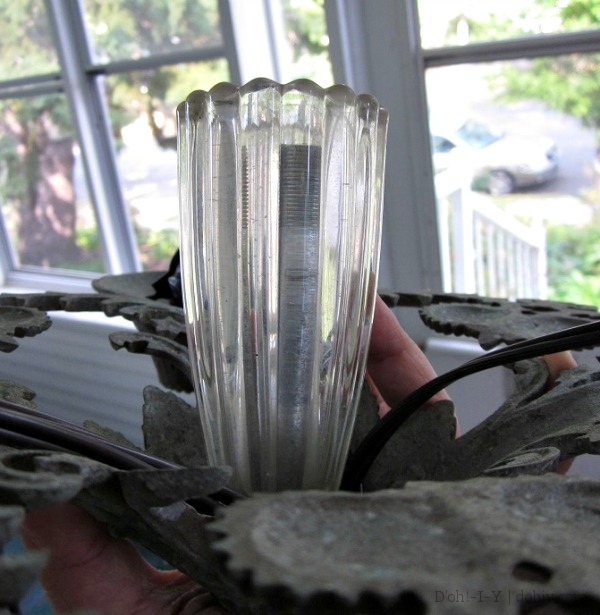
Since the upper finial was missing here, I used a glass column from a broken fixture lingering in the basement. I ran threaded lamp tubing through the center of the piece, drilling holes near the ends. The hole near the bottom (but above the fixture’s base) allowed wiring to travel up through the center, while the holes through the top would accommodate the chain (with the wire simply exiting the top of the tube).

light 1 finial

Pre-drilling/pre-assembly mock-up. Spacer nuts between the pan and the column now give the column more height (and I used a longer threaded tube). Also, look…it was summer then!

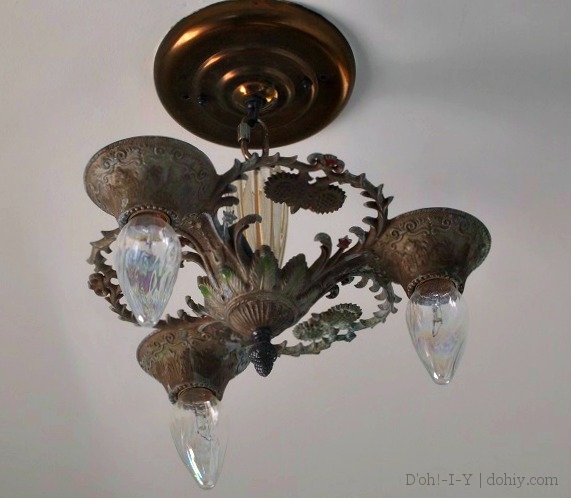
This is not a particularly accurate solution — glass columns go with glass light shades, metal finials with metal pan fixtures — but until I find or somehow make a top finial that will work with the pan, I like my Franken-fixture. The motif is delicate, and the glass column does not overwhelm the piece.

OLYMPUS DIGITAL CAMERA

I used a widely available acorn finial to hold it together (painted from bright brass to bronze), and a vintage ceiling canopy left in the house by the former owners.

OLYMPUS DIGITAL CAMERA

OLYMPUS DIGITAL CAMERA

I love the patterns these fixtures make on the ceiling — part of the whole effect.

As I mentioned in the bedroom fixture post, I’m not an electrician, so I don’t want to provide wiring instruction, but if you are interested, you can see how it’s done here, here, or here.

JLED-CFF-BRASS-2TA note on exposed-bulb fixtures: yes, these currently contain incandescent bulbs. We do not use overhead fixtures for more than a couple of minutes a day, if that–these fixtures are mostly house jewelry. I’m swapping over to LEDs house-wide, focusing on higher-use fixtures first and keeping an eye out for LED deals. Most likely, these fixtures will be sporting something like the bulb on the left in future (available here). I like that brass detail around the base!

If you are interested in vintage lighting, eBay and Etsy are good places to find parts, as are architectural salvage shops. Many people restore and rewire old fixtures if you don’t want another project. If you do, parts and advice can be found at Antique Lamp Supply, Grand Brass, and MyLampParts.

How obsessed am I? My next restoration candidate is already waiting in the workroom. Twenty dollars on Craigslist–how could I pass that up?

What’s your particular house obsession?

Posted in Before & After, Decor, Electrical, Romance, Salvage | Tagged , , , , , | Leave a comment

This Faucet is Finished

Would you like another lick of my flavor wax?

– Uter

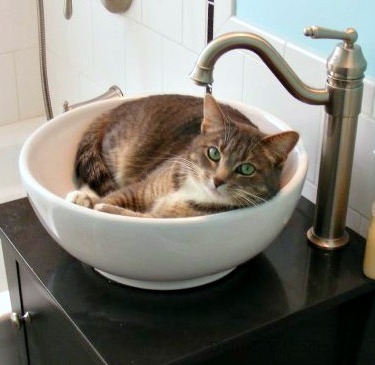
We have a vessel sink in our main bathroom, modeled here by a cat.

sink cat

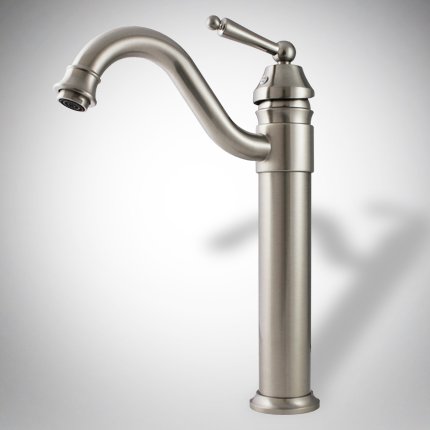
Vessel sinks are divisive in the design world (what isn’t?), but it turned out to be the best option for this space. We were nearing the end of the bathroom remodel when we chose the faucet (UK: tap), or “vessel filler” if you are feeling fancy. We were feeling a little skint after writing all those checks, so we bought this faucet:

I was suspicious of the price ($59 in 2009–still the price today), but it had great reviews. At the time, the Kev opined that it was a little too ornate. I agreed, but was won over by the price; other vessel fillers were four to five times the money.

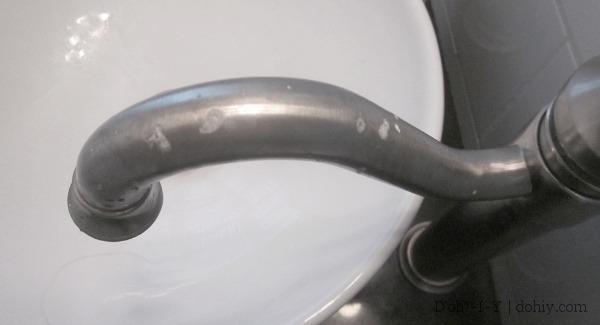
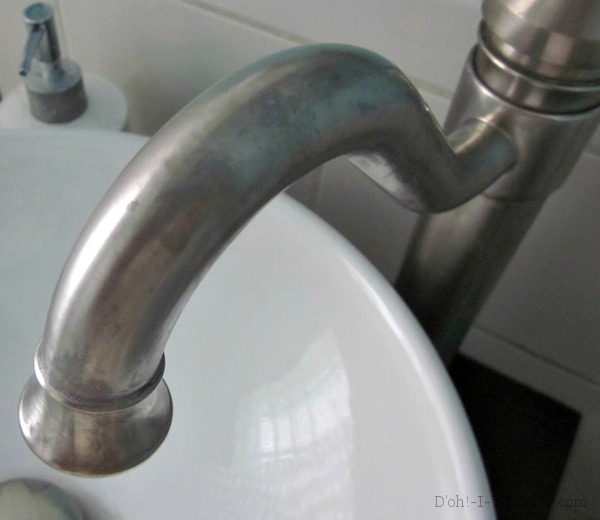
After a few months, I discovered why it was so affordable. The finish is thin, thin, thin. Once it started pitting, there was no going back.

The finish is not included in the warranty.

The finish is not included in the warranty.

Since the thing still works just fine, I’m on the casual lookout for a higher-quality replacement (one with cleaner lines and a finish warranty) on sale. But the pits bothered me, and the internet didn’t seem to have a cure.

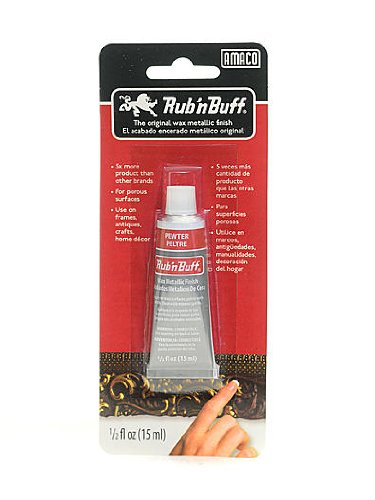
Enter Rub n Buff. Rub n Buff is a metallic wax available in a range of colors. I used Pewter for this adventure (I used a gold tone for the vintage light restoration I did last year). Rub n Buff is available at hobby and art stores, but it’s also (unexpectedly) available at Overstock for a great price.

rubnbuff

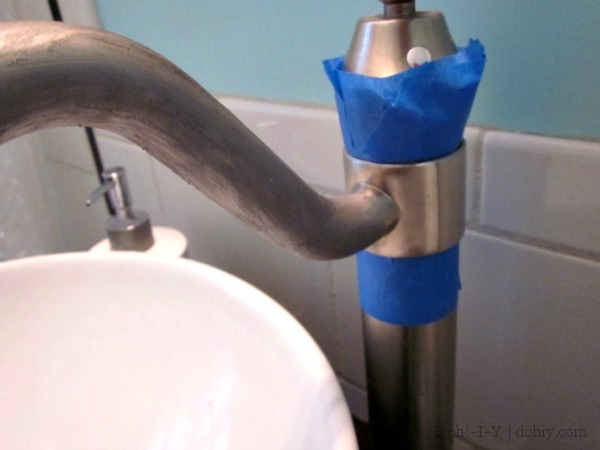
Initially, I applied the Rub n Buff all over the faucet section. I went at the task with more enthusiasm than discretion, and used far too much wax, resulting in gloppiness.

faucet with tape

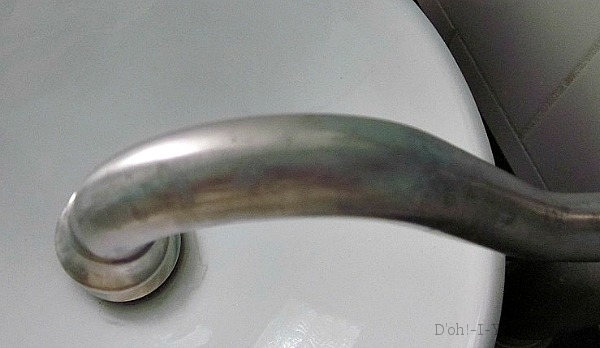
I buffed and buffed, and ended up removing most of the wax…except the Rub and Buff fortuitously adhered better in the pitted areas. I buffed the faucet back to the original finish, leaving the pits full of the wax.

faucet after

Well…

faucet after 2

I suppose…

It’s far from perfect, given the blotchiness, but it’s a reasonable temporary fix. It certainly looks better than the pitted version! If the pits grow, I can apply more product to them. I’m hoping that won’t be an issue because the angels will sing and I’ll find the perfect replacement tap on clearance.

I wouldn’t not recommend this faucet, by the way. It does work well, and if you are on a budget, it could be the right option. If you do choose it or one of the other cheap models in this price range, immediately apply a coating (beeswax or similar) to protect the finish. You might be able to delay pitting that way–and you can always touch up with Rub n Buff later.

Posted in American vs English, Bathroom, Before & After, D'oh!, Plumbing, Repair & Maintenance | Tagged , , , , | Leave a comment

Getting Crumbs All Over the Furniture

Let that be a lesson to the rest of you nuts!

– Chief Wiggum

I recently compared walnuts against stain markers for furniture touch-ups, and was pleasantly surprised to find that walnuts came out on top. My headboard test areas weren’t even the half of the problems, so I took a walnut to the rest of the headboard.

walnut mess

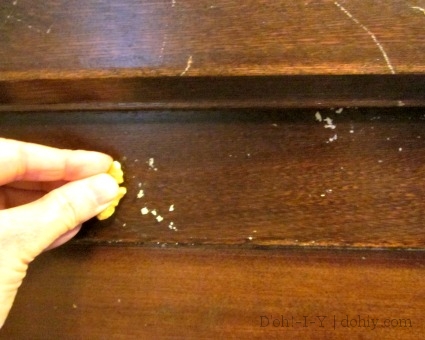
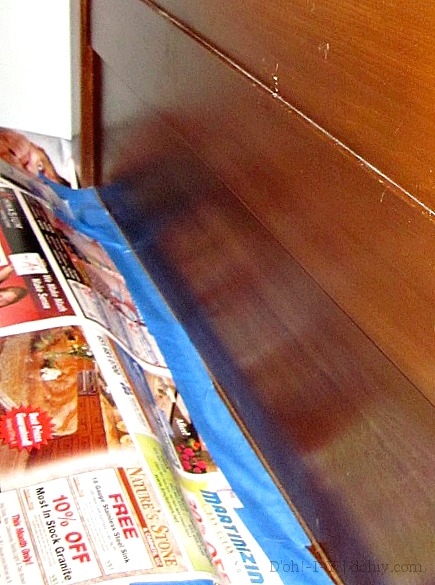
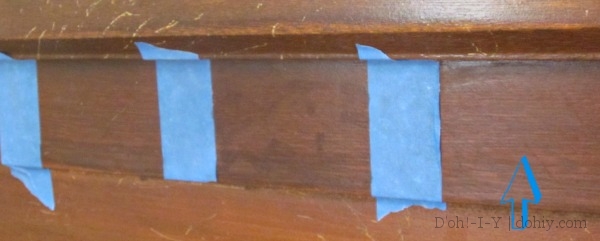
I discovered during the test that vigorously rubbing a walnut against a surface results in shredded walnuts, as seen above. You are left with a chunky nut flour, but it’s not anything you would want to use in a recipe! On a vertical surface like this headboard, you could quite easily end up with drifts of walnut dust under the bed…in the mattress…everywhere. To prevent this problem, I used painter’s tape and made a catch for the walnut goo.

newspaper catch

As I worked across the headboard, I found that this technique doesn’t work as well on gouges as it does on smaller scuffs. It does reduce the contrast slightly, but it doesn’t color large marks in completely. The bigger gouges would be a good job for a stain pen (if you happen to have one around after doing a blog post on walnuts and stain markers, for instance), but I chose to leave the flaws showing, to the greater glory of patina.

headboard gouge

The difference between walnutted scratches and gouges.

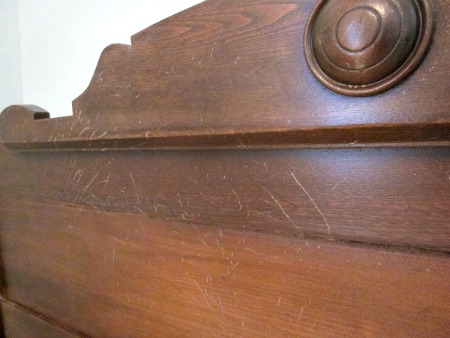
After completing the walnut rub (about 20 minutes total including clean-up), I continued to be impressed by the power of walnuts. Here’s a before of the finish:

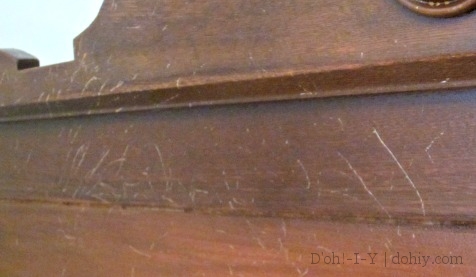
headboard scratches

And the after:

headboard after 2

headboard after 1

The whole headboard took about six walnut halves, a few feet of painter’s tape, and an old newspaper. I also swiped it with Old English when I was done. CHEAP AND EFFECTIVE! My favorite combination.

It may have occurred to you (as it did to me about halfway through) that this headboard could go seriously smelly if the walnut oil goes now in the finish goes rancid. According to woodworkers, walnut oil dries, and therefore does not go off when used as a finish. I’ll give it a sniff test from time to time just in case, and report back if woodworkers have steered me wrong (wouldn’t be the first time).

Happy refinishing — go nuts!

Posted in Before & After, Decor, Furniture, Repair & Maintenance | Tagged , , , , | Leave a comment

The Affray Near The Duvet

THE BOUT TO KNOCK THE OTHER GUY OUT

– Tatum-Watson Fight, The Simpsons

We pick up most of our furniture a bit at a time. One example is the headboard in Ben’s room. I found it at Marva’s Place in south Minneapolis (recommended–and check out current coupons on their site). It’s a vintage piece, and I like its shape.

headboard

Panhandle windmill photo by my darling Uncle Bud.

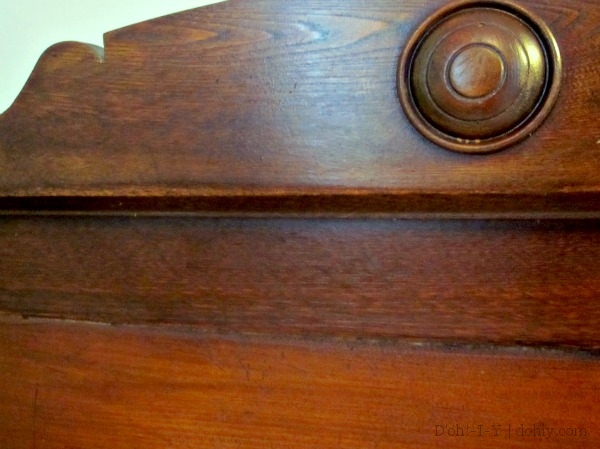
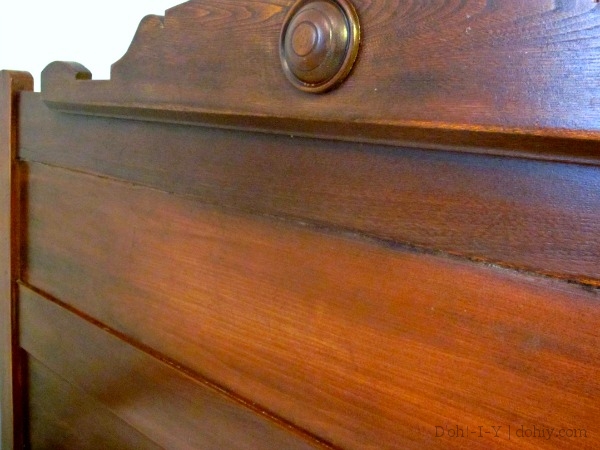
When I first brought the headboard home, I cleaned it and applied some stain restorer. That brought up the shine quite a bit, but it didn’t really deal with the scuffs and scratches, which are significant.

I guess Boots and Patches had some crazy nights back in the day.

I guess Boots and Patches had some crazy nights.

I was changing the bed recently and realized I still hadn’t dealt with those marks, so I thought it would be fun to try a couple of different techniques and see which worked better. I’ve used stain touch-up pens often, and I’ve also used the walnut trick, but I’ve never compared those techniques head to head. (Walnut trick?? Rub a walnut on finished wood to disguise scuffs.)

Ladies and gentlemen, let’s get ready to rumble!

Walnut v Marker

If nothing else, I keep myself amused.

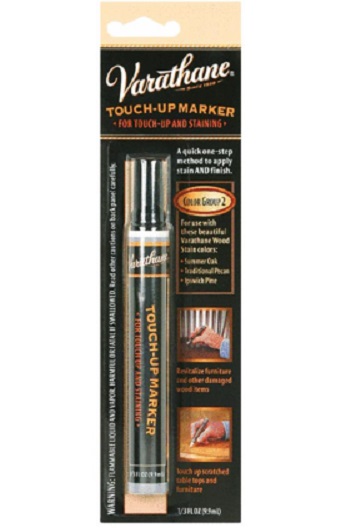
In this corner, A WALNUT. And in the other corner, a Varathane stain pen in Dark Walnut (because it would match the headboard better, not because it was also “walnut”).

Varathane Marker

I’ve used both Varathane and Minwax stain markers, and they seem about equally effective to me.

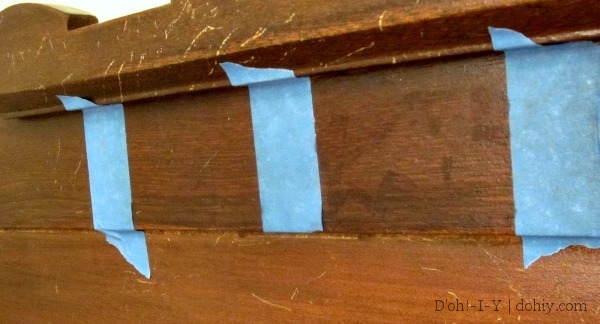
I taped off two areas and used the pen on the right and the walnut on the left. To be clear, you rub the walnut meat on the wood, NOT the shell!

test

Both worked, disguising the scratches by color but obviously leaving the scratches themselves in place (these options are not fillers). Even though both did the job, you can see the difference. Perhaps due to my technique, the pen is a little blotchy. I did buff the pen marks as I made them, and a little extra elbow grease will remove the blotchiness that’s there. But look at the walnut side! The scratches are disguised (except the one in the middle that I missed) and the walnut oil leaves the wood looking conditioned. I was so excited about the result that I did another area to the right of the stain marker space.

extra walnutingHere’s how this area looked before I started.

test areaEven better, the walnut option is quick — you don’t have to rub and rub to achieve stain pen coverage, and you don’t  need to de-blotch. It’s just a once-over. This whole test, including the extra area, took all of a minute.

I’ll admit, I was expecting the stain pen to win by a country mile — I’ve used walnuts before, but only as a stopgap when I didn’t have a stain marker. Putting the two options head to head was a surprise — knock-out by the walnut!

THE WINNER!

THE WINNER!

aliforeman_posterI’m not a boxing fan, but you probably guessed that the post title and quote are plays on the famous 1974 Ali-Foreman fight in Kinshasa, popularly referred to as “The Rumble in the Jungle.” This formula was repeated for the “Thrilla in Manila,” the championship fight between Ali and Frazier the following year. Thereafter, boxing lost its syntactical whimsy. Our runners-up:

  • Carnage on the Varnish
  • Pain on the Polyurethane
  • Skirmishings on the Furnishings

(I really loved Carnage on the Varnish, but I reckoned I’d disappoint a lot of non-DIY-minded Googlers.)

Posted in Decor, Furniture, Repair & Maintenance | Tagged , , , , | 3 Comments

Kevin Appreciation Month

Marge, look at me! We’ve been separated for a day, and I’m as dirty as a Frenchman. In another few hours, I’ll be dead!
– Homer Simpson

We were in England for Christmas, which was wonderful. Then I came home on New Year’s Day (not so wonderful). The Kev, however, stayed through for a family event, so he’s only been home a few days now. For the month of January, I was…

HomeAlone1_DVD

I wasn’t making that face in anticipation of being left to my own devices, though. A friend asked me what I was going to do with my time. “Wallow in my own filth!” I cheerily responded. (The Kev is neater than I am.) I knew I would miss him, but we have long-distance relationship experience, and I thought it would be nice to have a little time to myself.

But…when it came right down to it, I ended up working long hours, it was cold and dark outside, and the wallowing was not all that great!

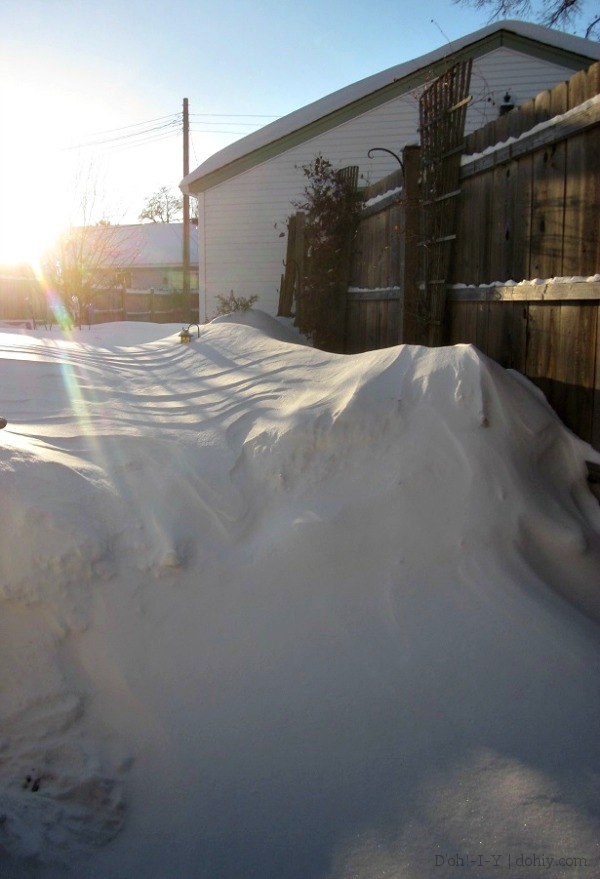
I kept things ticking over Chez D’oh — I managed the snow, for instance, but I didn’t dig out more than I had to. The path to the compost bin was not a high priority.

solar flare snow

The path is under there somewhere.

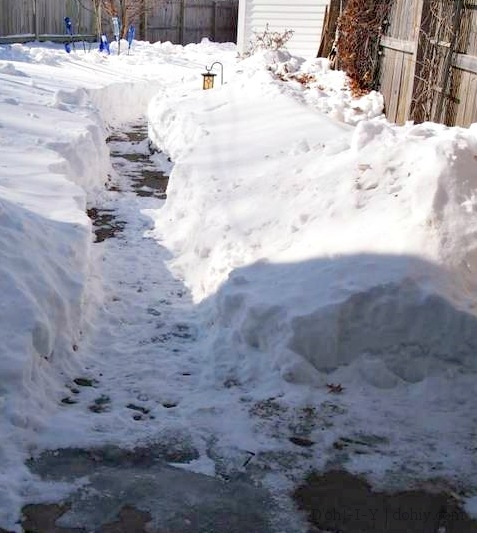
When Kevin returned, he took care of the things I skipped. This took the household from a “just getting by” attitude back up to “lovely homey home” status.

OLYMPUS DIGITAL CAMERA

There it is!

I didn’t realize quite how much we divide and conquer around the house. I also didn’t fully appreciate how much more fun even mundane DIY tasks are when we do them together. I still managed to repair the sofa and take care of a few other tasks while Kevin was gone, but NO FUN WAS HAD (comparatively speaking).

My Valentine’s week recommendation to you, then, is this: send your spouse away for a month! If you find yourself wishing he were home helping you strip paint, you’ll know you’ve got a keeper.

Related Posts Plugin for WordPress, Blogger...
Posted in D'oh!, Family, Romance | Tagged , , | Leave a comment