Holy Nesting Site, Batman!

Lisa: When the momma bird returns to feed her babies, we’ll have a prize-winning picture.
Bart:  Lisa, people these days don’t want to see a baby bird; they want to see celebrities at their worst.

– The Simpsons

Last year, a pair of robins nested on our stoop. “Nice location, except for the neighbors!” they told all their friends. “Always in and out all hours of the day and night — it’s ridiculous. And soooo snoopy!” But they soon became used to our comings and goings, and stopped scolding (and dive-bombing) us.

Momma Robin

Momma Robin

Up close and personal (with zoom)

Up close and personal (with zoom)

We have several birdhouses in the garden, but it was such a delight to have the robins right by the back door, raising their healthy little brood.

It can be a challenge for growing siblings to share a room.

It can be a challenge for growing siblings to share a room.

Robins don’t mate for life, but sometimes the same couple will team up in subsequent years, particularly if they were successful the prior year. We’re not sure if that’s what happened this year or not — we just know that we are hosting robins again!
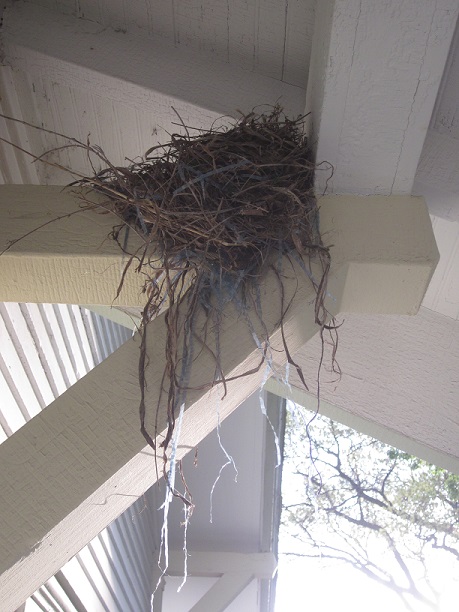
Exact same spot, slightly more flamboyant nest.

Exact same spot, slightly more flamboyant nest (same alligatoring exterior paint).

We don’t know if these are both the same birds, but it seems likely that at least one of them knows our stoop is a safe place. And the momma bird seems to be cool with our presence (which is good, since she’s sitting about a meter from our heads when we use the back door). We are so pleased to have robins again, and we’re looking forward to watching their progress.

Those of you visiting from th’other side of the pond might be laughing about my bird identification skills since the foregoing pictures are clearly not robins.

British robin, Erithacus Rubecula Melophilus

Now THIS is a robin! The British Robin, Erithacus Rubecula Melophilus (redder than pictured)

When I was a kid, I always wondered about the term “Robin Redbreast” since in my experience, robins have dull orange bibs. When the Kev arrived here, he also wondered about the robins. Turns out, robins are a different bird in England. The American Robin is named for the smaller European birds because of the bib, but other than both being birds, they aren’t closely related.

American Robin

Male American Robin, Turdus Migratorius (very unfortunate Latin name there!)

We have a lot of bird activity in our garden, which is partly because we have trees and partly because we actively encourage them. If you want to attract birds, here are some good resources:

And if you are British and want to know what a “stoop” is, click here.

Happy birding!
Posted in American vs English, Porch, Yard & Garden | Tagged | Leave a comment

Bedroom Paint: We Have A Winner!

Mmmm … Soylent Green …

– Homer Simpson

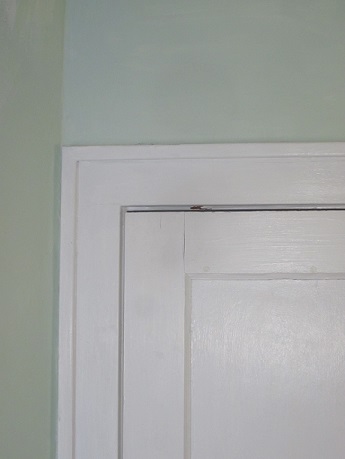
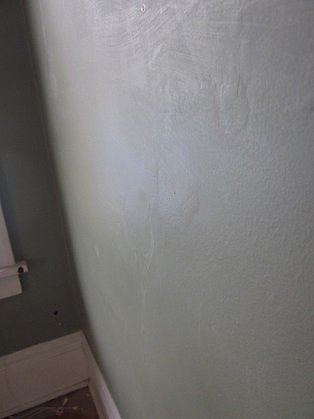
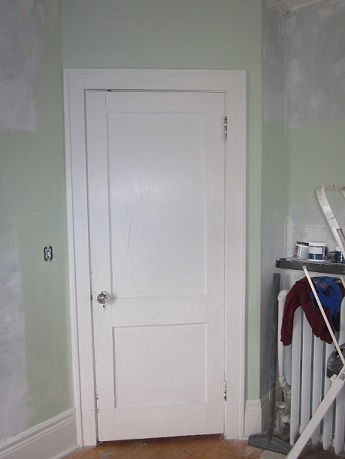
After considering the FIVE paint samples on the wall for a couple of days, we picked Benjamin Moore’s Hollingsworth Green (HC-141). I painted a thin coat all around the door to confirm our choice.

bedroom paint 1 bedroom paint

It’s very clean and fresh next to the white trim. Bright but still relaxing. Not particularly mint, which is the direction I thought I was going, but I was worried that mint paint would get old in a hurry anyway. So Hollingsworth it is!

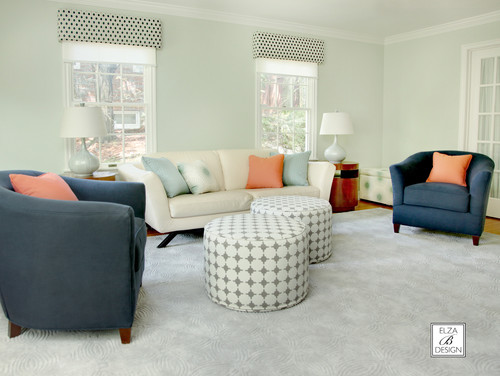
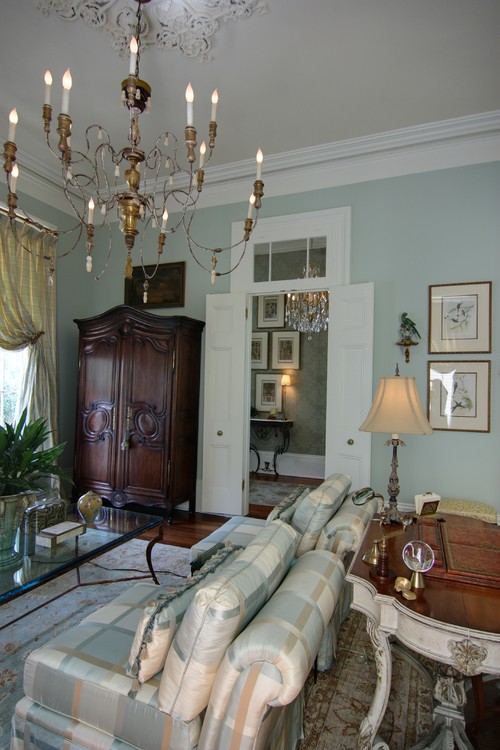
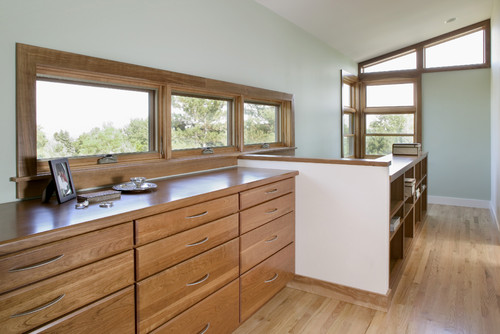
Here’s the color fully finished elsewhere (images from Houzz) in a variety of spaces and styles.

With the decision made, we still have surplus sample sizes of PPG Tint of Green, Sherwin Williams Filmy Green, and Benjamin Moore’s Van Alen Green and Prescott Green. If you are in the US, looking for a light green paint and want to try these, we will mail these four samples to you freeeeee — just leave a comment about what you are painting, and we will pick a comment at random and contact you for your mailing address.

Posted in Construction, Decor, Walls & Floors | Tagged | 4 Comments

It Isn’t Easy: Choosing Green Paint

Oh, figs.

– Lisa Simpson

Post-sanding: prettiest day ever.

Post-sanding: prettiest day ever!

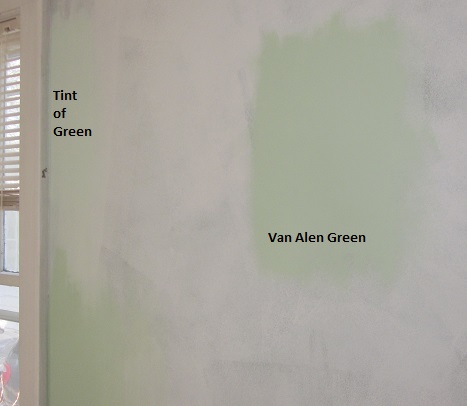
I finished sanding and priming the walls in the bedroom, and was looking forward to slapping a few paint samples on the wall. I’d followed my usual paint selection techniques, and I had three test samples to try:

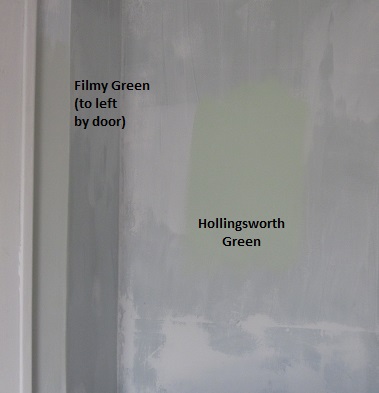
Tint of Green was a good match for an inspiration picture I’ve been loving on for awhile now. Filmy Green was a much lighter version of the color we already had (and liked). Prescott Green caught my eye on The Decorologist — a color she uses beautifully in her own home.

I was expecting to be seduced by the perfect green out of these three finalists.

"Pick me," our paint would whisper alluringly.

“Pick me,” our paint would whisper alluringly.

I put the samples on the wall, full of anticipation, and…

"Your expectations were overstated," gumbled Oscar.

“Your expectations were overstated,” gloated Oscar.

…paint sample FAIL. Instead of being drawn to the most beautiful of three tempting tones, I was confronted with three colors that, while lovely in other settings, just did not look like they would work in our room. Just to complicate matters, I ran out and picked up two more samples: Benjamin Moore HC-141, Hollingsworth Green, and HC-120, Van Alen Green. Those went up as well, and then I let everything get good and dry before peeking again.

green 1 green 2 green 3

They all improved with a longer dry time (although I’m having trouble getting them to photograph with any accuracy). First day impressions:

  • Prescott Green is probably out — it’s not as clean and pretty in our room as it is at the Decorologist’s place.
  • Tint of Green is a pale green, but it is kind of ELECTRIC(!!!) in artificial light, so it’s probably out.
  • Filmy Green…I like it…it’s a little boring…maybe boring is good? I don’t know.
  • Van Alen Green and Hollingsworth Green — both bear further observation (and maybe bigger swatches).

The Kev, always helpful, says, “They are all nice.”

Why stop at five (5!) samples?! Anyone have suggestions?

Posted in D'oh!, Decor, Walls & Floors | Tagged , | Leave a comment

Trying a Three-Way

Moe’s Tavern: Now with electricity!

– The Simpsons

Because the regulations about such things are much more restrictive in the UK, the first major electrical wiring project I did was when we remodeled our kitchen. I had a great time doing it and learned a lot. I learned much of it from a book.

Many things can be learned from books.

Many things can be learned from books.

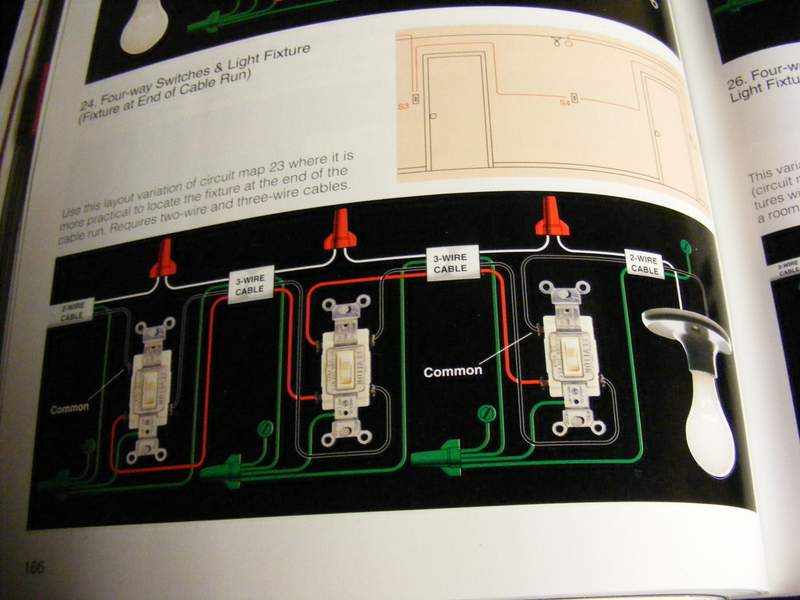
To be specific, The Black and Decker Complete Guide to Home Wiring. One of the nice things about this book is that there is a whole section of wiring diagrams. All you have to do is find the appropriate diagram for what you want to do, and away you go.

There are three doors in our kitchen, and we thought it would be most convenient to have a light switch for the overhead light next to each door. So I found the diagram that explained how to configure the wires for the light. Three switches for one light means using four-way switches. (That didn’t make sense to me either.)

Wiring diagram for four-way switches and light fixture.

Wiring diagram for four-way switches and light fixture from the Black and Decker book.

Well, everything went great. I wired the light and switches in the way shown in the diagram, and it all works fine.

But here’s the thing. I have no idea how this works. I have studied this diagram for ages trying to work out why it works, but I still have no clue. I use these switches every day, and I still marvel at the fact that they work.

I think the thing to take away from this is that it doesn’t matter. You don’t need to understand it to follow a wiring diagram, as long as you can accurately follow it. Just like I don’t really know how this computer works.

But if anyone can explain it to me, I’d be very interested.

Posted in Electrical, Kitchen | Tagged , , | Leave a comment

Don’t Lick This Spatula: Touching Up Plaster Walls

Marge: Homer! You didn’t do a very good job frosting Maggie’s birthday cake.
Homer: What? It’s not Magaggie’s birthday?

– The Simpsons

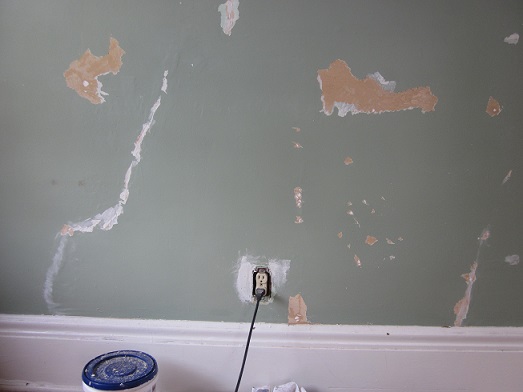
One of the great perversities of home improvement is that when paint is applied to woodwork, it tends to obscure details, but when paint is applied to a wall, it emphasizes Every Tiny Flaw. And in a house over 90 years old, there are quite a few flaws.

Wall smoothness FAIL

Wall smoothness FAIL

But joint compound or patching plaster can help shape things up. It won’t be perfect, but the human element is one of the charms of plaster walls.  RIGHT?

Start by looking for places that the surface is cracked or paint is not adhering well, and use a scraper to remove anything loose. I work the surface back to where everything seems to be hanging together really well.

Picking at the plaster

Picking at the plaster

I also uncover cracks and follow them until they disappear. After a while, the wall will start to look like it’s picked up some sort of pox.

Shabby chic yet?

Is it shabby chic yet?

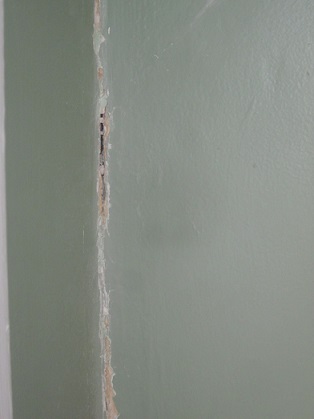
There will be some cracks in the walls themselves, but a little digging often reveals a crack in the corner where the plaster comes together. I fill these with caulk and then run a bead all the way up the seam and smooth it over. The regular cracks also receive some love in mastic form.

Corners need attention, too.

Corners need attention, too.

I let that goo dry, and then I whip out my cake decorating skills! Using a plaster spatula (this is actually what this tool is called — I thought I was just being silly all these years), I spread joint compound into and over the gaps and dents I’ve just created. If there’s an area that’s just a little rough, I’ll skim coat it, but most of the application is a cover up operation.

Is this an improvement?

Is this an improvement?

After this application is fully dry, I’ll go back and hit it with the palm sander to smooth everything down. Sanding may reveal a few places for a little more touch-up work, but that’s generally pretty minor.

After sanding, it’s primer time, yay! You might say I’m already primed to prime, but that’s an understatement. I’m 101% ready to move this project along! (I wish I had another math joke, but I guess that’s the only reference I have that’s divisible by itself and one.)

Posted in Construction, Repair & Maintenance, Walls & Floors | Tagged , , | Leave a comment

Bedroom Project: Slow, Not So Steady

For dangerously underweight individuals like yourself, I recommend a slow, steady gorging process combined with assal horizontology.

– Doctor Nick

Hey, remember the bedroom project? Remember? Good times! Good times that are still underway, as it turns out. But work is becoming less completely consuming for both of us, and my teaching thing is almost done for the semester, so we’re picking up the pace (if there could be said to have been a pace of any sort). Here’s a quick update on our status:

1. Storage Bed

The bed is stained and finished, and still living on the porch.

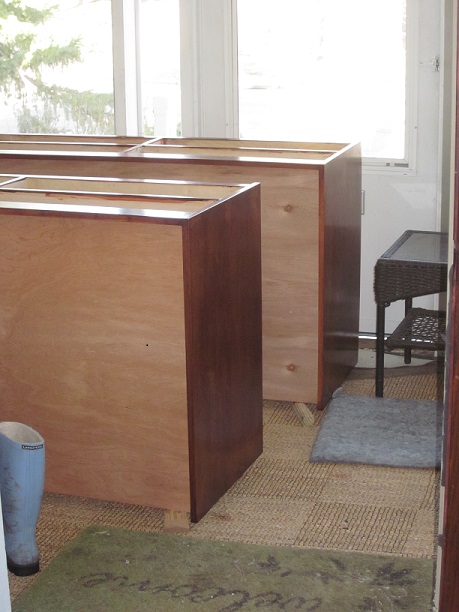
Stained bed, still blocking any use of the porch whatsoever (well, except use as a furniture storage facility)

Stained bed, still blocking any use of the porch whatsoever (well, except use as a furniture storage facility)

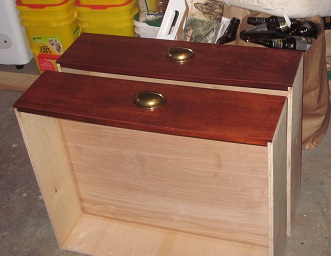
The drawers are done as well, and I’ve attached the pulls to the fronts. They are living in small groups in the basement.

A mating couple in their captive habitat

A mating pair in their captive habitat

I used my gel stain procedure on the bed, and finished with two coats of a wipe-on poly from Minwax (in satin finish, so not too shiny). I also sanded the insides of the drawers and applied clear caulk around the interior joints to prevent splinters in clothing (never fun).

Next: finding a replacement mattress, fitting metal drawer glides and adding bolts to hold the two sides together.

2. Floor

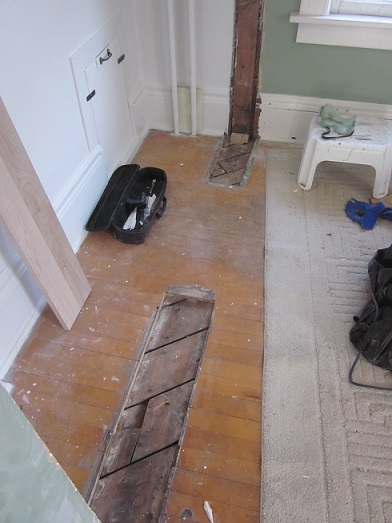
The Kev has been sawing away at the gaps in the floor and is about ready to put in the gap-filler floorboards.

Can you tell where the door was?

Can you tell where the door was?

I originally thought we’d saw out the boards where the door was and make the patch go all the way across the opening, as we (necessarily) did with the kitchen door. But Kev thought it would be cool to leave the doorway floor intact so future owners would be able to “see how the closet was originally configured.”

“Like the Sistine Chapel restoration?” I queried.

“Yes,” he said.

Repainting was textured so restoration work could be distinguished.

Biggest art restoration of the 20th century on the one hand…our bedroom floor on the other!

Next: attaching new floorboards and sanding/refinishing the whole dang floor.

3. Closet Framing/Doors

The doors arrived and I bought some knobs for ’em. They’re living in a corner of the dining room.

Next: pretty much everything having to do with that.

4. Walls and Ceiling

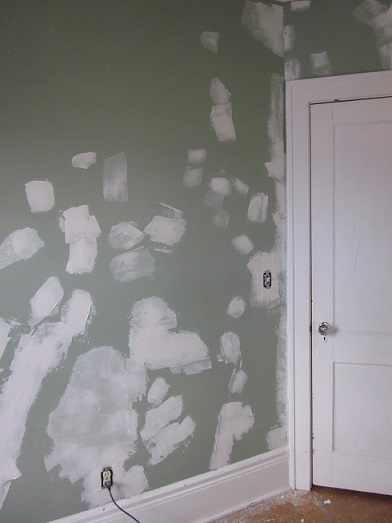
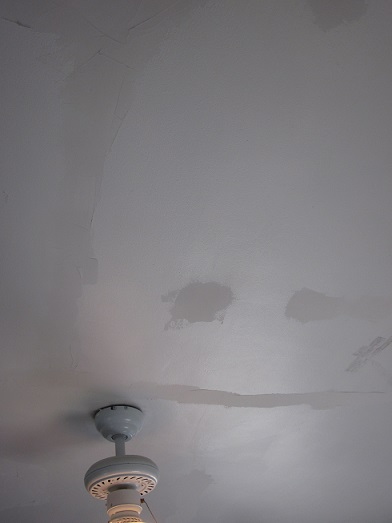
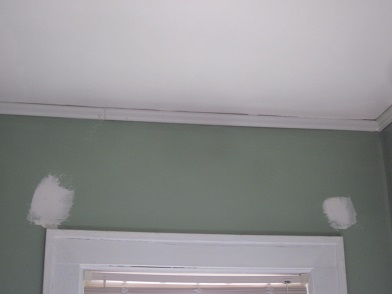
I’ve touched up the plaster on the ceiling and walls using joint compound, but I haven’t sanded that work flat yet.

Ceiling plaster patches awaiting sanding. Is it just me who sees a sad clown face in this picture?

Ceiling plaster patches awaiting sanding. Is it just me who sees a sad clown face in this picture?

The walls are going to take some additional work beyond the basic hole-patching, especially under the windows, so I’m going to sand everything at once when those areas are ready to go.

Patched curtain-rod holes

Patched curtain-rod holes

Next: patching wall issues, sanding, priming, painting, installing moulding. And painting that.

5. Everything Else

Of course, there are other lists, with their own sublists, but let’s focus on the positive. I bought a vintage etched mirror for the wall! And a storage ottoman for the vanity table! So I appear to believe we’ll be done some day.

Progress! Maybe we’ll be back in there this year. I’d welcome words of encouragement if you’ve been there and reached the other side.

Posted in Construction, Walls & Floors, Windows & Doors | Tagged | Leave a comment

Mind the Gap

I’d be happy to help out. What can I do-diddily-doodily-diddly-hobbily-hibbily-gobbily-gobbily-gobble-gabba-gabba-hey?

– Ned Flanders

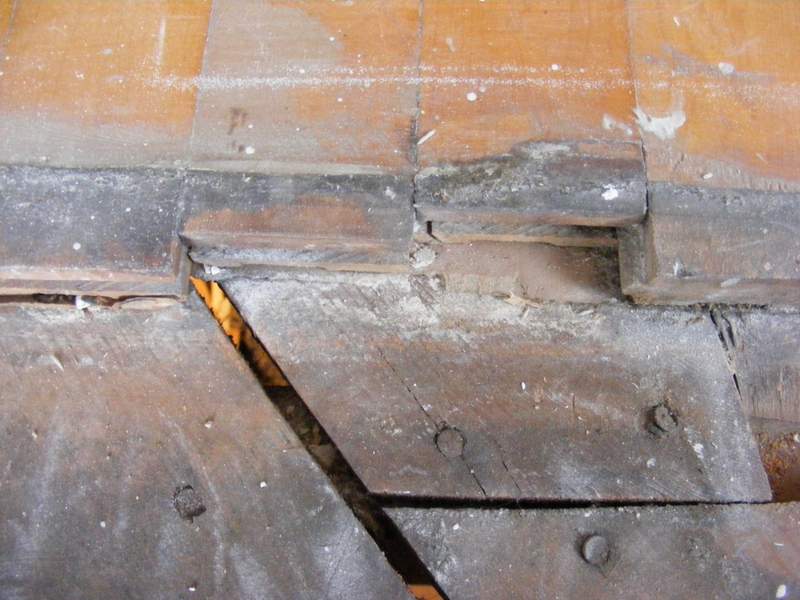
We recently took out a wall in one of the bedrooms to improve access to the closet. Of course, where the wall used to be, the hardwood floor isn’t. Instead, what’s left is a jaggedly edge of hardwood floor ends.

With the wall in place, nobody sees the hardwood edges, so there's no need to tidy them up.

With the wall in place, nobody sees the hardwood edges, so there’s no need to tidy them up.

I came across this situation once before in this house. It was when we were remodeling the kitchen.

The traffic flow through our kitchen used to be horrible, and Stacey and I had some quite spirited discussion about how to change it. The solution was to block off one door, and open up a new door at the other end of the same wall.

In that case, I also had to deal with a jaggedly wooden edge.

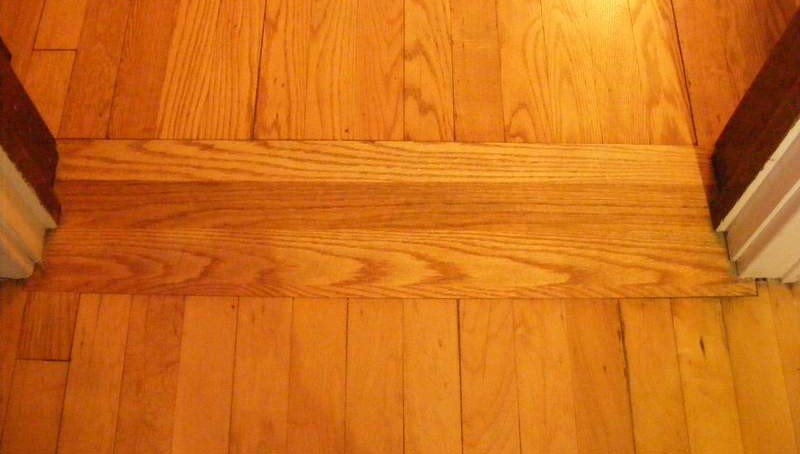
We decided to use one solid piece of oak (actually a stair tread) to span the gap between the hardwood floors of the kitchen and dining room.

One piece of oak filling the gap between the kitchen and dining room floors.

One piece of oak filling the gap between the kitchen and dining room floors.

The question was: how to cut off the jaggedly edges and leave a nice straight edge for the new piece of wood to butt up against. My solution at that time was to drill a series of 1/8″ holes along a straight line. I drilled the holes as close to each other as possible, without the drill slipping into the previous hole.

This, of course, took quite a lot of holes!

When I’d eventually drilled all the tiny holes, I used a chisel to cut the wood that remained between the holes. After the chisel had done its job, I used a sander to smooth off the rough bits and to straighten out any kinks.

This was a very long and arduous method. So, when I was presented with the same task, only on a longer stretch of floor, I decided to use a different method. This time I’m using the sawzall!

Bedroom floor jaggedly edge partly tidied up.

Bedroom floor jaggedly edge partly tidied up. So far, I’ve sawn the part on the left from the foreground to the middle distance (the straight bit).

The task is still not easy or fast, but it is much better than the previous method.

Because the hardwood is, well, hard, the saw blades get hot. So, I’ve been using two blades; I swap them over when the one in the saw overheats.

It’s going to take a while this way, but I’m hoping for good results.

Posted in Construction, Walls & Floors | Tagged , | Leave a comment

Composting Made Easy (Because It Is)

Lisa: I started an organic compost pile at home.
Jesse: Only at home? You mean you don’t pocket-mulch?
Lisa: Oh, it’s so decomposed!

– The Simpsons

Occasionally, I do community education sessions on gardening topics. My favorite subject is composting. People come in having read lots of complicated instructions online, and I have the fun of telling them how easy composting really is in practice. Basically, if you make a pile of vegetative matter, it’s eventually gonna rot. There’s not much you can do wrong!

Rotten goodness! (image: Sonoma County Master Gardeners)

Rotten goodness! (image: Sonoma County Master Gardeners)

The more complex instructions, including carbon/nitrogen ratios, layering techniques, and compost thermometers, aim at the fastest possible end result. If you just want a place to put your leaves and scraps to make compost at some point, it’s much easier.

What you don’t need:

  • An understanding of C/N ratios (thinking browns/greens is more intuitive).
  • Compost starter of any sort (microbes that make stuff rot are everywhere).
  • A compost thermometer (life’s too short).
  • A special plastic bin (fills up too fast and often ugly as sin).
  • A kitchen scrap caddy with charcoal filter (plastic baggies or cookie jars work fine; if it smells, take it out).

What you do need:

  • An outdoor spot for a pile of stuff.
  • A pile of stuff.
  • A garden/manure fork.

What to do:

  • Pick a place for your compost pile. You probably want to make this somewhere that isn’t in the middle of your view (or your neighbor’s).
  • Start throwing down some plant-based stuff. No animal, meat or dairy waste (eggshells are ok). You can throw in coffee grounds and filters, tea bags, and shredded black-and-white newsprint — they are plant-based too. Avoid throwing weed seeds in there in case they don’t get baked enough.
  • Try to vary the size of the stuff. It’s good if air flows through the pile a bit, and variously sized chunks gives you the needed texture.
  • Think roughly 2:1, browns to greens. Or 3:1, or 4:1. There’s disagreement on this, so basically, have some of each, but more browns. A “green” is something that would become slimy if left in your fridge for a while. A “brown” is dead leaves, newsprint — the vegetative stuff that wouldn’t get slimy in your fridge. These things aren’t necessarily green or brown, obviously. Don’t worry too much about the ratio, though — if you have a lot of leaves in there, boost up the wet, juicy kitchen scraps a bit, or vice versa. If the ratio’s wrong, it will still rot.
  • Every couple of weeks, take your fork and turn the stuff over a bit. If you don’t, it will still rot — it will just take a lot longer.
  • If the pile dries up, sprinkle some water on it. It helps if it stays moist but not soggy. But if you don’t, it will still eventually rot.
  • When you start to get some finished compost, throw that business down in your garden beds. BOOYA!

You can make this more complicated or fancy. We have a two-bin system on a concrete platform that works great, but we made it out of scrap wood (free!), and it’s just an enclosure for a couple of piles of stuff. A chicken-wire cylinder is also good, but it’s still a pile of stuff. That will eventually rot. (Lots of designs are available here, here and here.)

Our two-bin system, made of pallet wood, while under construction.

Our two-bin system, made of pallet wood, while under construction.

Only the internet could make “put things in a pile and let them rot” into a source of confusion and overwrought commentary! I hope this post helps make this process as simple as it really is.

Posted in Outdoor Building Projects, Yard & Garden | Leave a comment

The Best Housecleaning Advice, Ever!

I can’t believe it. I’ve done all my housework, and it’s only 9:30. Well, better go upstairs and make sure the beds are still made.

– Marge Simpson

Our house gets messy when there’s a project on. Temporarily relocated furniture everywhere, tools on random surfaces — the chaos just breeds. Our usual chore roster doesn’t cut it.

Like this, minus the Wookie.

Like this, minus the Wookie.

Clutter makes both of us nuts, and I hit my limit today and went on a cleaning spree. For some reason, it’s typically only when I’m in a cleaning frenzy that I remember the best tidying tip I ever heard (from my mother, naturally):

Don’t leave a room empty-handed.

If you are walking through the dining room, pick up the tablecloth and drop it in the laundry; in the laundry, grab the clean clothes and take them to the bedroom. In the bedroom,  grab the mugs and drop them in the kitchen. Pick up the gel stain and polyurethane languishing in the kitchen (seriously) and set them in the workroom.

Usually tidying involves lots of just walking from place to place. If I make an effort in each room to look around and grab a few things that belong in the next room I’m headed to, it all gets done so much faster.

So YAY, MOM! for an enduring piece of advice, even if I only remember it when I’m on the edge of a clutter-induced nervous breakdown.

Posted in Organization | Tagged , , | Leave a comment

Bedroom: Minty Fresh?

Lisa: Mmmm, smells like mint!
Homer: Oh, I spit my gum in there.

– The Simpsons

We are now working on the bedroom walls and ceiling, touching up the plaster and woodwork. I’ve also finished staining and sealing the storage bed (pictures to follow). Layering those two tasks led me to a discovery.

tikigiki_people-woman-002DIY Ladies! 

Wood stain embedded in your cuticles…again?

Tired of all that scrubbing and bleeding?

Just follow this hot tip instead! Have a mastic manicure. Just cover your nails in caulk, let dry and peel off!

It’s MAGIC.

I really need to be better about wearing gloves.

After the walls are prepped and primed, it will be nearly time for paint. Our bedroom is kind of a mid-range gray-green right now, and we want to stay green but go lighter. Using my paint-picking method, I’ve got three good possibilities, now reduced to samples I will put on the wall after the primer is up.

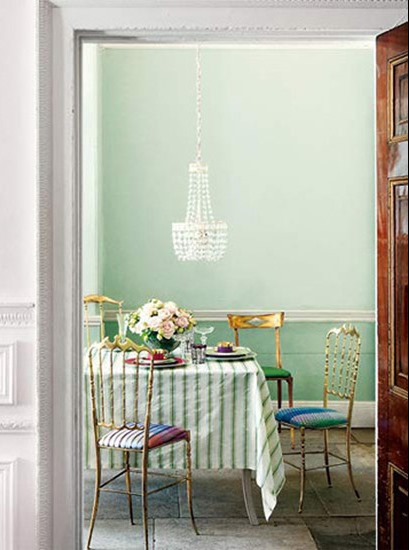
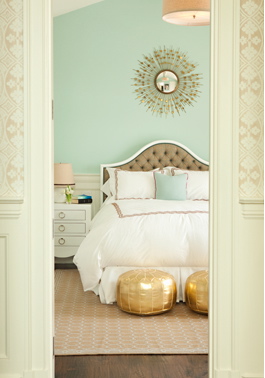
One of them is a light mint-green. This may change when I see it on the wall, but right now, it’s the color I’m most drawn to. It’s a close match to the upper walls in this photo, maybe a bit lighter:

As seen basically everywhere on the internet, but my research says it originally came from House & Garden magazine, sometime in 2009.

As seen basically everywhere on the internet, but my research says it originally came from House & Garden magazine, sometime in 2009.

I like how this shade contrasts with the dark woodwork, which is so like what we have in the hallway leading to the bedroom. And our hardware will be gold-toned. It could work, right??

I want a color that makes me feel happy like our crisp aqua bathroom does, and this color does that. But I’m worried we’ll tire of mint in a hurry. I’ve been perusing a lot of pictures to check my tolerance. This one is brighter than I’m thinking, but still pretty. (I think I’m the only blogger who isn’t gaga over the sunburst mirrors. They’re fine, I guess, but do they need to be in every room?)

This is brighter than I'm thinking, but still pretty.

Source unknown: it seems to be everywhere.

This next one is a more sedate shade. This was actually a “before” picture on HGTV, but it is a good demonstration of the color.

This was actually a "before" picture on HGTV I picked for the paint colour.

HGTV.com

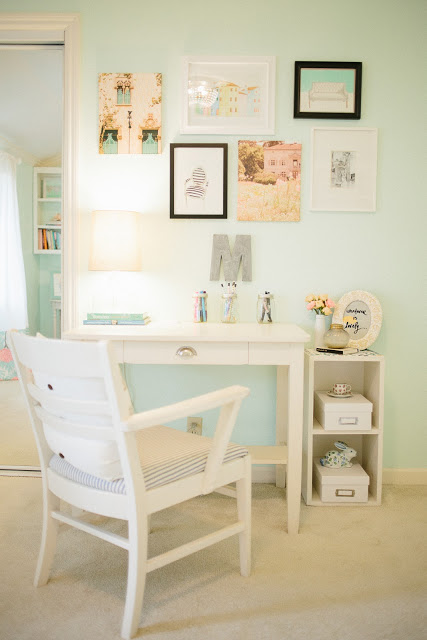
I like mint against lots of white as in this next shot.

From Michaela Noelle Designs

Fresh and bright, from Michaela Noelle Designs

Of course, once I slap some on the wall to check, I might hate it. But is it silly even to consider? Would it be too girly for a master bedroom? Too bright? Too much like living in a toothpaste palace? All opinions welcome!

Related Posts Plugin for WordPress, Blogger...
Posted in D'oh!, Decor, Walls & Floors | Leave a comment