Cabinet of Dreams, Part I: Genesis

My dreams will go unfulfilled? I don’t like the sound of that one bit.

– Homer Simpson

When we bought this house it ticked most of our boxes. The only box left unticked was the one next to “Fireplace.” But other than not having a fireplace in the sitting room, this house was exactly what we were looking for, so it seemed like a reasonable compromise.

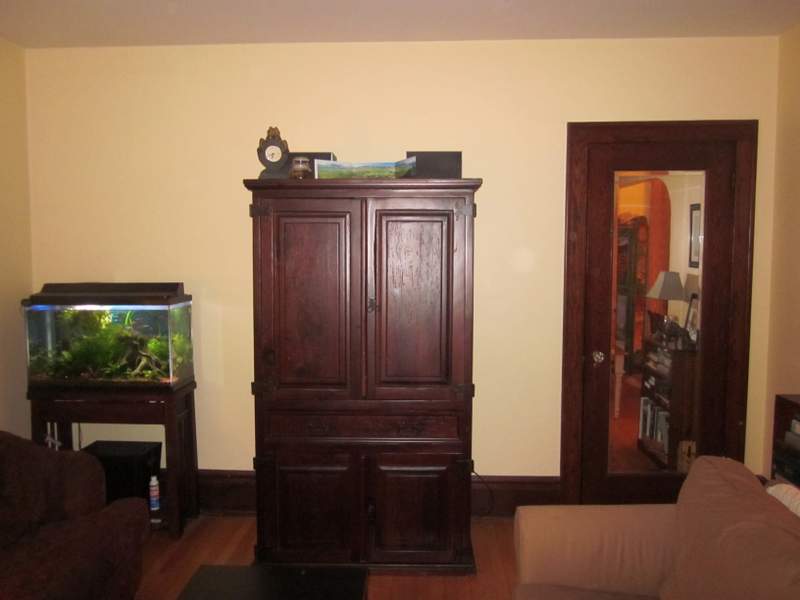
The way it was in our sitting room.

Our living room before we set about building cabinetry and after we’d done a lot of tidying.

This was our sitting room back in February 2012. The armoire, which we bought at Slumberland circa 2000 AD, was designed to house a giant TV from the 90s. It was quite an imposing piece of furniture, and tended to loom over the living room. But it was very useful for housing all the electronics, DVDs, and CDs, and keeping the clutter at bay.

Our sitting room before we installed cabinetry

No clutter, but no other particular visual appeal

After we bought a flat screen TV, we realized that we no longer needed such a deep cabinet. We began to think about making a built-in cabinet that the TV could stand on top of, and the electronics could go inside of. That way, we would have the same storage capacity with less loominess.

Then we began to talk about incorporating the fireplace we’d always wanted into period-appropriate cabinetry, simultaneously satisfying our desire for fire and reducing room loominess. Stacey did some research and found that fake fireplaces were even a thing in the 1920s, so it was arguably period-appropriate. And that was how we developed our cunning plan to construct a built-in cabinet and fireplace.

Quest for fire quad poster

Could our quest for fire be satisfied?

Having decided in principle to build cabinetry into our sitting room, we began to think about the major issues, such as:

  • Deciding what type of fire (solid fuel, gas, or electric) to install,
  • Finding a fireplace surround that we liked, and
  • Designing the associated built-in cabinetry.

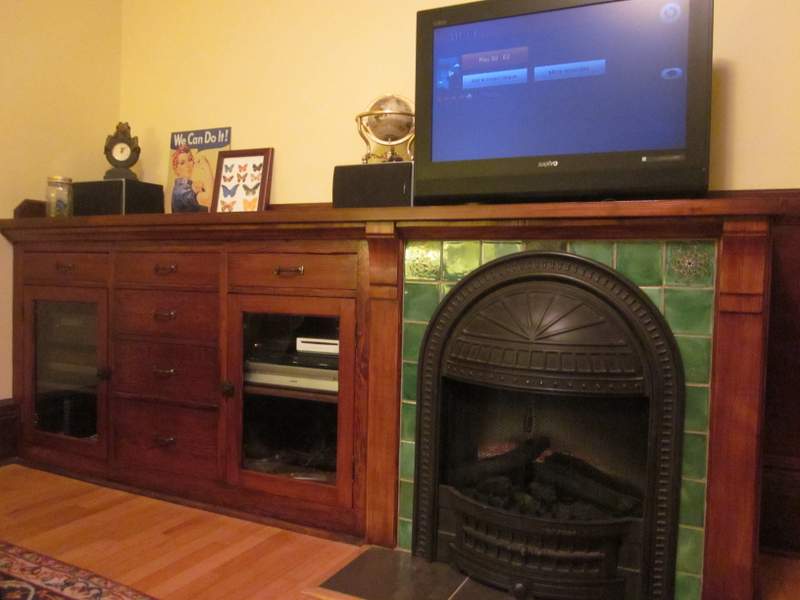
Clearly, this was a project where we would have to decide what we were doing, and with what, before we broke up a perfectly good sitting room. Eventually, we came up with answers to most of our questions, and this was the result.

The finished cabinetry, incorporating a fireplace.

This is the first “after” picture we took of the finished cabinetry, incorporating a fireplace.

For the next few posts, I’m going to be talking about the process we went through to get to this point and beyond. The first thing we tackled was deciding which kind of fire to install, which will be tackled in turn in the next post.

Update! links to the other posts in this series:

2: Light My Fire–how we selected a fake fireplace

3: You Don’t Know What You’ve Got–how we found and prepped the cabinet

4: The Building Part–how we built the structure

5: A Firry Tale–how we found and used vintage wood for trim

6: The Tiling–how we picked and installed fireplace and hearth tiles

7: If You Build It–the finishing touches and the final reveal

Posted in Before & After, Construction, Decor, Furniture | Tagged , , , , , , | 2 Comments

DIY Instagram Coasters

Today, we are so happy to host Christine and Jan from Little House on the Corner, one of our favorite DIY blogs. Please jump over to check them out–they are prolific and terrific!  – Stacey & Kevin

Hi Guys, it’s Christine & Jan here from Little House on the Corner! We’re really excited to be stopping by and sharing this quick little craft idea with you – DIY Instagram Coasters.

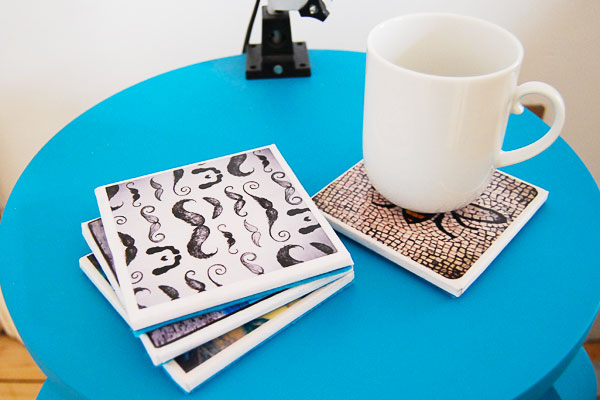
01 DIY CoasterIf you’re anything like us, you’ll have a load of Instagram pictures without actually doing anything with them all. When we came across a random box of little square tiles in our cellar, making these coasters instantly seemed like the perfect way to use some of them.

They’re really quick & easy to make and you probably even have most supplies lying around already.

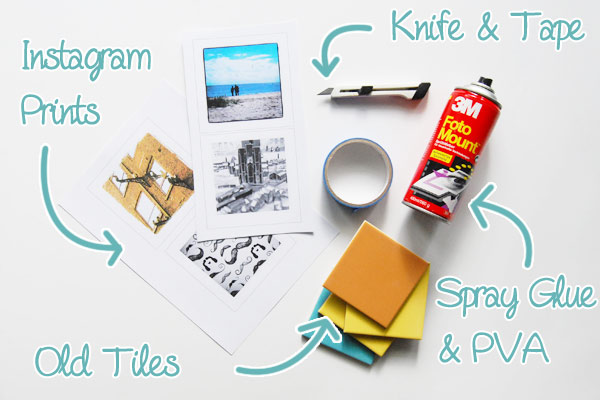
This is what you’ll need to make your own:

02 DIY Coaster

  • Instagram prints
  • Tiles
  • Spray glue (you could use any other glue, but you’ll have to make sure that you apply it evenly)
  • Craft knife & sticky tape
  • Scissors (not shown)
  • Felt (not shown)
  • PVA (not shown)
  • Varnish (optional)

This is how to make them:

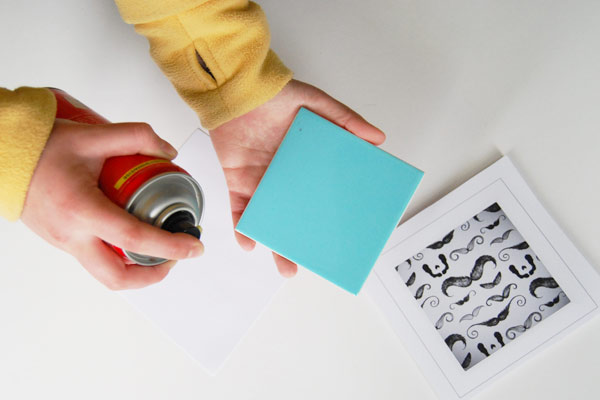
#1 After deciding which of your Instagram images you want to turn into coasters (this the most difficult step of the whole process!), print your images onto some paper. We just used our standard inkjet home printer and printed onto some normal (thick-ish) paper. Make sure to print your images the same size as the tiles. Then cut out your print leaving an edge that you can later wrap around your tile and secure on the reverse side.

#2 The next step is to secure your print to the tile. Apply your glue evenly (that’s why it’s a bit easier with spray glue) to the surface of the tile.

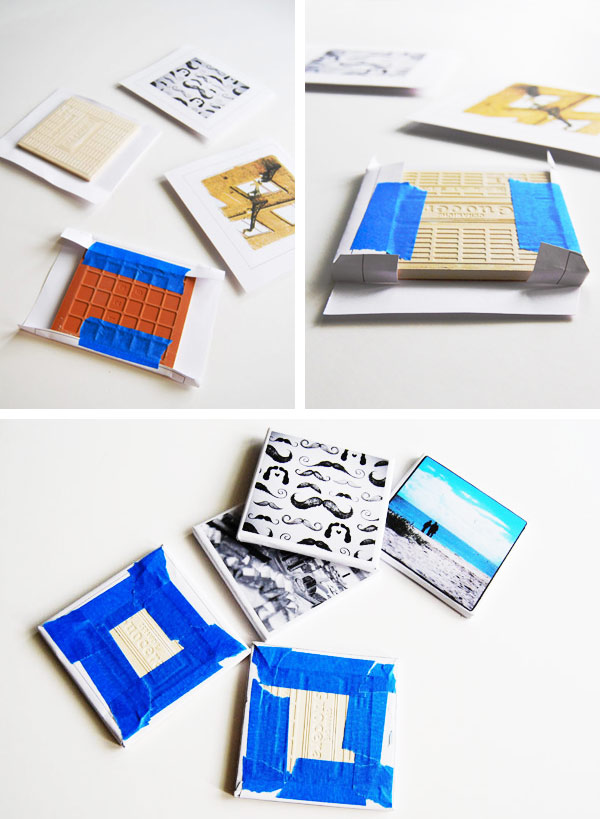
03 DIY CoasterThen place your image on top and make sure it’s completely stuck down. It’s really important that the image is stuck down all over, otherwise you’ll probably end up with air bubbles later on.

#3 When the glue has dried, you can start to wrap the overhanging paper around the tile.

04 DIY CoasterIt’s a bit like wrapping a present! Make sure to pull the paper taught and then secure it on the back of your tile with some sticky tape. We found that we could achieve the neatest result, by carefully trimming the corners first. Don’t worry too much about the look of the back of your tile, as we’ll be covering it later.

#4 Now that you’ve made your coaster, it’s time to seal the picture.

05 DIY CoasterPaint at least 3 coats of PVA over the tile, making sure to let each coat dry before applying the next – this should make your tiles waterproof. Painting them with PVA (which will dry clear) not only seals the coaster, it also gives them a nice sheen. If you want them to be really durable, you could apply a coat of clear varnish, too.

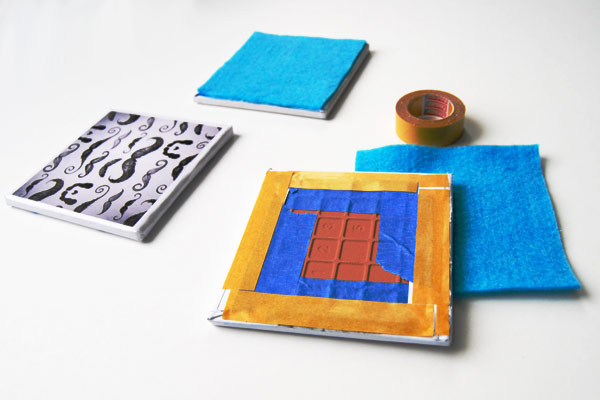
#5 All that’s left to do is cover the back of the coaster.

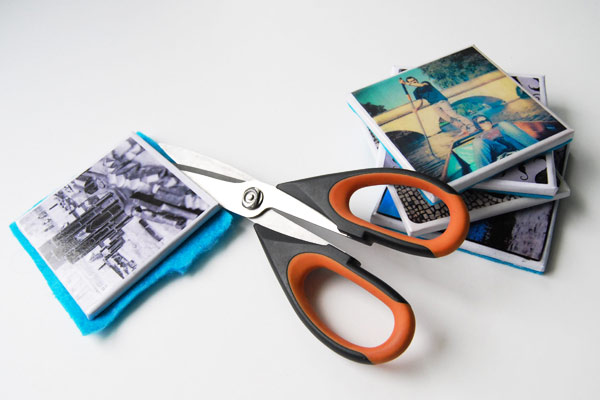
06 DIY CoasterRoughly cut a piece of felt to the size of your tile and glue it to the back of your coaster. Then, using the edge of the tile as a guide for your scissors, trim the felt to the exact size.

07 DIY CoasterThat’s all there is to it, told you it was easy!

08 DIY CoasterWe love how they add a personal touch to the coffee table. Of course they’d also make a cute personal gift for someone, too!

Thanks so much to Stacey and Kevin for asking us to stop by! If you’d like to see more of our crafty projects, home improvement efforts or DIY disasters, why not pop over and pay us a visit at Little House On The Corner.

Posted in Decor, Food & Drink | Tagged , , , , , , , | 1 Comment

DIY Quartz: Checking the Measurements

Two more feet, and I can fit it in the fridge.

– Homer Simpson

When we ordered our quartz, the kitchen person told us to await templates that we could roll out over our existing counters to check our measurements. Yesterday, they arrived!

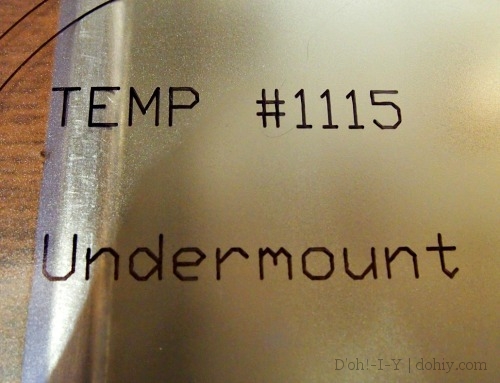
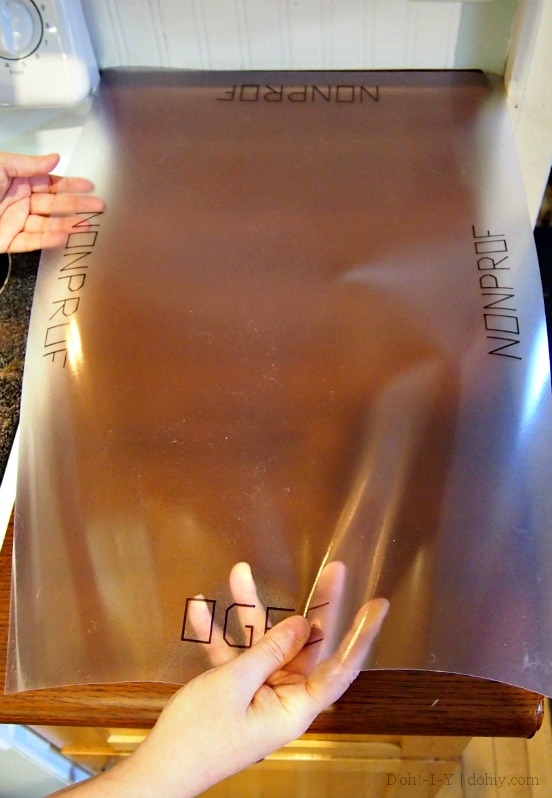
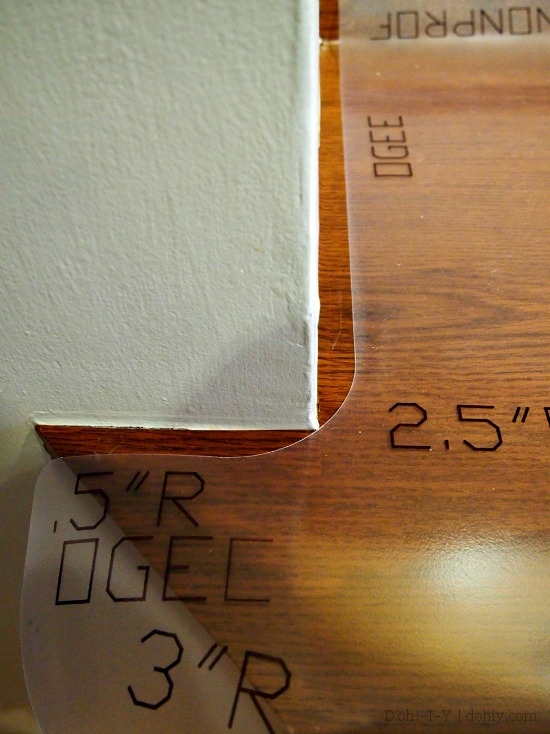
The templates are vinyl sheets cut to size with all the edges and cuts shown in place. I was weirdly delighted that all the information had been hand-lettered by a draftsperson rather than machine printed or scrawled.

OLYMPUS DIGITAL CAMERA

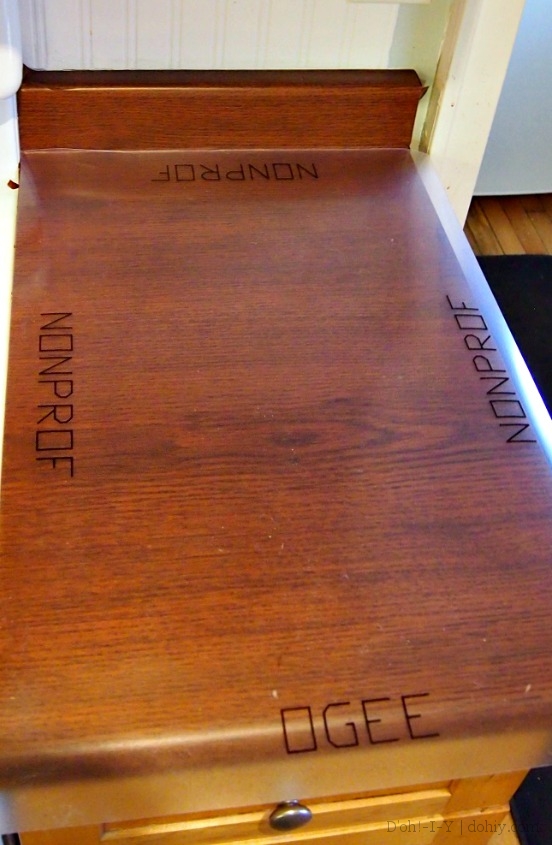
Rolling out the templates accurately was a little tricky because we currently have a 4-inch backsplash that the new surface will not.

OLYMPUS DIGITAL CAMERA

For both obstacles, we push the template up as far as possible and checked the offset, then floated the pattern pieces over the top and eyeballed everything again.

OLYMPUS DIGITAL CAMERA

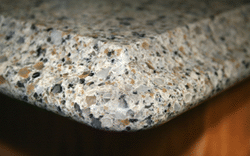
By the way, “OGEE” on the templates refers to the edge we ordered for the front of the counters. It’s a routed edge, while the edges at the ends and against the walls will be flat.

Ogee edge from the Riverstone quartz site

Ogee edge from the Riverstone quartz site

We have three countertop areas. Two of the three checked out just fine. But something was lost in translation on the third.

OLYMPUS DIGITAL CAMERA

If there is a problem with the templates, you take them back to Menards, where they will correct the order. The measurements for this piece were right, but we didn’t love the idea of an ogee edge and inside radius up against the wall. So it was back to Menards!

It turned out that the piece had been entered correctly in the system, but the template-maker got it wrong on the vinyl. I imagine it must have really seemed like an unlikely piece to the fabricator! Kev printed off a photo of the weird corner, and the department manager will fax that over on Monday.

The angle goof is a bit of a frustrating setback, but I’m glad we found out now. The template is an option that the buyer can delete from the order, but it’s less than $40 and completely worth it. If this finished piece arrived with an inside radius corner and the wrong edge, we’d have a situation of high vexation. Plus, it was really useful to check our measurements with something tangible–it would have been easy to make a mistake at our end.

We’re getting there! If the change can be made by fax, we are looking at April delivery.

Posted in D'oh!, Kitchen | Tagged , , , , , | 5 Comments

A Frayed Knot

Doll: I’m Krusty the Klown and I’m going to kill you!
Homer: Heeheehee! Didn’t even pull the string that time.

– The Simpsons

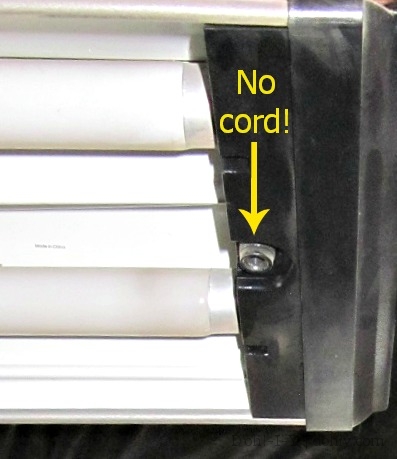
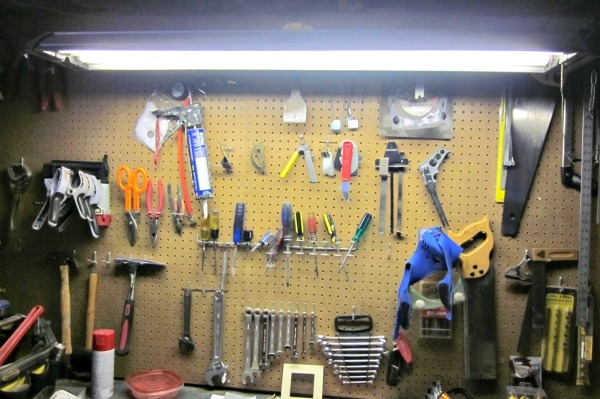
When I squared up the Princess Leia frame the other day, I worked by faint, cold light filtering through a tiny, high window. I do love martyrdom, of course, but on this occasion, my suffering was because the pullchain on the big worklight was broken.

nocord

If you have pullchain lights or fans, you’ve likely had the fun surprise of pulling the chain or cord clear out of the fixture.* I’m certain light and fan manufacturers would prefer that you buy a replacement unit, but fortunately, swapping out one of these switches is not difficult. You just need a basic grounding (heh) in electrical work, including how to apply a wire nut.

porcelain thing

Not for this

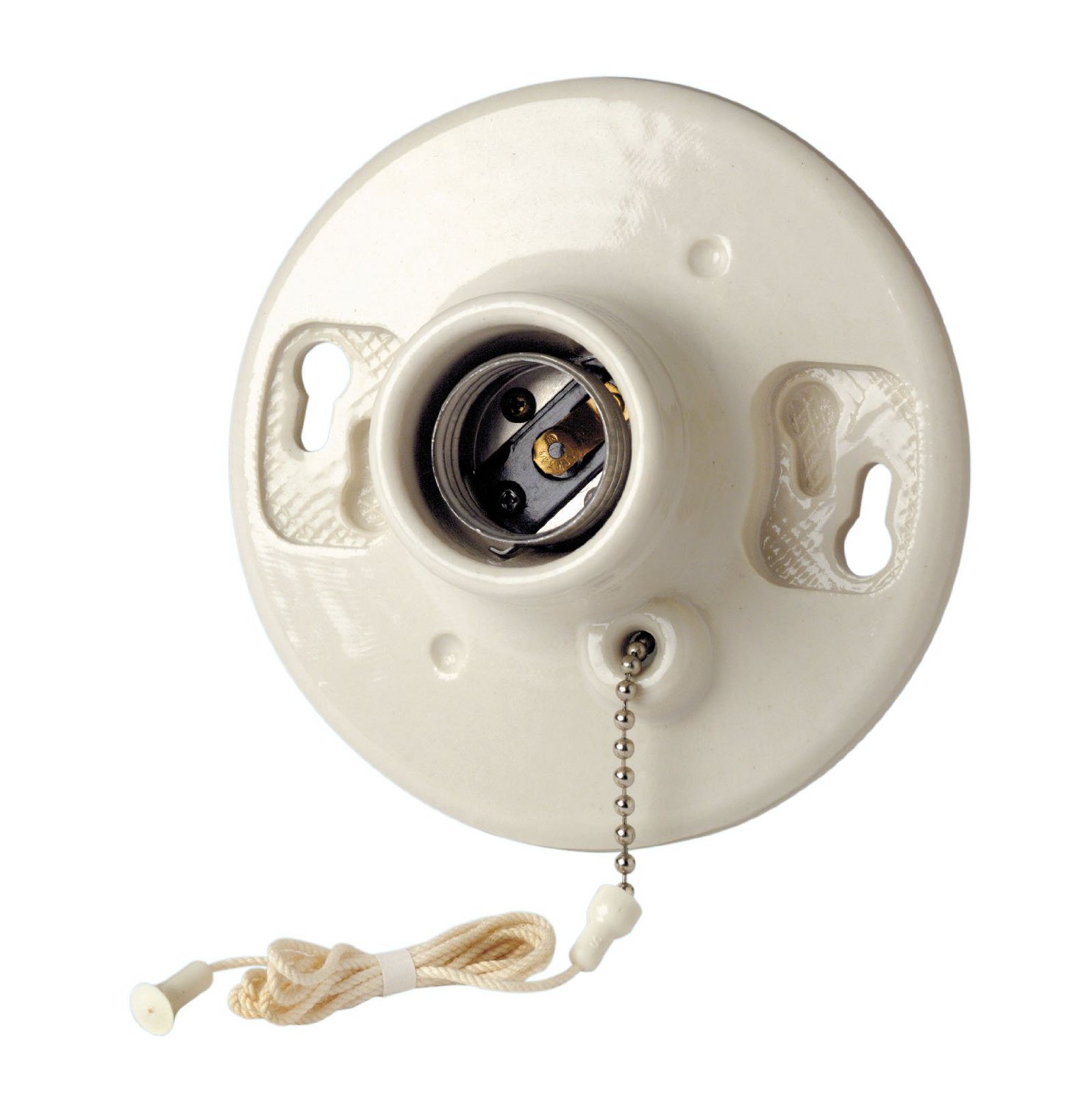
Before starting, please note that this process does not apply very well to the old-school porcelain lamp bases (such as the one on the left) with pull chains. Those switches are often integral to the housing, and in any event, it’s just as cheap and easier to buy a new base. Be aware, you also need to be completely clear on how to wire a light socket to wire a porcelain lamp base to replace one of those; the wiring described here won’t work for you.

With that disclaimer, here’s how to replace a pull-chain switch!

First, TURN OFF THE CIRCUIT OR UNPLUG THE THING.

Second, GO BACK AND MAKE SURE YOU TURNED OFF THE CIRCUIT OR UNPLUGGED THE THING. It’s especially important to do a double-check with a voltage tester on hard-wired items.

Take whatever it is down so you can work on it. Remove breakable stuff like lightbulbs and set them aside.

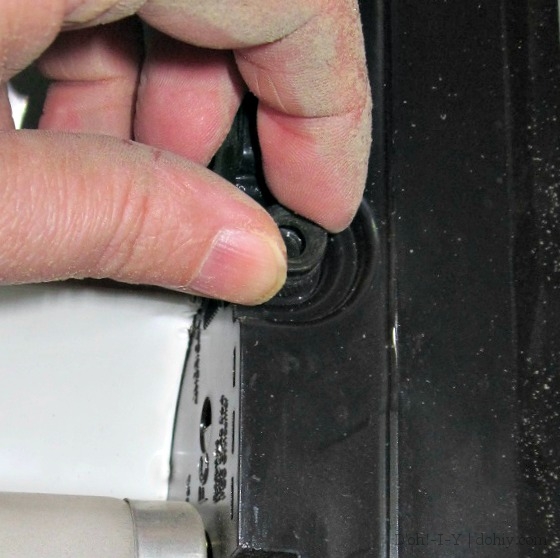
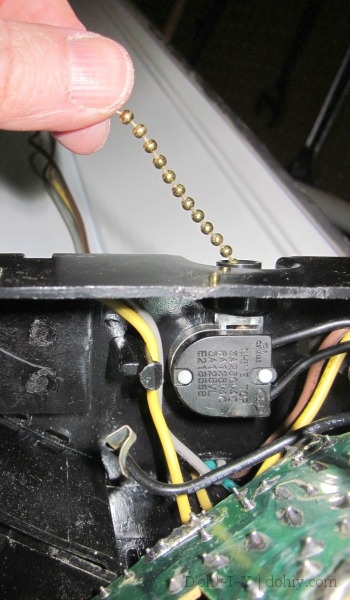
Unscrew the pass-through nut that the pull chain…um…passes through, and then disassemble the housing over the switch.

In my defense, the top of the light was covered in sawdust.

In my defense (although not a great defense), the top of the light was covered in sawdust.

The housing will vary widely depending on what you are working with. When I did this job on a ceiling fan light, there were obvious bolts holding everything together, but for this cheap fluorescent worklight, everything sort of snaps together, so I had to do a fair bit of prying and nudging. I did a little bit of the nudging with a hammer. Carefully and lightly, but still with a hammer.

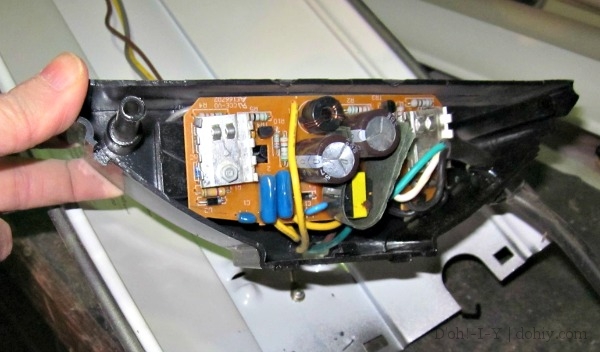
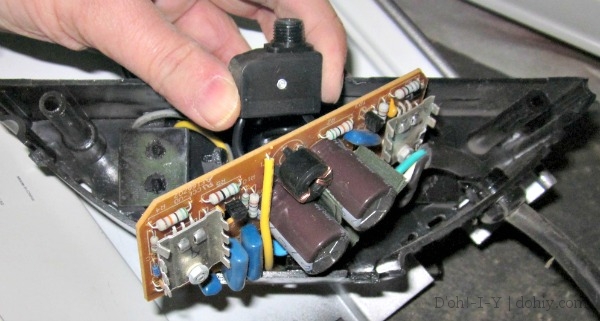
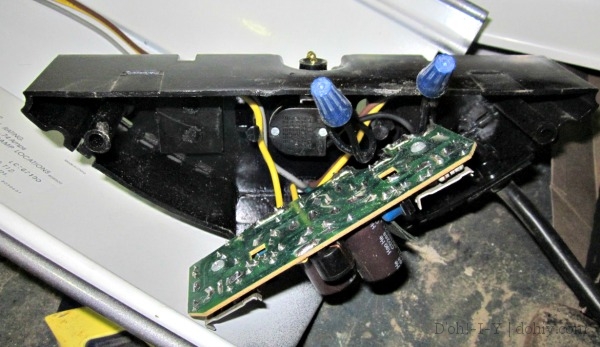
The innards

The innards

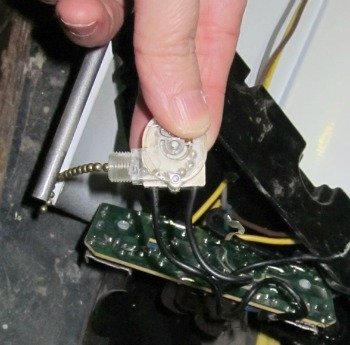
Once you are inside the housing, you may need to shift a circuit board around to pull out the bad switch. Just pull it out of the way slowly and gently by the edges and you won’t damage it. Try to avoid touching any of the connections on the board or any items attached to it.

Pull the switch out. It will have two wires that you need to disconnect.

oldswitch

The wires are coming from the bottom (or top, depending on perspective) of this old switch. The plastic housing is permanently riveted together (or it was).

Best case, wires from the switch will be connected to wires running to the circuit board with wire nuts that you can just unscrew. More likely, though, these wires will run into the switch, in which case you will need to either unscrew the housing (if you are lucky and it’s a housing with an obvious screw holding it together), or you will need to pry the dumb thing apart (if you are me and it’s today). If it’s the latter, it’s no big deal — the switch is broken anyway, so the fact that you are going to break into the housing isn’t ruining anything worth saving. Long story short: One way or another get those wires disconnected from the switch.

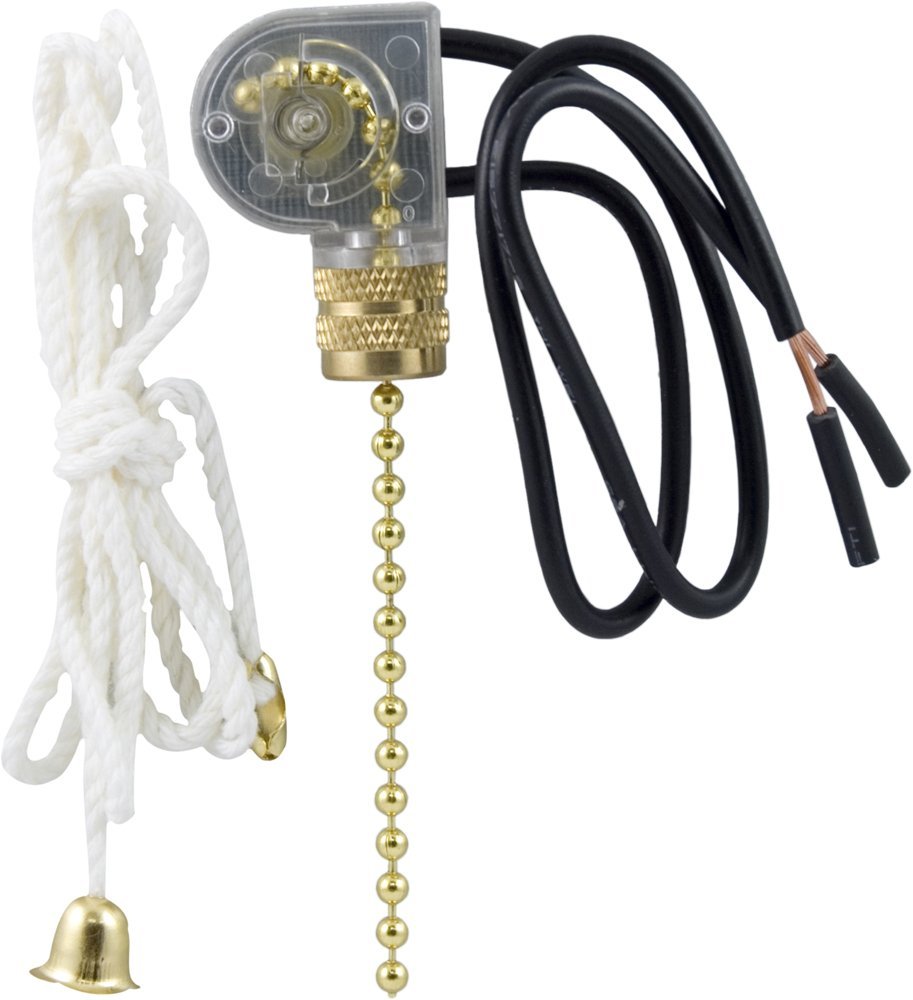
You can buy a replacement pull-chain switch anyplace with a basic wiring/lamp parts department. Make sure you buy one that will handle the current you want to put through it; also, make sure it’s the right application. Fan pulls might be three-way switches (for off-low-high power), so don’t use those to control lights or vice versa.

GE Pull Chain Switch

If you are a house-parts hoarder, however, you might already have one on hand.

Me: Hey, have you seen that ceiling fan carcass?

The Kev: No.

Me: The one I said I could cannibalize for parts someday?

The Kev: Still no.

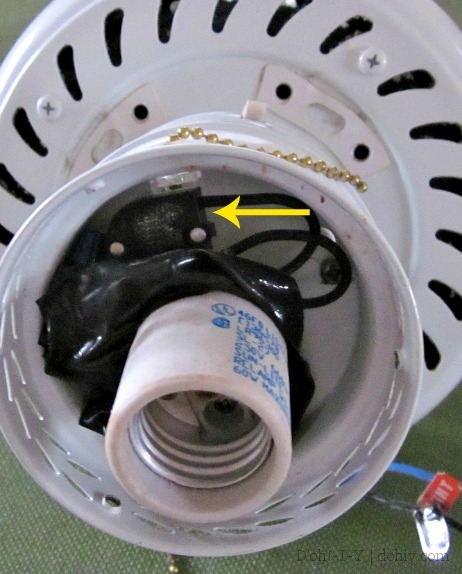
I found it anyway, and ta-da! A switch.

There it is!

There it is!

These switches are all pretty standard, but the physical size may vary a bit. This variance can make it tricky to put everything back together at the end, so if that will be an issue, you can order the exact replacement part. Look for the part number imprinted on the switch you just took out and search for that. It should not cost more than $10 with shipping online, or about $5 from a hardware store.

"New" switch ready to go.

“New” switch ready to go.

Thread the chain through the hole in the fixture housing, then convince the threaded part of the new switch to follow it. This part can be fiddly because you are working in a small space. Have the pass-through nut close to hand so you can seal the deal once the threads emerge on the outside of the fixture.

newswitchinplace

Make your connections. On a switch, you are making a connection for current to run to the light, so you are interrupting the hot line to the fixture when the switch is off. It therefore doesn’t matter which wire to the switch connects to which wire extruding from the switch. Clean up the wire ends if you need to, or strip back further if you have the wire and need a cleaner end for the connection.

connectionsmade

Pick a pair, apply a wire nut, then wire nut the remaining pair, and tuck in your connections. (I usually wrap wire nuts with electrical tape, but it’s not technically necessary.)

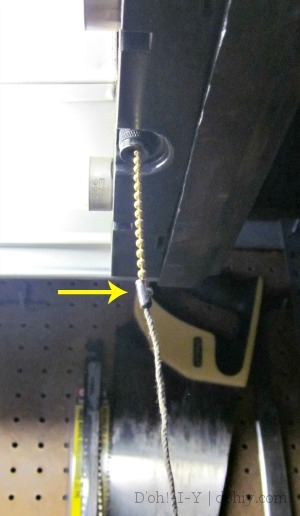
Reverse what you did when you took the fixture apart and reinstall everything. Since the pull chain on the new switch may be short, attach more chain or cord to it with those oblong key chain connectors that are typically attached.

Extend the pull using this thing.

Extend the pull using this thing.

BLUE SMOKE TEST TIME! Turn the circuit back on or plug in the fixture. Pull the chain. Popping sounds? Puff of smoke? Turn it off immediately and figure out your problem. If you just got a light turning on and off as if nothing had happened, you are done! Congrats!

Seeing is terrific!

Seeing is terrific!

These fixtures have much longer working lives than their cheapest component, so knowing how to replace such a piece reduces waste and saves money over time.

—–

*Unless you are in the UK, where they make pull switches so hardy that they run them up into the ceiling as if they will never need replacing–and honestly, I’ve never even heard of one breaking, so maybe they don’t. Must be made of adamantium or something.

Posted in American vs English, Electrical, Repair & Maintenance, Salvage | Tagged , , , | Leave a comment

Rabbits of Unexpected Size

Simpsons_Collection_VHS_-_Call_of_the_SimpsonsAfter learning of the rabbit-based tree devastation, the Kev and I bought a live trap. Out cunning plan was to relocate whatever rabbits we could catch to a nice nearby conservation area, thereby at least reducing the overall number of sharp, pointy teeth in and near the garden.

We set the trap up with carrots and parsnip parings. First night, nothing.

Tonight, Kev came into the house and said, “We caught a rabbit…? But it’s really little.”

My response: “WHAT ARE WE GOING TO DO?!?”

So tough!

Neither one of us wanted to relocate a juvenile rabbit. It just didn’t seem fair. Kev had just looked at the cage from across the yard, so we went back out there with a light and approached the trap for a better look.

“That’s…not a rabbit.”

I’ve never seen such an exasperated squirrel. He seemed fully aware that our scenario was not going to plan, and aggravated that we had inconvenienced him. He might as well have been tapping his foot while I struggled to open the “quick release door.” Once freed, he sauntered out like a candidate for Most Dignified Rodent.

It’s possible the rabbits and squirrels are working together on this thing.

Posted in D'oh!, Yard & Garden | Tagged , , | Leave a comment

It’s a Frame-Up!

It’s hip to be square…like the song says!

– Homer Simpson

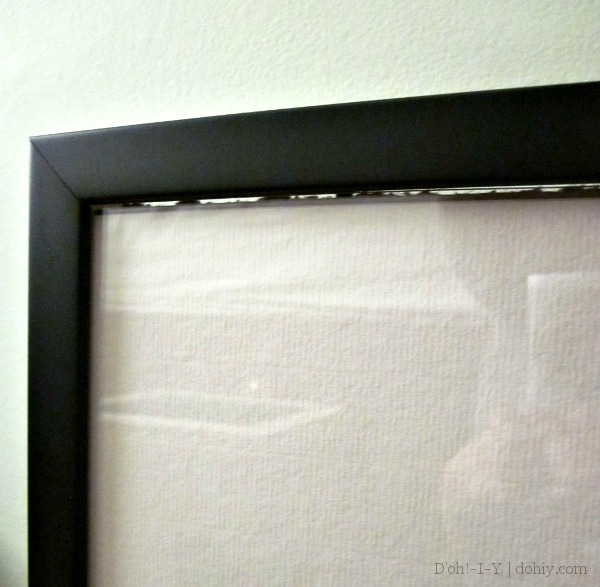
Ever buy a gallery frame, hang it up, get on with your life, and then later notice that the top rail is bowed? If you hang a frame from the top rail, the weight of the glass (and everything else) can pull the top out of square. Ikea frames and thin gallery frames are particularly prone to this effect.

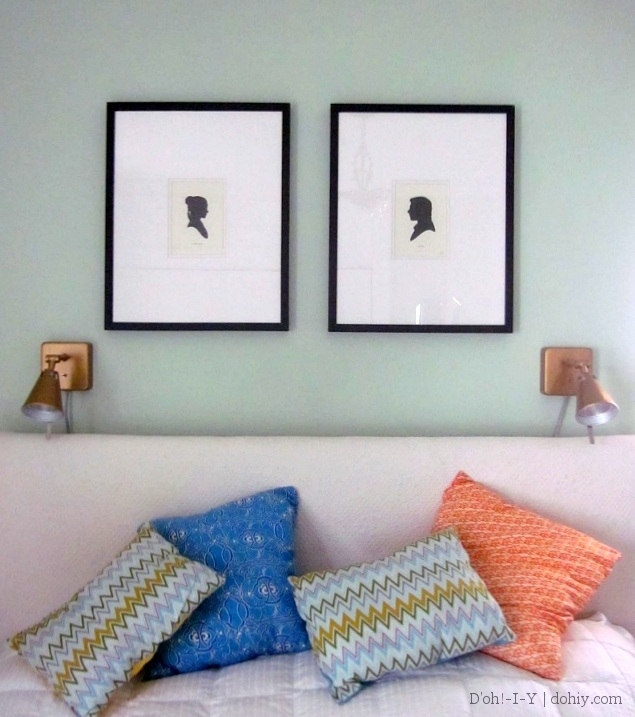
Last year, I used French cleats to hang some geeky art in gallery frames.

Dohiy.com Leveled Art on French Cleats

I used cleats to help hang the matched frames exactly at the same height. Since the cleat extends along the top rail for a few inches, I didn’t think that the frames would bend. I was wrong!

That's daylight between the frame and the glass.

That’s daylight between the frame and the glass.

The better way to hang frames like this is to run a wire from side to side, which keeps the weight off the top rail. But I’d already used cleats, and many frames attach hanging hardware directly to the top, so this issue is pretty common.

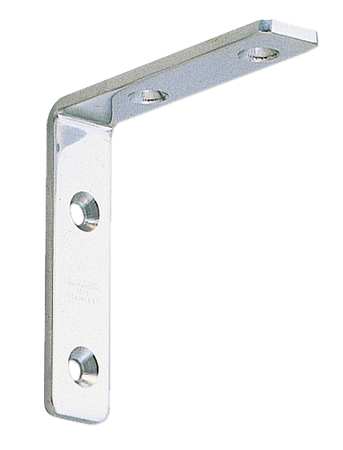
To fix the problem, I needed to either stiffen up that top rail or transfer some of the weight from there to another part of the frame. I went shopping for small angle brackets to insert in the top corners to pull the frame into square.

via

Angle bracket (via)

The Kev surmised (correctly) that a cheaper option would be buying flat aluminum bar to tie together the top and sides of the frame. A three-foot length was under $3, and I picked up some 1/2″ brass screws to hold everything together for 86 cents. Last of the big spenders!

aluminium_tile_coasterBy the way, it’s “aluminum” in the states and “aluminium” in the UK (learn why here). “Aluminium” jives more closely with other elemental names (sodium and potassium, for instance), but the difference is basically just one of those things. We both use the -um and -ium versions situationally, but I’m never fully comfortable with -ium. I find that I take a break before I push through to the end: “Ah-LOOOOOOO. Minium.” As you might imagine, I’m often mistaken for a super-cosmopolitan chemist.

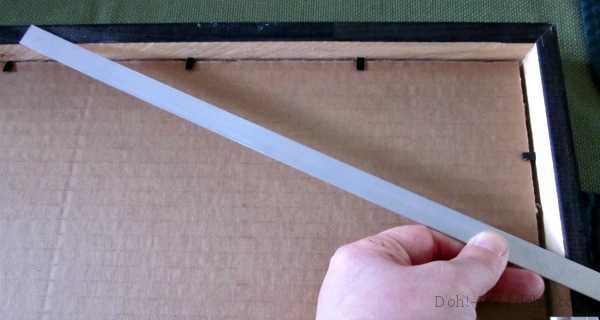
Thin alumin(i)um strip

Thin alumin(i)um strip

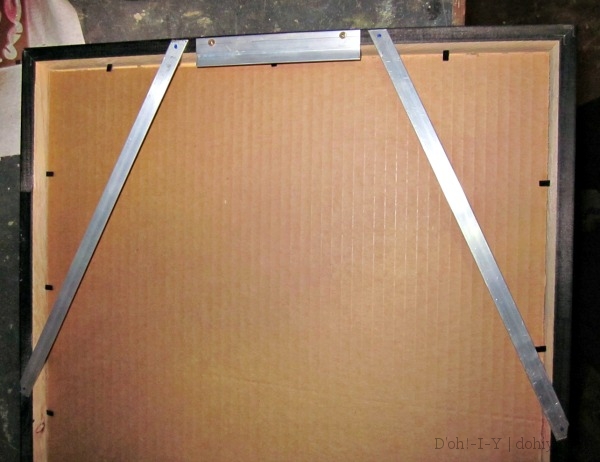
I laid the strip on the back of the frame and marked an angled cut for the top and for about halfway down the side. I used a hacksaw to cut my two pieces.

Metal pieces cut and in place on either side of the French cleat

Metal pieces cut and in place on either side of the French cleat

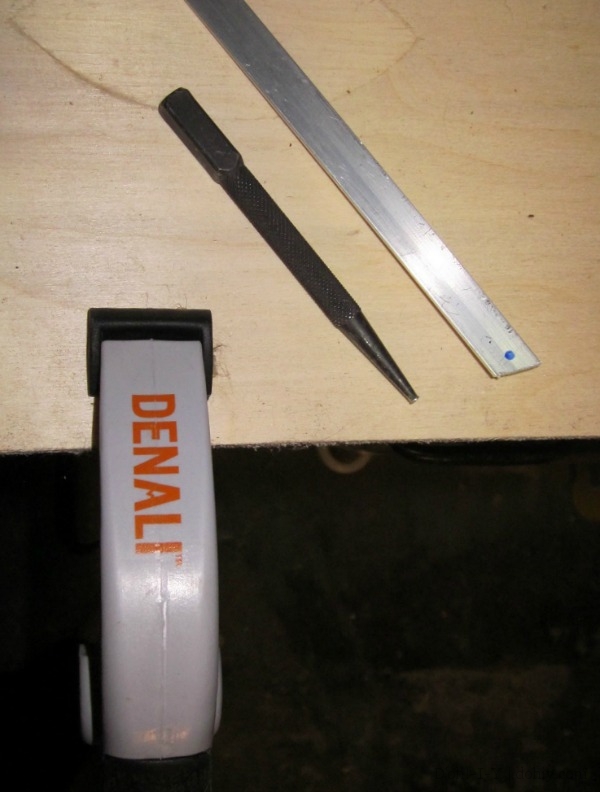
I marked where to drill the holes for the screws. It’s a little harder for a drill to bite into metal, so I use a punch and a hammer to make a little dent on top of the mark. The dent helps guide the bit so that the drill doesn’t just dance all over the place and make you feel like a dope. If you don’t have a punch, you can use the point of a large nail the same way. Hold it in place and tap it with the hammer. It’s also a good idea to clamp a piece of wood down that you can drill into once you’re through the metal.

Punch and clamp

Punch and clamp

So drill those holes! Use a file or sandpaper to take slivers and burrs off the sawed and drilled edges, then set the pieces back in place on the back of the frame. I used a ballpoint pen through the drilled holes to mark where the pilot holes would go in the top rail. I swapped for a skinnier drill bit to make the pilot holes, then I screwed the bar down to the top rail only.

You want to square up the frame before putting in the other screws. I pushed the frame’s top rail down and used a square to make sure the top rail was at right angles to the sides. With the square in place, I marked the side rails for the pilot holes, drilled, and then screwed in the sides.

done

Looks fairly square here…

I wouldn’t really know if it had worked until I set the frames back on the cleats. Fortunately, we appear to have a result!

onna wall

Square here too! Maybe a little frame nudging needed, but the bowing is gone.

The French cleats really help everything hang evenly, but I will brace the frames first before using them again. Eventual frame bowing rather ruins the effect of even hanging!

Posted in American vs English, D'oh!, Decor, Repair & Maintenance | Tagged , , , , , | 6 Comments

Time for the Holy Hand Grenade

 I’ll go into the bushes over there, make a lot of noise, and flush out a rabbit. When he comes out, you step on him.

– Homer Simpson

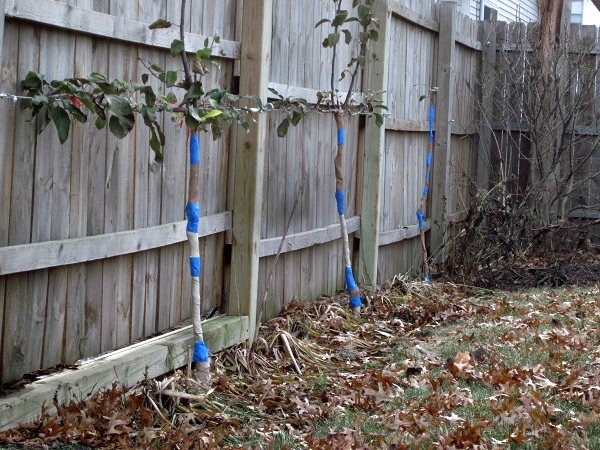
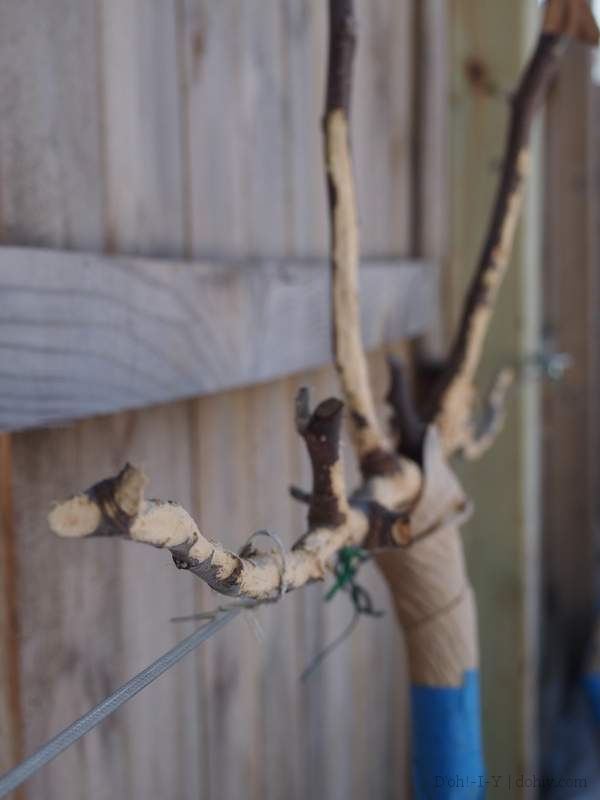
Last year, I wrapped up my baby espalier apple trees to an excessive extent to avoid rabbit damage.

little tree

I made fun of myself when I posted about it. I thought I’d gone off the deep end, but I had lost a full year of growth the prior winter. I completely encased the smaller trees, but I left the higher growth unwrapped on two of the bigger ones.

three trees

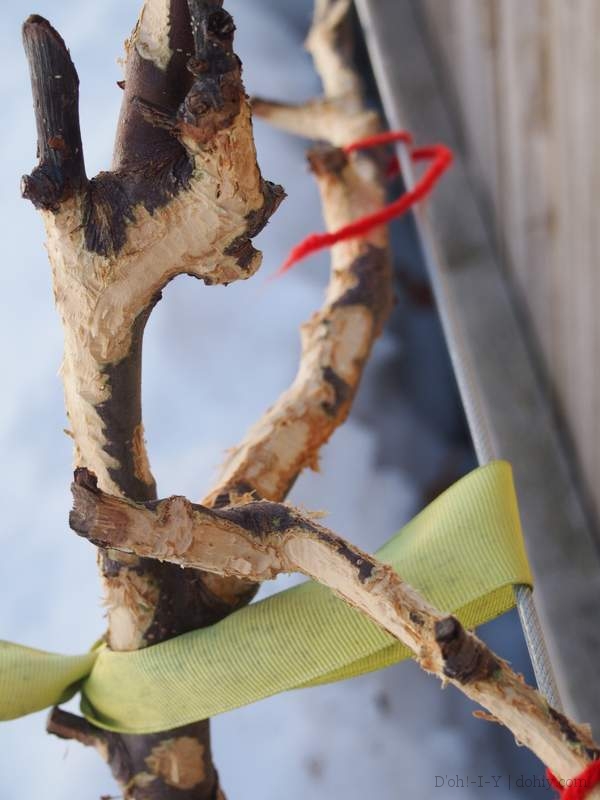
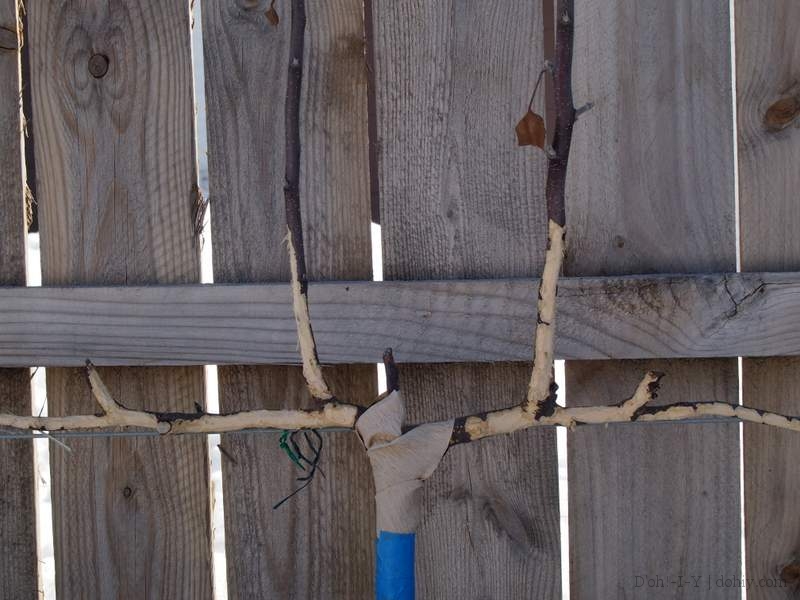
It turns out, that was a mistake. I should have gone every bit as wrap-happy on these trees as well. Look what those damned rabbits did to my trees.

OLYMPUS DIGITAL CAMERA

OLYMPUS DIGITAL CAMERA

OLYMPUS DIGITAL CAMERA

Judging by all the rabbit poop around this area, the little devils have been stretching up on their back legs to chew even these relatively high branches.

I’m just sick about it.

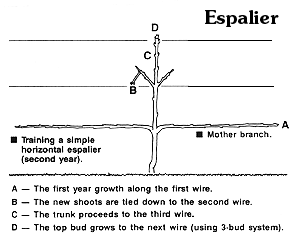
These two trees weren’t damaged last winter, so they were further along than the others. The first cordon (tier) was grown in on both of them, and the trees were up to the second cordon level. I was going to start training the second cordon this spring.

Espalier is an exercise in patience under normal circumstances. These trees aren’t dead (necessarily) — if trimmed back to the trunk, they should put out new shoots. In two more years, that first cordon will be grown out again.

I understand that rabbits just want to be alive and food is scarce over the winter. That didn’t stop me charging full tilt toward a rabbit sitting on the driveway the other night. It started to run and then froze in the headlights. And I braked. BECAUSE I’M WEAK. Maybe I’m not tough enough to espalier.

Anyone had any luck with live traps and relocation?

Posted in D'oh!, Yard & Garden | Tagged , , , | Leave a comment

Finally, A Decision

Bart: Dad, you’re giving in to mob mentality.
Homer: No, I’m not–I’m hopping on the bandwagon. Come on, son, get with the winning team!

– The Simpsons

We ordered some countertops. Then I had to have a lie-down, because a major decision every six or seven years really takes it out of me.

We’d been through a stack of options, and created a short list of wood, zinc, and marble. We tried out a wood look, and decided it didn’t work. Zinc was also knocked out as aesthetically wrong for our tiny kitchen. Despite testing how marble would wear around messy cooks, my dream surface was eliminated as well. It turned out to be undoable with slab remnants, meaning a very high per-square-foot cost for buying a whole slab. We did consider marble mini-slabs, but we didn’t want the grout lines. We did more research, revised the list, and maybe did a bit more research.

Then Menards had a sale, and we ordered quartz.

Riverstone Quartz is Menards own brand of quartz surface. After our faux wood experiment, we settled on a light color and ordered “Cotton.” It’s almost entirely white with clear flecks.

RS301_SWAN_COTTON_LARGE

White quartz is a nice, crisp look, and it will bounce light around the room.

During the recent kitchen sale, Menards offered this material starting at $30/square foot, plus charges for sink and faucet cut-outs. It’s pretty affordable at other times, too, but it’s worth waiting for a sale–they have them several times a year. You’ll need to provide double-checked measurements for each piece of counter, plus the position of the sink (measure for the midline of the sink you will use) and any cut-outs (faucet, drop-in range, extra sinks, etc.). You can buy a sink as part of the transaction, or provide the model and brand.

The Cotton pattern was one of the ones at the opening price; some other patterns were more expensive, but fortunately, we wanted the white. It’s an unbeatable deal, but installation is not included. Here are the other ups and downs for quartz counters: 

Pros:

  • Quartz is described as a “bullet-proof” surface (which makes me want to try shooting it, but I’m a bit over-literal). It doesn’t stain, it doesn’t etch. Despite my marble trials, I have to admit that I was a tiny bit relieved that I wouldn’t have to test my true tolerance for etching.
  • Riverstone quartz is the same material as other quartz surfaces (93% quartz bound with acrylic), but fabricated for DIY installation, which is a huge money-saver.
  • The color we selected and the reflective finish will help light up our north-facing kitchen.

Cons:

  • Quartz looks stone-like, but a uniform color like we chose won’t be mistaken for stone.
  • This is a serious DIY scenario. The material is heavy, and we’ll need to draft in some helpers.
  • Unlike some stone surfaces, it’s not advisable to place hot pots directly on quartz. We’re not in the habit of doing that anyway, but it’s a performance gap between quartz and granite.

We provided our measurements, and the factory will send us a vinyl template that we can roll out over our existing tops to check that everything is right before they proceed to fabrication. After that, the finished surfaces will be delivered to our local Menards in about three weeks. We’ll pull out the old counters and level everything before the heavy lifting begins.

I’m relieved to have the decision made so I can stop thinking about countertop materials. Now I can start thinking about countertop installation. Progress!

Posted in Decor, Kitchen | Tagged , , , , | 6 Comments

Paying Retail is for Muggles

Call 1-600-DOCTORB. The B is for Bargain!

– Dr. Nick Riviera

Shoes I bought on clearance in Dec. 2013

Shoes I bought on clearance in Dec. 2013

Back in college, I had a status-conscious boyfriend. One time, I was bragging about some shoes I’d bought on clearance, and he said, sadly, “You never pay retail for anything, do you?” To which I replied, “You say that like it’s a bad thing!”

I still buy shoes on sale, but I’ve also carried my love of a good deal over into DIY. When it comes to house fixtures or appliances, I don’t want to buy cheap stuff cheap–I want to find excellent prices on good-quality items. Doing that takes a little planning and research, but can pay off handsomely. Plus, if you treat it as a game, it can be fun. True story!

Start well in advance of a project with research and measurements, and figure out what you need and want. (This methodology is not for the time your water heater explodes at 3am!) I find it’s best to have specs in mind, but not necessarily specific model numbers, although you can do either or both. 

1. Local Research. As part of your research, take a look around the local big box places and outlets. We’ve been shopping for a new kitchen sink and a faucet, so we looked at DIY places and visited a nearby builder’s outlet to gain an idea of pricing, appearance, and quality. You might also check Craigslist–while it’s hard to find the exact thing there, sometimes you will be pleasantly surprised.

2. Potential Deals. You may find exactly what you want locally, but if it’s not on sale and staff don’t know about any upcoming events, check what you can find online. The big box places often have specials online, or may place printable coupons onsite. Joining an email list may yield 10% or more off your next purchase.

It’s worth checking what’s available online from a known store. That’s how I found “Ray’s List” at Menards.com. Ray’s List is an index of discounted and clearance merchandise outside of regular store stock. You enter your location, and it lists items in stores near you, which you can search and sort.

To find the list, use the pulldown from “Promotions” on the Menards home page.
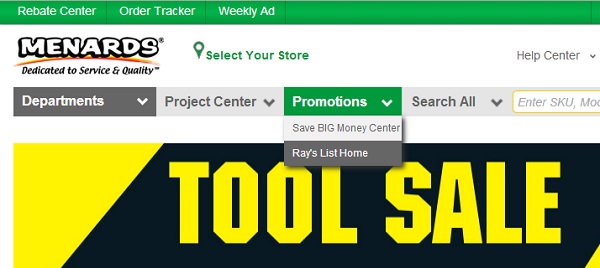
Rayslist1At the Ray’s List page, you can sort locations and departments to see what’s on hand. When you see something you want, you can take the SKU number to the store with the item and pick it up.
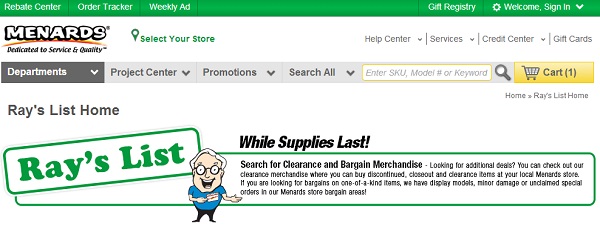
rayslist2Since you see the item in person, you can check its condition and suitability for your project before taking it home. Remember, you can also use rebate credit and 11% off gift cards to bring down even a discounted price.

Be aware that Ray’s List items sell quickly, but they don’t seem to update the index as promptly. On our quest, I found one of two sink models we were considering available at a store eight miles away. It was a new-condition returned item, and a great deal. We didn’t call ahead, and there was some confusion among the staff over whether it was still in the store (and if so, where). It was eventually located, and for now, it lives in the corner of our dining room. It’s as if we don’t even have a basement!

3. Online Research. I have a set of tried-and-true places to look online. All of these sites are well-known, but there are ways to make a good deal even better. Plus, these spots may also lead to helpful niche sellers (for instance, when searching for a new tap, I was led to efaucets.com) that might have precisely what you are seeking.

Hit each of these to double-check options and to find the best pricing:

Google Shopping. Run a Google search for the brand name and model number, then click on “Shopping” to retrieve a linked pricing index for that item. It’s a good idea to save the search so you can go back and re-run it periodically to check for sales.

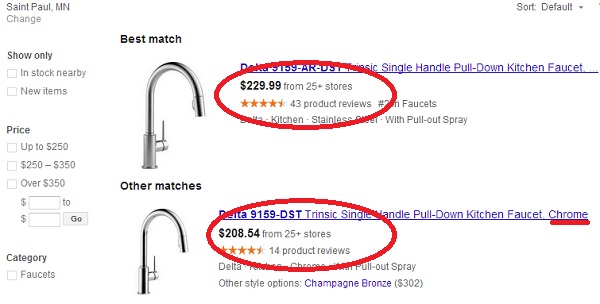
Here, I searched for “Delta 9159-AR-DST” (the brand and model for a particular kitchen faucet, which lists at over $450, but can generally be found around $300). You can either switch to shopping at the top of the page (click “Shopping” from the search results) or click in the box to the right of the results. This shopping box usually shows up for brand/model searches.
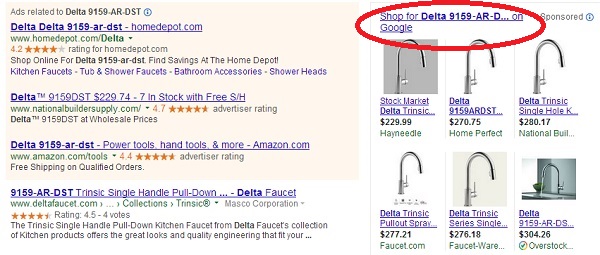
Google1

When you review the shopping results, Google will list the best price: for this faucet, $230, versus the usual $300 retail. Remember that this may or may not include shipping, tax, and coupon or promo code options (check Retail Me Not for promo codes for most commercial sites).  You can sort results using tools on the left of the screen.
Google2

This Google Shopping results page shows an exact match and “other” matches. The “other” result is a better price, but notice that it’s for a chrome finish. When you shop online, check to make sure you are buying the options you want.

Amazon. I ran the same brand/model search on Amazon. The main listing is for $276.

amazon1

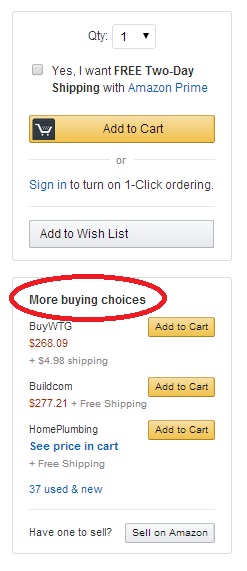
If your item shows up on Amazon, also bookmark the product page so you can check back later. Check if there is a “More buying choices” box over on the right side of the screen. The box looks like this:
amazon2

Other vendors may have item returns, display models, or close-outs offered through Amazon; you complete your transaction on Amazon.com, but the other seller sends the item to you. You have an extra layer of buyer protection versus just buying straight from a website, because Amazon will intervene with any vendors who don’t live up to their obligations.

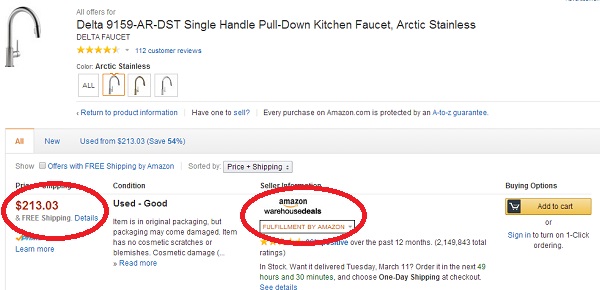
One of the best secondary sellers on Amazon, though, is Amazon–or more specifically, the Amazon warehouse, which sells open box, returned, and overstocked items from the “more buying options” index. These may be marked “used” but the exact condition of the item is described, and you have full return rights.

For this faucet, buying a return with a slightly damaged box would save over $60 on the regular Amazon price.
amazon3

I bought our new bathroom tap (more info here) as an “open box” unit from Amazon Warehouse Deals, saving over 50%.

Overstock. Check Overstock.com as well. If an item is on Overstock, you can set a price alert to receive an email if the price drops. It’s also worth being on their mailing list; they send “surprise” coupons and other specials, typically for 10-15% off.

Overstock didn’t have the Delta faucet.

overstock1

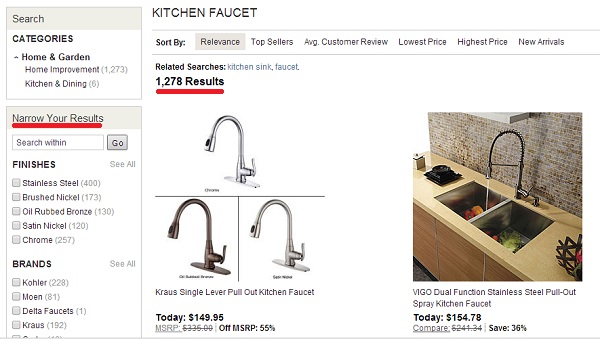
But it did have over 1,000 kitchen faucets to browse through!
overstock2

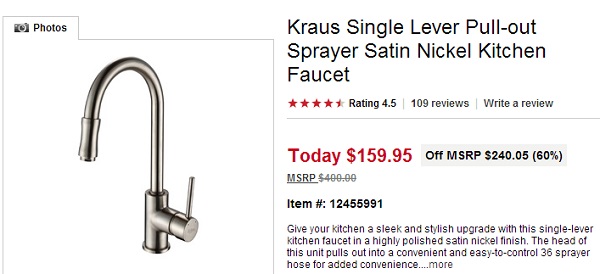
Overstock does have the similar-looking tap below for only $160. If it’s mainly the look you were going for, you may have just found a deal.
overstock4

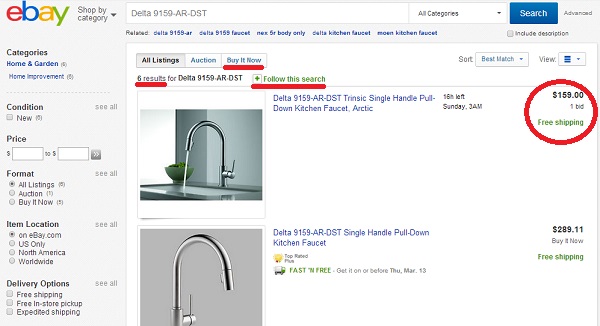
eBay. You never know what’s going to be on eBay! Like Amazon vendors, eBay has a customer service model that will intervene if you have a problem with a seller. Vendor feedback is also useful for seeing a seller’s track record. However, of all the options given here, eBay is the one you need to be most careful about when looking at an item’s condition and completeness.

When I searched for the Delta example, six results came back, and the first had a very attractive price, plus free shipping. That item is an auction, and one bid was already in. If you don’t want to mess around with an auction, click the Buy It Now tab (underlined below) to see set-price listings. If you don’t like what you see, you can choose to save the search (“Follow this search” underlined below) and receive emails about new listings for your search.
ebay

eBay is where I found our new kitchen faucet. It’s a completely new item in its unopened packaging. A builder bought it for a project, but the customer changed his mind. The transaction had free shipping and no tax; UPS is bringing it to our door on Tuesday.

My results for the most recent shopping mission:

  • Stainless undermount sink: 51% off list price, 44% off available retail price (what we could have paid multiple places)
  • Kitchen faucet: 62% off list price, 45% off available retail price
  • Total savings: Over $300
  • Final outcome: VICTORY!

lisadancing

Please let us know your best tips for home improvement shopping in the comments (and your purchasing triumphs!). Happy shopping!

Posted in Construction, Organization, Plumbing, Repair & Maintenance | Tagged , , , , , | 3 Comments

Anglo-American House of Pancakes

Back up a bit now. When are the pancakes coming in the mail?

– Homer Simpson

Yesterday was Pancake Day in England, and Chez D’oh. Shrove Tuesday is better known in much of the world as a last-ditch party before Lent, but in the U.K., it’s a chance to cosy up with some carbs.

If you are North American, these may not look like pancakes as you know them. British pancakes are what we’d call a crepe. The traditional Pancake Day version is so yummy, it really should happen more than once a year.

When the Kev and I wed, I decided to learn his strange ways some British recipes, especially those connected with holidays. English holidays and seasons each seem to have very specific recipes–parkin, cinder toffee, Christmas cake, hot cross buns, and so forth. Other than Thanksgiving, holiday foods aren’t quite as definite in the states. Sure, you might have fruitcake at Christmas, but more likely a chocolate cake or a pie or cookies (or all of those). Some years, therefore, baking holidays sneak up on me, like last Easter morning when I sat bolt upright in bed and shouted:

“Oh, crap–it’s another holiday involving a baked good!”

crazy lady shooting gun

My point is, there have been many last-minute shopping runs to keep up! Of course, I should emphasize that none of this is Kev-based pressure–I’m the one wanting to observe English traditions. He has never been one to sit around in his skivvies demanding calendar-based baked goods. Yet.
Whether you are an Anglophile or not, you should try these pancakes at any time of year. They are easy and delicious! We use Delia Smith’s recipe but there are many options, here, here, and here, for instance (note to American cooks: caster sugar is granulated sugar, more or less).

As long as you have a good basic recipe, the killer aspect is what you do with them out of the pan. Smear them with butter, sprinkle them with sugar, then squeeze a lemon wedge over the top. Roll the whole business up, and…

cookie monster

Every year, we say, “Why don’t we do this more often?” Other than the calories, there’s no good reason. The lemon keeps it from being too heavy or sweet–the whole thing is made of yum.

pancakes

Haven’t rolled these up yet — still slathering them with butter and sugar!

Put a little English tradition into your life!

Related Posts Plugin for WordPress, Blogger...
Posted in American vs English, D'oh!, Family, Food & Drink, Romance | Tagged , , , , | Leave a comment